This episode didn’t revolve around suspicion, and it certainly wasn’t about who was telling the truth. It was about power. More specifically, it was about how Sonny Corinthos never walks into chaos unprepared. What looked like a messy web of doubt between Ethan and Ric was actually something far more calculated. Sonny wasn’t reacting to events as they unfolded — he was orchestrating the conditions that made those events inevitable.
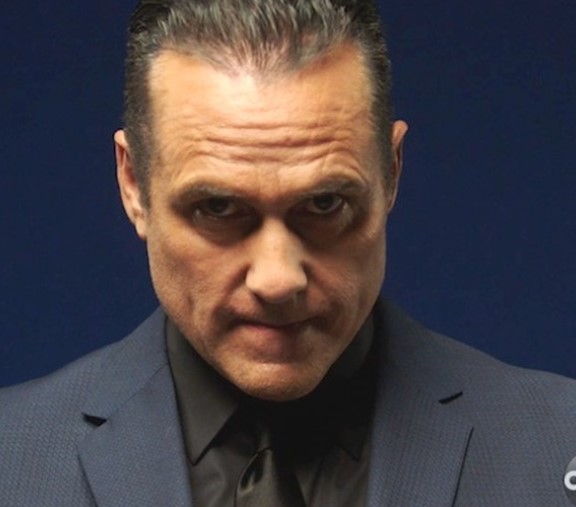
When Ethan Lovett spotted Ric with Ava and carried that suspicion back to Sonny, it felt like a natural development. A concerned ally sees something off and reports it. But the timing was too precise, the encounter too convenient, and the information too perfectly aligned with Sonny’s needs. That raises a dangerous possibility: Ethan didn’t stumble onto anything. He was placed in a position to see it. And once he did, his reaction became part of the test.
Sonny’s history proves one thing above all else — he doesn’t eliminate uncertainty, he studies it. Letting Ethan operate in a gray zone isn’t a weakness; it’s strategy. By allowing Ethan to believe he’s acting independently, Sonny gets something far more valuable than loyalty: he gets truth under pressure. Ethan’s role in this moment wasn’t to deliver intel. It was to reveal himself. How quickly he reported, what he emphasized, what he chose to ignore — every detail becomes data in Sonny’s larger assessment.
At the same time, Ric Lansing was unknowingly stepping into the second half of the trap. His interaction with Ava wasn’t just suspicious — it was observable. If Sonny already had doubts about Ric, then this wasn’t a slip-up waiting to happen. It was a scenario waiting to be triggered. Ric believed he was navigating his own agenda, managing his own risks, but the truth may be far more unsettling. He wasn’t hiding in the shadows. He was moving exactly where Sonny needed him to be.
The real brilliance of the setup lies in how these two paths intersect. Ethan sees Ric. Ric senses Ethan. Both become aware of each other, and both react accordingly. But neither realizes that their reactions are being measured. This isn’t coincidence. It’s alignment. Sonny didn’t just gather information — he engineered a collision point where both men would expose themselves without ever realizing they were being tested simultaneously.
What Sonny is ultimately watching for isn’t truth in the traditional sense. He’s not asking who is innocent or guilty. He’s observing behavior. Who hesitates. Who overexplains. Who moves too quickly or not quickly enough. These are the tells that matter. Under pressure, people reveal more than they intend, and Sonny understands that better than anyone. This isn’t interrogation. It’s a pressure test designed to force instinct to override control.
And then there’s Ava Jerome — the wild card who may not be as random as she seems. Ava has always existed in the gray, making her the perfect catalyst for suspicion. Her presence in that moment amplified the tension instantly, turning a quiet observation into a loaded situation. Whether she was knowingly part of the setup or simply the perfect unpredictable element, her role intensified the stakes in exactly the way Sonny needed.
What makes this entire sequence so compelling is that it reframes everything. This wasn’t Ethan uncovering something. It wasn’t Ric making a mistake. It was Sonny creating a controlled environment where both men would reveal their true positions. Every look, every decision, every word spoken fed into a larger evaluation that only Sonny fully understands.
By the end of it, one thing becomes clear: neither Ethan nor Ric is in control of this game. They’re participants, not players. Sonny, on the other hand, is already several steps ahead, watching, calculating, and waiting for the moment when the test is complete. And when that moment comes, the real question won’t be what he learned — it will be what he decides to do with it.
