The appearance of the character known as Baby Phoebe on General Hospital has sparked a significant wave of interest among the viewing audience. While many soap opera roles are clearly defined by casting announcements and credits, this particular infant has gained attention through a remarkably natural presence that seems to transcend typical scripted interactions. The impact is not driven by a complex narrative, but by a sense of realism that has become a major talking point for the series’ followers.
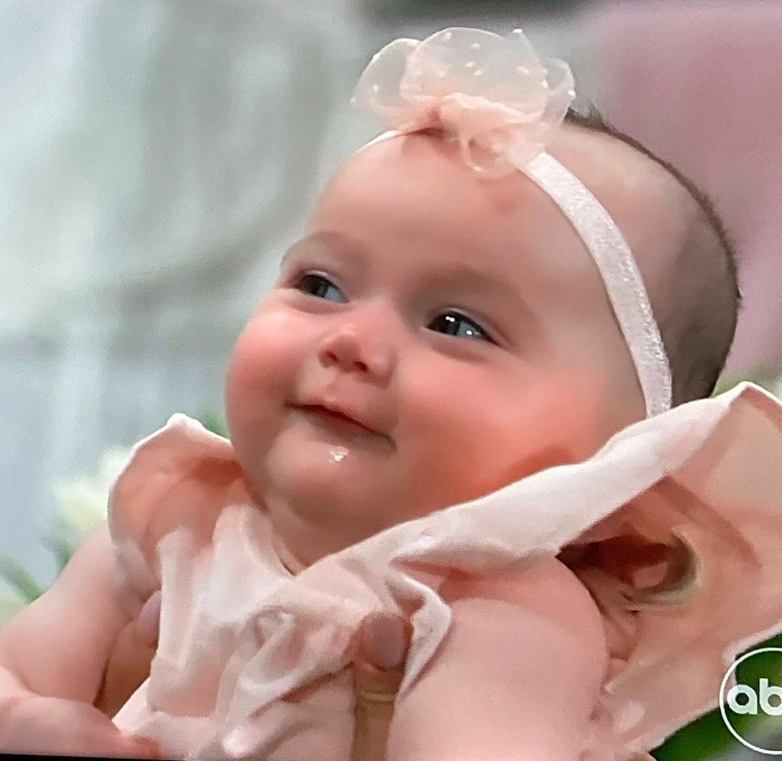
The intrigue surrounding the character is heightened by a noticeable lack of public information regarding the infant’s identity. In an industry where even the smallest roles are typically documented on platforms like IMDb or through production press releases, the absence of an official name or casting history stands out. This silence from the production has led to a vacuum of information, which viewers are now filling with their own observations and interpretations about why this specific child was chosen for the role.
What truly resonates with the audience is the emotional realism displayed during the scenes. Viewers have noted that the infant’s reactions—such as timely smiles or attentive gazes—do not appear staged or forced. Instead, they seem like spontaneous responses to the environment and the other actors. This perceived authenticity has led many to comment that the performance feels less like traditional “baby acting” and more like a genuine human connection captured on film.
The chemistry between the infant and actress Amanda Setton, who portrays Brook Lynn Quartermaine, is a focal point of this discussion. There is a visible familiarity and ease in how they interact, with the baby appearing to recognize and respond to Setton’s voice and movements. Such a high level of comfort is often difficult to achieve in professional filming environments involving infants, leading to widespread admiration for the quality of these specific scenes.

Given that Amanda Setton is a mother of three in her private life, her professional skill in handling an infant is well-supported by lived experience. This background provides a logical explanation for the maternal warmth and technical ease seen on screen. However, the connection is so seamless that it has prompted fans to speculate on whether the relationship between the two is purely professional or if there is a more personal link that contributes to the naturalistic tone of the performance.
One prominent theory circulating within the fan community suggests that the infant might be Setton’s own child. While this idea is a popular topic of conversation, it remains unconfirmed and is not supported by any official evidence from the network or the production team. The theory persists largely because of the instinctive nature of the interactions, which many feel would be difficult to replicate with a standard casting choice.
From a production standpoint, there are practical reasons why a performance might appear so polished. Television shows frequently employ multiple infants or twins to adhere to strict labor laws regarding filming hours. It is entirely possible that the “Phoebe” character is played by a very calm and attentive infant discovered through traditional casting channels, whose natural temperament simply aligns perfectly with the requirements of the show.
Beyond the identity of the actor, the mystery has also fueled interest in the character’s future arc. Fans are curious to see if Phoebe will remain a peripheral figure or if she will eventually become central to a major storyline involving the Quartermaine family. The lack of behind-the-scenes clarity serves to keep the audience more engaged with the on-screen mystery, making the infant’s presence a unique element of the current viewing experience.
The rise of this phenomenon is notable because it happened organically, without a focused marketing campaign or specific plot twists designed to grab headlines. It suggests that modern audiences are particularly drawn to moments of perceived sincerity. In a medium often defined by heightened drama and artifice, a quiet and authentic performance by an infant has managed to become a significant draw for the show.
Ultimately, the appeal of Baby Phoebe may simply be the result of excellent casting and the professional expertise of the veteran actors on set. Whether the connection is the result of a hidden reality or simply a testament to the skill of those involved, the character has successfully captured the imagination of the audience. The ongoing discussion highlights how a sense of realism can still be one of the most powerful tools in television storytelling.
