For weeks, General Hospital has been quietly dropping unsettling hints that something about “Nathan” simply doesn’t add up. At first, the strange behavior was easy to overlook — a few awkward reactions here, a suspicious comment there. But now, Dante may be closer than ever to uncovering a terrifying truth hiding in plain sight. The most shocking part? He may not need DNA proof, forensic evidence, or even a confession to realize something is terribly wrong. One tiny slip-up may have already exposed the entire deception.
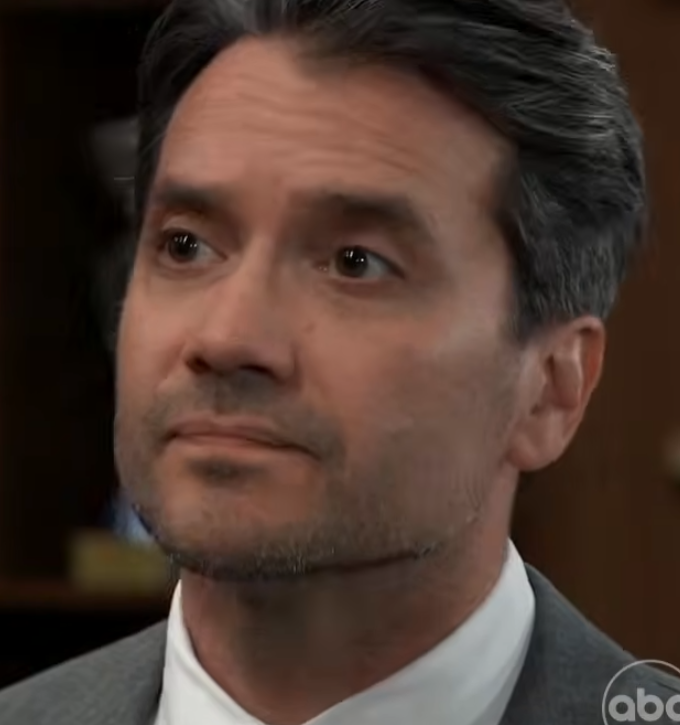
The turning point may not have come from physical evidence at all. Instead, everything seems to have shifted because of behavior. As Dante paid closer attention to how “Nathan” spoke about Rocco, subtle warning signs started piling up. The emotional warmth expected from someone close to the family suddenly felt absent. Rather than sounding protective or compassionate, “Nathan” often came across as someone trying to manage a dangerous situation before it spiraled out of control. That alone may have triggered Dante’s growing suspicion.
What unsettled Dante even more was the strange way “Nathan” approached conversations surrounding the Cullum shooting. Instead of helping Rocco process trauma or encouraging honesty, he appeared overly focused on controlling the narrative. Questions about who knew the truth, how much had been revealed, and how quickly everything could be buried suddenly became his main concern. To Dante, this no longer felt like family support — it felt orchestrated, almost rehearsed, as if “Nathan” was trying to prevent something catastrophic from surfacing.
Once Dante started noticing the pattern, the pieces may have become impossible to ignore. Every time chaos erupted, “Nathan” somehow appeared almost instantly, often knowing details he realistically shouldn’t have known yet. His timing felt too convenient. Even more alarming, he repeatedly redirected discussions whenever sensitive topics surfaced, carefully steering people away from dangerous territory. What initially looked like concern may now seem much darker — an intentional effort to stop uncomfortable truths from coming out.
Perhaps the biggest red flag of all involved Rocco himself. Time and time again, “Nathan” reportedly pushed Lulu to remove Rocco from the situation as quickly as possible. On the surface, that request could easily be mistaken for protection. Any caring adult would want a child away from emotional chaos, right? But Dante may now be seeing a disturbing difference. Was “Nathan” actually trying to protect Rocco — or was he trying to isolate the one person who could unknowingly expose everything?
That distinction changes the entire story.
Because if this truly were the real Nathan, Dante may believe his focus would be completely different. The real Nathan would likely prioritize Rocco’s emotional well-being, helping him process fear, confusion, and trauma after the shooting. But the man standing before them now appears obsessed with secrecy instead. If this really is Cassius hiding behind a false identity, then protecting Rocco may never have been the priority at all. Protecting the secret itself may be what matters most.
The more Dante watches him, the harder it becomes to ignore one chilling possibility — “Nathan” no longer behaves like family. He doesn’t feel like a brother, trusted friend, or caring uncle figure. Instead, his actions increasingly resemble someone assigned to manage a dangerous liability. Every conversation feels controlled. Every emotional reaction feels measured. And every decision seems focused on containing damage before the truth explodes.
Then came the moment that may have shattered the illusion completely.
During one especially tense discussion involving Rocco and the fallout from the shooting, “Nathan” reportedly responded in a way that deeply disturbed Dante. It wasn’t necessarily the words themselves that raised alarm — it was the emotional emptiness behind them. The tone felt strangely cold. The urgency sounded misplaced. Rather than expressing fear for Rocco’s emotional state, he seemed far more anxious about what might be exposed if events spiraled out of control.
For Dante, that single interaction may have changed everything. In that moment, a terrifying realization may have finally taken root: the real Nathan would never sound this detached, this calculated, or this emotionally distant. And once a doubt like that enters Dante’s mind, there may be no turning back. If he truly starts pulling on this thread, the carefully constructed lie surrounding “Nathan” could finally come crashing down — and when it does, the fallout may destroy everyone involved.
