What was supposed to be an emotional moment for Jordan has suddenly turned into one of the most brutally mocked scenes in recent General Hospital history. Instead of sympathy, viewers exploded online with confusion, frustration, and outright laughter after Jordan appeared wearing a dramatic headscarf while trying to hide the aftermath of her injuries. The problem? According to fans, the scarf accomplished absolutely nothing. In fact, many viewers believe it did the exact opposite, transforming a serious emotional storyline into accidental comedy and exposing what they see as one of GH’s most baffling creative choices in months.

The biggest complaint dominating fan discussions is painfully simple: the scarf did not hide the scars. Jordan’s visible injuries are on her face and neck, yet the accessory mainly covered her hair and head. Fans flooded comment sections with disbelief, repeatedly asking the same brutal question: what exactly was she trying to hide? For many viewers, the logic simply collapsed the moment Jordan walked into the scene. Instead of blending in or protecting her privacy, audiences argue the outfit practically screamed for attention. As one common sentiment echoed across fan reactions, Jordan ended up highlighting the very thing she was supposedly trying to conceal.
That contradiction is exactly why so many viewers found the moment unintentionally hilarious. Fans repeatedly joked that the scarf made Jordan look more dramatic rather than more vulnerable. Some compared the look to a character in a historical drama, others referenced religious imagery, fantasy movies, or even science fiction characters. While the comparisons ranged from playful to savage, the overall reaction revealed something deeper: audiences were not emotionally connecting with the scene the way the show likely intended. Instead of heartbreak, many viewers found themselves laughing at what they considered an over-the-top visual decision that distracted from the emotional weight of Jordan’s trauma.
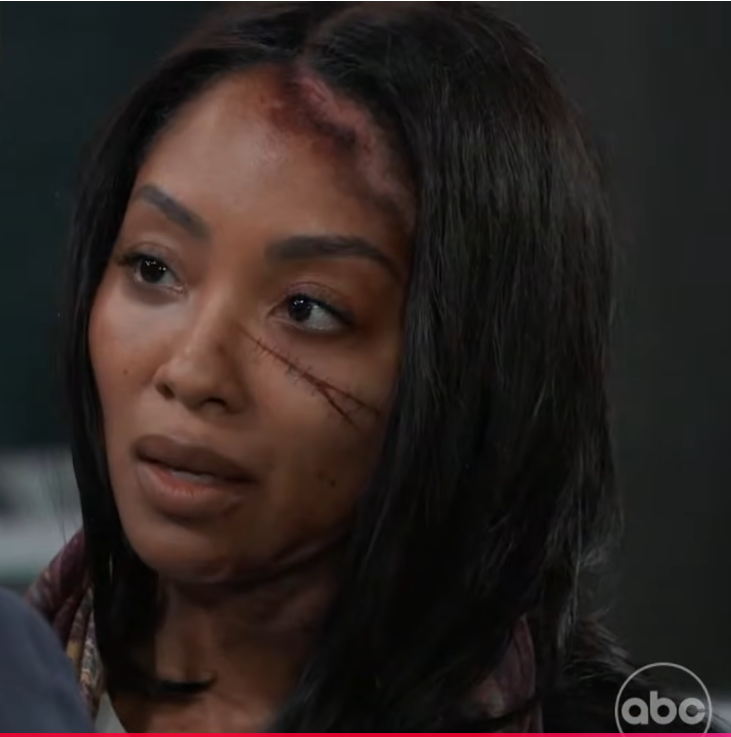
Even harsher criticism emerged from fans who argued that the scene betrayed basic common sense. Many pointed out that Jordan’s own hair would have hidden the scars better than the scarf did. Others questioned why makeup, bandages, or a more subtle approach were never considered. To longtime viewers, the entire situation felt oddly theatrical rather than realistic. What made the frustration worse was the belief that General Hospital seemed determined to force emotional symbolism instead of allowing the moment to feel natural. Fans were not rejecting Jordan’s insecurity about her appearance; they were rejecting what they saw as a poorly executed attempt to visually represent it.
At the heart of the backlash is an important emotional contradiction that many viewers cannot ignore. Jordan has long been portrayed as one of the strongest, smartest, and most confident women in Port Charles. For years, she survived danger, betrayal, and emotional heartbreak without collapsing under pressure. That history makes this sudden shift especially jarring for longtime fans. Viewers are not necessarily criticizing Jordan for feeling insecure after a traumatic accident. In fact, many understand that facial scars can deeply affect someone’s confidence. The issue, according to critics, is the way the show chose to express that insecurity. Instead of subtle emotional storytelling, fans feel GH pushed the drama so far that Jordan suddenly felt unfamiliar, exaggerated, and strangely disconnected from the woman audiences had come to admire.
Still, not every viewer completely rejected the scene. A smaller but passionate group defended Jordan, arguing that people who experience burns, scarring, or physical trauma often struggle emotionally before they are ready to face the world again. These fans believe viewers are being too harsh and ignoring the real psychological impact disfigurement can have on confidence and identity. From this perspective, Jordan’s dramatic appearance was less about logic and more about fear, vulnerability, and emotional survival. Yet even some supporters admitted the visual execution may have unintentionally undermined the emotional message.
What makes this backlash so fascinating is that it reveals a growing frustration fans have with the current direction of General Hospital storytelling. The outrage is not really just about a scarf. It is about trust. Viewers want emotional moments to feel earned, believable, and true to the characters they love. When storytelling starts feeling forced or visually confusing, audiences notice immediately. And right now, many GH fans feel the writers may have crossed a line between emotional drama and accidental parody.
If General Hospital hoped Jordan’s appearance would spark conversation, then mission accomplished. Social media exploded, comment sections caught fire, and viewers clearly have strong feelings about what happened. But the uncomfortable truth for GH may be this: fans are not talking because they were moved. They are talking because they are confused. And unless the show finds a smarter way to balance emotion with realism, Jordan’s infamous scarf moment may go down as one of the most unintentionally funny soap opera scenes fans have seen in a very long time.
