When Rory Gibson stepped into the role of Michael Corinthos, most General Hospital fans saw it as nothing more than a risky replacement. After all, Chad Duell had embodied Michael for years, making the character feel familiar, emotional, and deeply connected to the show’s legacy. So when the recast happened, backlash exploded almost instantly. Social media became flooded with criticism, comparisons, and frustration from viewers unwilling to embrace a new face. To many, it looked like an unnecessary gamble that could never truly work. But looking back one year later, a surprising theory is beginning to gain traction—what if this was never simply about replacing Chad Duell? What if the recast was always designed to reshape Michael into something entirely new?
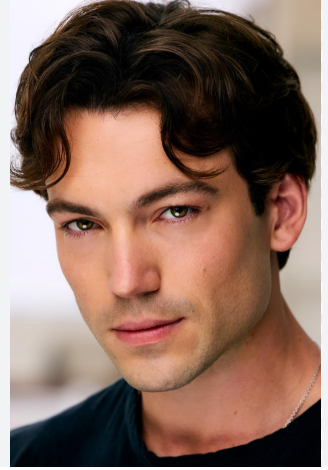
Behind the scenes, the evolution of Michael’s character seems far too intentional to ignore. For years, Michael functioned as someone caught in emotional storms rather than controlling them. He reacted to betrayal, family conflict, and chaos, often serving as a moral center rather than a strategist. But after Rory Gibson took over, the energy surrounding the character noticeably changed. Suddenly, Michael became quieter, more measured, and strangely harder to read. Instead of emotionally responding to situations, he started watching them unfold with patience and restraint. That dramatic tonal shift feels deliberate, suggesting there may have been a larger long-term creative plan at work from the very beginning.
A major reason this transformation stands out comes down to Rory Gibson’s acting choices. Rather than attempting to imitate Chad Duell’s version of Michael, Gibson appears to have built his own interpretation from the ground up. His portrayal depends heavily on subtle expressions, lingering glances, and carefully restrained emotions rather than dramatic reactions. There are scenes where Michael barely speaks, yet somehow commands attention through silence alone. Fans have increasingly pointed out how much emotion seems hidden behind his eyes, with many viewers saying he communicates more through pauses and looks than through dialogue itself. That level of nuance feels purposeful—as if Gibson’s performance was carefully designed to fit a much darker and more controlled version of Michael.
Of course, none of this happened overnight. The early reaction from fans was undeniably harsh. Many longtime viewers openly rejected the recast, insisting that Chad Duell’s presence simply could not be replaced. Every performance sparked endless comparisons, and resistance remained loud for months. But over time, something unexpected slowly began to happen. Conversations shifted. What started as criticism evolved into cautious acceptance, and eventually curiosity. Fans who once dismissed Rory Gibson outright began noticing subtle changes in Michael’s behavior and tone that made the character unexpectedly compelling. Without fully realizing it, audiences were gradually adjusting to an entirely different version of someone they thought they already knew.
What makes this shift even more fascinating is the growing possibility that the storyline itself may have been crafted specifically around Rory Gibson’s strengths. Rather than forcing a new actor to replicate an established character, it increasingly feels like producers intentionally chose someone capable of unlocking a hidden side of Michael that audiences had never fully seen before. Recent storylines strongly support that idea. Michael no longer seems trapped inside the drama—he observes it. He notices details others overlook. He questions motives that everyone else blindly accepts. And in a world dominated by lies, manipulation, and betrayal, someone quietly collecting information becomes far more dangerous than anyone openly causing chaos.
Now, after a full year in the role, many viewers are starting to recognize what may have been unfolding all along. Fans who once fought against the recast are now talking about how controlled, intense, and quietly powerful Michael feels compared to previous versions. More importantly, they are paying attention to the small details: the silence before a response, the unreadable expressions, the tension hidden beneath calm moments. Michael no longer feels like someone being dragged through the story—he increasingly feels like someone preparing to shape it.
As current storylines continue to unfold, the implications of this transformation become impossible to ignore. Michael is no longer positioned as the man constantly blamed, manipulated, or sidelined by those around him. Instead, he is slowly becoming the person who understands the bigger picture before everyone else does. In Port Charles, where secrets hold more power than loyalty, that kind of awareness can turn someone into a major threat overnight. And if this evolution continues, Michael may soon become one of the most unpredictable players in the entire show.
Because ultimately, this was never only about recasting an actor. It was about reinventing Michael Corinthos from the inside out. The version of Michael that many fans initially rejected is now becoming the version audiences can’t stop watching—more mysterious, more strategic, and potentially more dangerous than ever before. What once sparked outrage has quietly transformed into anticipation.
This wasn’t just a casting replacement.
It was a complete reset.
And one year later, the Michael nobody expected to accept might end up changing General Hospital forever.
