General Hospital may be quietly building toward one of the most emotional and devastating double-twists in recent memory — and many viewers may not even realize the clues are already there. What if Britt Westbourne was never truly suffering from Huntington’s disease? And what if Rocco’s decision to run away with her had nothing to do with guilt or sympathy, but everything to do with a hidden biological connection? Looking closer at Britt’s current story, the pieces seem to hint at a massive rewrite of both her illness and Rocco’s past.
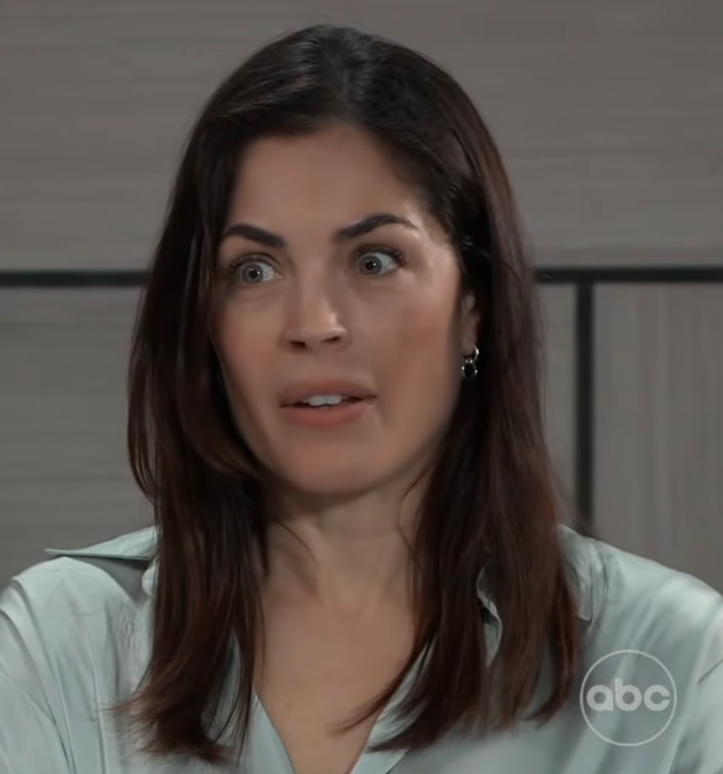
The first major clue lies in Britt’s strange dependence on the medication secretly supplied by Cullum. Britt recently admitted that without those drugs, she may only have a few months left to live. But that detail immediately raises suspicion. Huntington’s disease does not normally spiral out of control simply because medication stops for a short time. However, long-term exposure to dangerous neurological treatments could absolutely create that kind of rapid collapse. Suddenly, Britt’s entire medical situation feels far more suspicious than tragic.
This possibility opens the door to an explosive new theory. What if Britt’s symptoms were never caused by Huntington’s disease at all? Her tremors, emotional instability, worsening neurological issues, and physical decline may actually point to years of damage caused by experimental treatments. GH has already established Dalton’s connection to secret biomedical research, while Cullum appears unusually invested in controlling Britt’s access to medication. Put those pieces together, and a terrifying picture starts to emerge: Britt may have spent years believing she carried a fatal inherited illness while unknowingly serving as a medical experiment.
If that theory is true, Britt’s escape from Port Charles with Rocco suddenly becomes far more meaningful. Imagine Britt arriving in Berlin only for her health to rapidly deteriorate after losing access to Cullum’s drugs. Desperate to save her, Rocco rushes her into specialized treatment, where doctors begin extensive testing on her blood, nervous system, and genetic history. But instead of confirming Huntington’s disease, the doctors uncover severe cellular damage linked to toxic neurological experimentation. In other words, Britt may not have been dying from genetics at all — she may have been poisoned over time while someone carefully convinced her she was terminally ill.
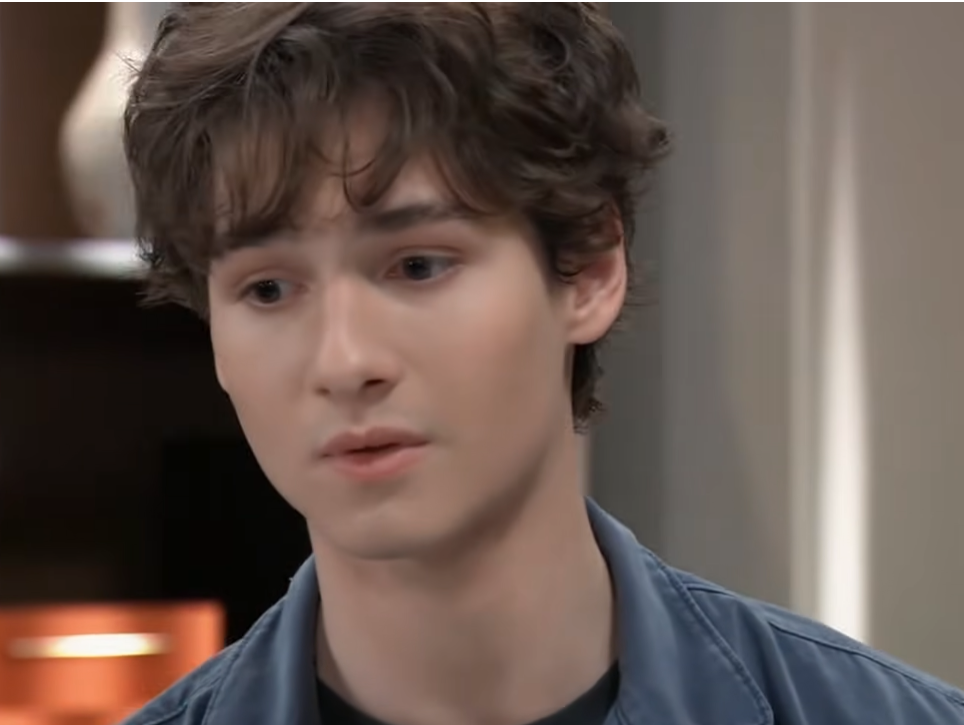
Even that shocking discovery may only be the beginning. If Britt’s body has suffered severe marrow or stem-cell deterioration due to years of chemical exposure, doctors could urgently need a compatible donor. Blood. Stem cells. Bone marrow. Someone genetically close enough to give Britt a fighting chance. Naturally, the first person doctors would test is Rocco — the teenager who refused to abandon her.
Then comes the moment that changes everything.
Rocco returns as an unusually strong biological match.
Not merely compatible.
A match so close it raises immediate questions about maternal DNA.
And just like that, GH’s infamous embryo storyline crashes back into the spotlight.
Fans have spent years questioning the complicated Britt, Lulu, and Dante baby storyline. Viewers were told Britt stole Lulu and Dante’s embryo and secretly carried the child before eventually returning him to his biological parents. But in soap operas, medical records are rarely untouchable. IVF mistakes, altered samples, hidden procedures, and secret manipulations are practically tradition. What if the original story was never completely honest? What if Britt unknowingly carried an embryo altered with her own DNA? Or worse — what if someone deliberately manipulated the IVF process years ago?
If that turns out to be true, the implications are enormous. Rocco would no longer simply be the child Britt once carried.
He would actually be her biological son.
Looking back, GH may have already hidden the emotional clue in plain sight. During their recent scenes, Rocco told Britt, “You brought me into the world,” while begging not to leave her side. At first, the line sounded symbolic — a teenager expressing gratitude toward someone who once protected him. But if this theory becomes reality, those words instantly feel like foreshadowing. Rocco’s fierce loyalty to Britt suddenly makes deeper emotional sense. He trusted her over everyone else — over Lulu, over Dante, and even over the safety of Port Charles itself. Maybe that connection was never accidental.
What makes this theory so compelling is how neatly it could solve multiple story problems at once. It explains the strange vagueness surrounding Britt’s illness. It gives meaning to Cullum’s obsessive control over her medication. It makes Dalton’s biomedical work suddenly central to the story. It even reframes Britt’s emotional behavior as someone manipulated into believing death was unavoidable. Most importantly, it offers Britt something she has rarely been allowed to have: hope.
Because perhaps the real tragedy is not that Britt is dying.
The real tragedy may be that someone stole years of her life by convincing her she already was.
