There was a moment in the May 26th episode of General Hospital that most viewers may have passed over in the rush of everything else happening at the PCPD. Dante and Lulu were reeling. Chase was chasing leads. The whole station was in motion. But in a quiet interrogation room, something far more significant was unfolding — and it had nothing to do with a search warrant or a fake passport.
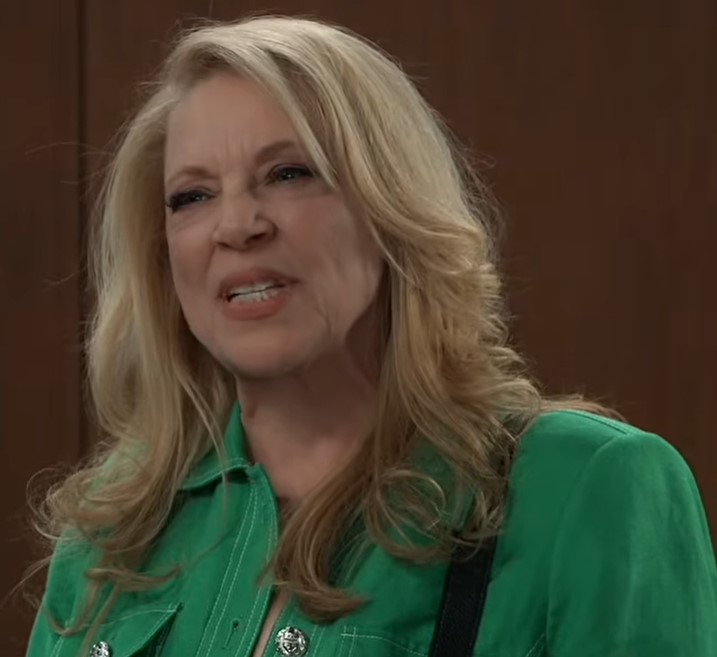
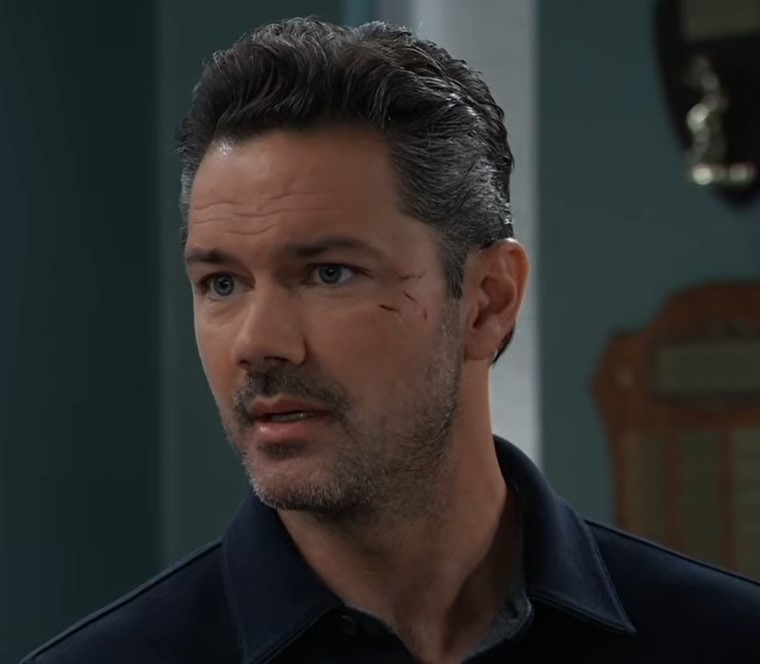
“Nathan” pulled Liesl Obrecht aside and told her they needed to find Britt before she died of Huntington’s disease. He was urgent. He was specific. He sounded, on the surface, like a desperate brother terrified of losing his sister. But Liesl Obrecht is not just a mother. She is a physician. And what she heard in that moment was not a brother’s fear — it was a pharmacist’s knowledge.
Her response was immediate and surgical: Britt’s Huntington’s had shown no sign of worsening. So why, she asked, did he believe she was going to die? The evidence is clear — that question was not born from emotion. It was born from clinical observation. Liesl has been watching Britt’s condition since the diagnosis was first made. She knows what Huntington’s disease actually looks like as it progresses. She knows the tremors, the cognitive decline, the loss of motor control that cannot be reversed by any medication currently known to medicine. And she had not seen any of it accelerating in her daughter.
Here’s what actually happened in that interrogation room: Cassius Faison — the man who has been living as Nathan West for months — made a critical error. He spoke about Britt’s medical condition with the precision of someone who controls her drug supply, not the vagueness of someone who simply loves her. A real brother, terrified for his sister, would have said: “I’m scared for her. She needs her medication.” What Cassius said instead was a clinical declaration — that without intervention, she would die. That is the language of a man who knows exactly what happens when the drug he provides is withheld. It is the language of leverage, not love.
This proves something that has been building beneath the surface of this storyline for months. The medication that Cullum and Sidwell have been supplying to Britt is not a treatment. It is a leash. And Cassius — whether as the delivery mechanism or as the architect — knows precisely how tight that leash is. When he told Liesl that Britt would die without being found, he was not warning her about Huntington’s disease. He was warning her about what happens when his drug runs out.
Liesl’s final line in that scene — that she believes there is a great deal her son is not telling her — is the most important sentence spoken in General Hospital this week. It is not the statement of a confused mother. It is the conclusion of a doctor who has just run the numbers and found that they do not add up. Huntington’s disease does not plateau. It does not hold steady. It does not respond to any experimental compound so completely that a physician finds zero clinical evidence of its presence — as Lucas Jones did when he examined Britt in September of last year and noted she exhibited no signs of the disease whatsoever.
That September examination is the detail that ties everything together. At the time, Britt accepted the explanation that Cullum’s medication was working. But a complete absence of neurological symptoms is not a treatment outcome. It is a diagnostic red flag. Liesl, if she learns of that examination, will understand immediately what it means: either Britt was never sick, or the drug she has been given is doing something far more sinister than managing a disease.
Port Charles has been waiting for someone to see through Cassius. Dante is too close to the grief of losing his son. Chase is following evidence. Jason is working from the outside. But Liesl Obrecht is standing in the same room as the impostor, looking him in the eye, and asking the question that no one else thought to ask. She is not chasing a lead. She is already at the answer. The only question now is how long it takes her to say it out loud — and what Cassius will do when he realizes she already knows.
