For years, Britt Westbourne’s Huntington’s diagnosis has been treated as one of the cruelest tragedies in Port Charles — a devastating illness passed down through family bloodlines, leaving Britt trapped in a future she believed she could never escape. But what if the entire story was built on deception? A chilling moment on May 26 may have quietly changed everything, as Liesl Obrecht appeared to notice a contradiction that no one else has fully questioned yet.
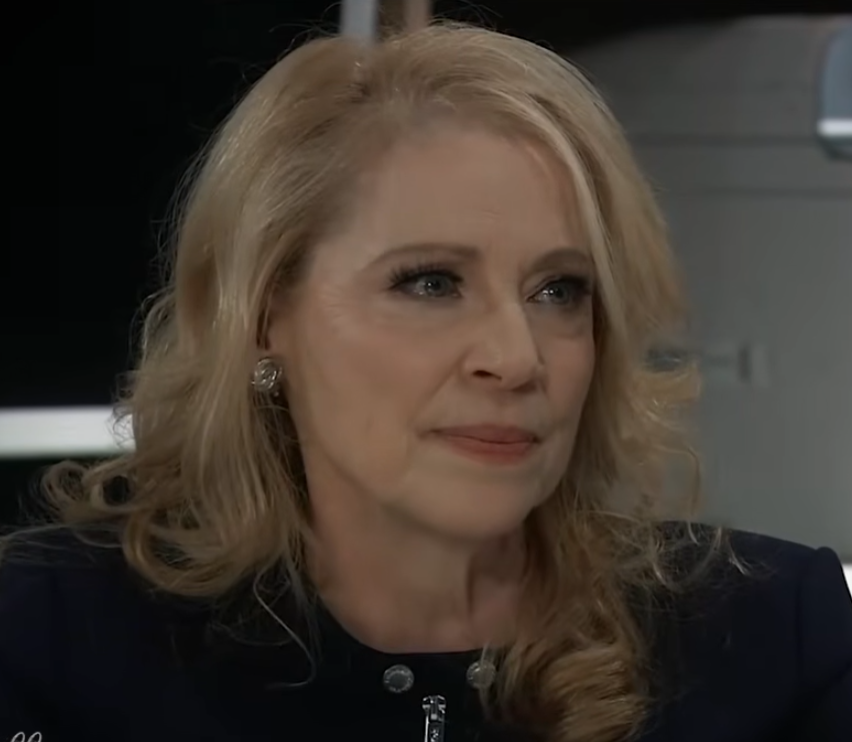
During the tense exchange inside the PCPD interrogation room, the man claiming to be “Nathan” insisted they needed to find Britt immediately because Huntington’s disease would eventually kill her. But Liesl’s reaction was not emotional panic or desperation. Instead, she responded like a doctor. She pointed out something medically troubling: Britt’s condition had shown no meaningful signs of deterioration. If Huntington’s was supposedly progressing, why was there no visible worsening? That single question may have exposed a dangerous inconsistency no one expected her to catch.
What Liesl seems to be slowly recognizing is medically impossible to ignore. Huntington’s disease is not something that suddenly stops progressing. It is a relentless neurological disorder that worsens over time, gradually damaging cognitive and motor function. There is currently no treatment capable of completely erasing all evidence of the disease. Yet when Lucas Jones examined Britt last September, he reportedly found no neurological symptoms at all — not mild symptoms, not managed symptoms, but nothing. For a patient genuinely suffering from Huntington’s, that kind of clean medical presentation simply does not make sense.
This raises a disturbing possibility that completely changes the narrative. What if Cullum and Sidwell never “saved” Britt at all? Instead of rescuing her from Huntington’s disease, they may have manipulated her into believing she needed them to survive. One explanation is that Britt’s original diagnosis may have been tampered with — altered results, falsified testing, or a medical setup she never had reason to doubt. Another possibility is even darker: the medication Cullum has been giving her may not be curing anything. It may actually be creating symptoms designed to imitate Huntington’s whenever Britt stops taking it.

If that theory is true, Britt has unknowingly been trapped inside a carefully engineered cycle of dependency. She believes she inherited a fatal illness from her father. She believes the medication is the only thing standing between her and death. Because of that fear, she complies. She stays close to the people controlling the treatment. She continues her work and avoids running away — until Rocco finally gave her a reason to fight for something bigger than survival.
Now Britt is somewhere between Port Charles and Berlin with Rocco, carrying a limited amount of medication and no clear understanding of what may happen once it runs out. If the supply disappears, she may not experience the expected progression of Huntington’s disease at all. Instead, she could go through severe withdrawal from a chemically engineered drug specifically designed to mimic the symptoms she fears most. The terrifying part is that Britt may never recognize the difference because she has spent years believing the illness itself was real.
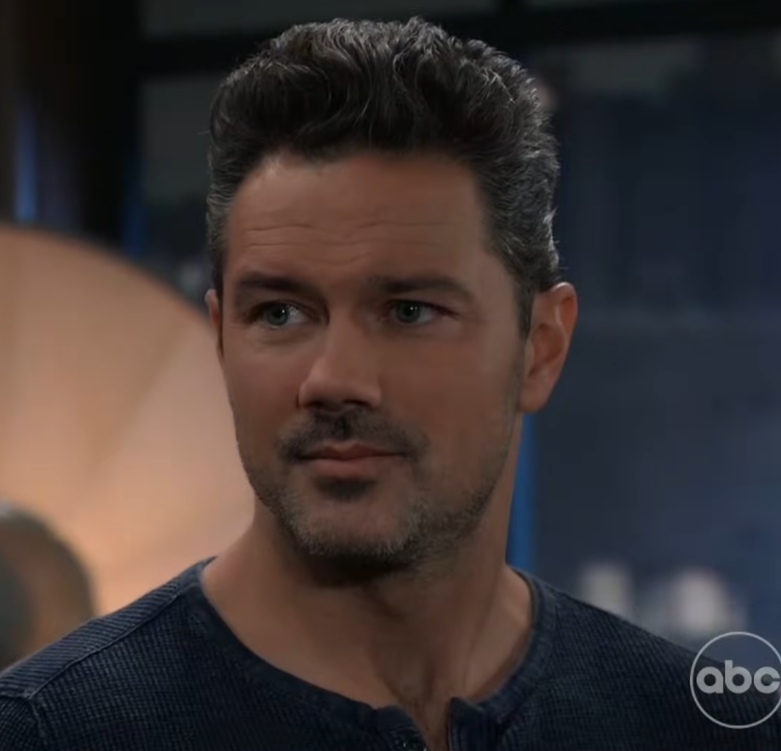
That possibility also completely reframes the urgency shown by Cassius during the interrogation. His panic may never have been about Huntington’s progression in the first place. It may have been about timing. He likely knows exactly how much medication Britt left with, how long the doses remain effective, and what happens to her body once the drug supply runs dry. So when he warned Liesl that Britt could die if they failed to reach her in time, he may have accidentally exposed something much darker — not the timeline of a disease, but the countdown of withdrawal.
Unfortunately for Cullum and Sidwell, Liesl Obrecht may be the worst possible person to have noticed this inconsistency. She is not just a worried mother; she is an experienced physician who understands medical patterns. If Liesl begins reviewing Britt’s complete medical records, contacts Lucas Jones for more details, or orders independent genetic testing from any sample she can obtain, the entire story could collapse almost overnight. No legitimate Huntington’s diagnosis. No miracle treatment. Just a devastating manipulation built on fear and control.
The most heartbreaking part of this theory is what it would mean for Britt herself. Years of obedience. Years spent working, sacrificing freedom, and living under the belief that death was already written into her future. If this deception turns out to be real, Britt may discover that the disease she spent years trying to outrun never truly existed at all. Liesl may not have every answer yet, but she now has the one thing that matters most in General Hospital: doubt. And once doubt enters Port Charles, secrets rarely stay buried for long.
