For years, Britt Westbourne’s Huntington’s disease diagnosis has stood as one of the most devastating tragedies in Port Charles. The illness, believed to be inherited through her family bloodline, shaped every major decision in Britt’s life and convinced her that her future had already been written. But what if everything Britt believed was built on a lie? A quiet but chilling moment on May 26 may have hinted at something no one expected — Liesl Obrecht may have finally spotted a contradiction that could destroy the entire story surrounding Britt’s illness.
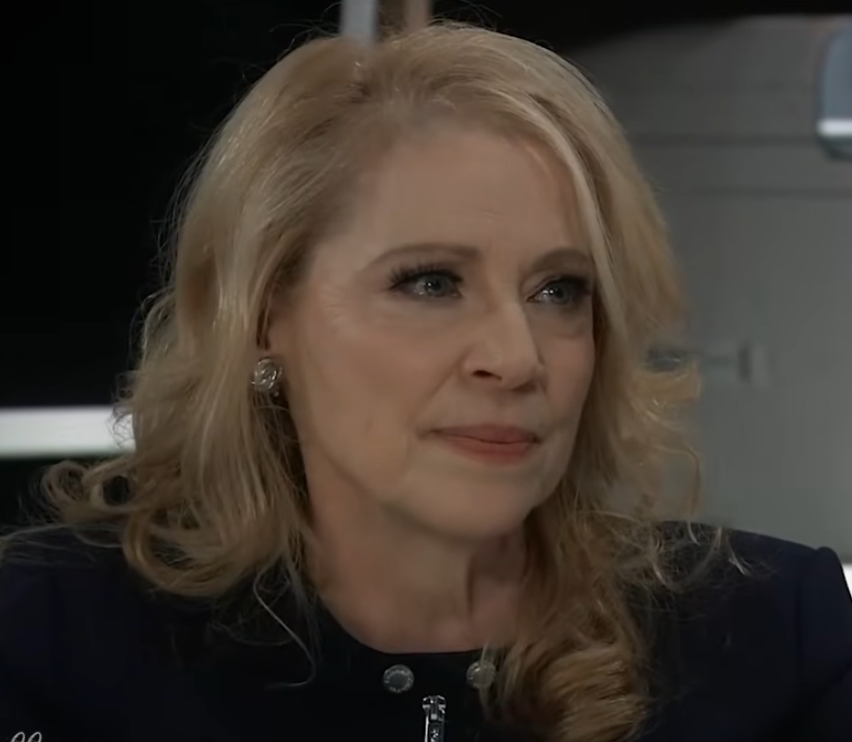
Inside the tense atmosphere of the PCPD interrogation room, the man identifying himself as “Nathan” urgently insisted that Britt needed to be found immediately because Huntington’s disease would eventually kill her. However, Liesl’s reaction was far from emotional panic. Instead of responding as a frightened mother, she responded like a physician. Rather than focusing on fear, Liesl questioned something deeply troubling from a medical standpoint: Britt’s condition had not visibly worsened. If Huntington’s disease had truly been progressing all this time, why were there no obvious signs of deterioration? That single observation may have quietly uncovered a major inconsistency.
The issue Liesl appears to be recognizing is difficult to dismiss medically. Huntington’s disease is known as a progressive neurological disorder that steadily worsens over time, affecting movement, cognition, and behavior. There is no known cure capable of completely removing all evidence of the illness. Yet when Lucas Jones reportedly evaluated Britt last September, he found no neurological abnormalities whatsoever. No noticeable decline. No early symptoms. Nothing that would reasonably support an active Huntington’s diagnosis. For someone supposedly battling an inherited fatal disease, such a clean medical assessment raises serious questions.

That realization introduces a disturbing possibility that could completely rewrite Britt’s story. What if Cullum and Sidwell never actually saved her? Rather than rescuing Britt from Huntington’s disease, they may have manipulated her into believing she depended on them to survive. One possible explanation is that Britt’s diagnosis itself was tampered with through falsified medical records, altered genetic testing, or manipulated results that she never had reason to challenge. But an even darker theory exists: the medication Britt relies on may not be treating a disease at all. Instead, it may have been designed to create symptoms that resemble Huntington’s whenever she stops taking it.
If that theory proves true, Britt may have unknowingly spent years trapped inside a carefully controlled system of dependency. Convinced she inherited a fatal condition from her father, Britt believed the medication was the only thing protecting her from a terrifying decline. Fear became the tool that kept her compliant. She remained close to the people overseeing her treatment, continued working under pressure, and never truly attempted to escape — until Rocco entered the picture and gave her something more important than survival to fight for.
Now, Britt is somewhere between Port Charles and Berlin with Rocco, carrying only a limited supply of medication and no real understanding of what may happen when it runs out. If the drugs disappear, she may not experience Huntington’s progression at all. Instead, Britt could face severe withdrawal from a chemical dependency specifically engineered to imitate the symptoms she has feared for years. The most heartbreaking part is that Britt herself may never recognize the difference because she has spent so long believing the illness was real.
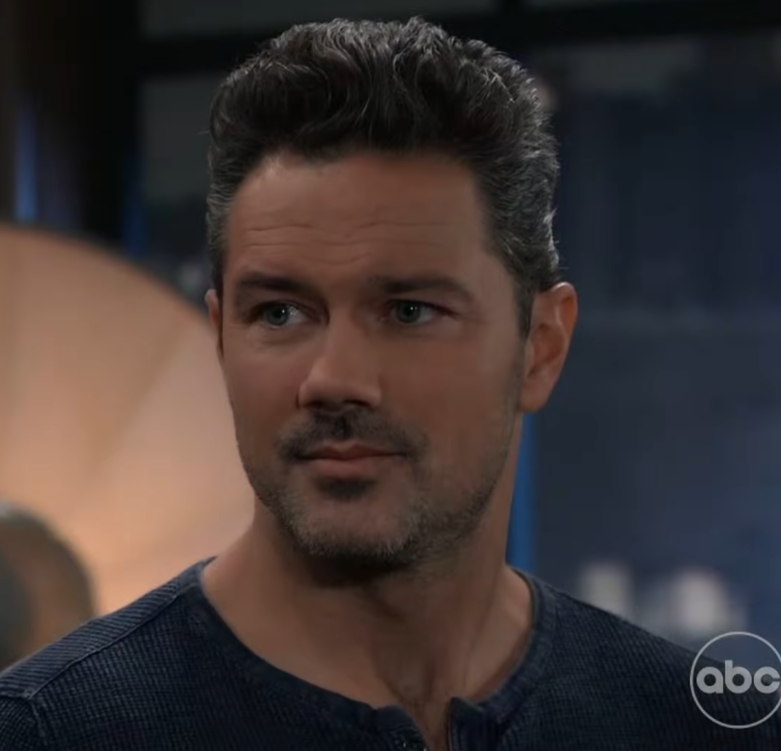
This theory may also completely change the meaning behind Cassius’ panic during the interrogation. His urgency may never have been about Huntington’s disease worsening. Instead, it could have been about timing. Cassius likely understands exactly how much medication Britt has remaining, how long its effects last, and what might happen to her once she no longer has access to it. So when he warned Liesl that Britt could die if they failed to find her quickly, he may have unintentionally exposed a much darker truth — not the timeline of a deadly disease, but the dangerous countdown of withdrawal.
Unfortunately for Cullum and Sidwell, Liesl Obrecht may be the worst person possible to notice such an inconsistency. She is not only Britt’s mother but also an experienced doctor with deep medical knowledge. If Liesl begins examining Britt’s medical history more closely, consults Lucas Jones for details, or pushes for independent genetic testing, the entire illusion could collapse. No legitimate Huntington’s diagnosis. No miracle cure. Just years of manipulation fueled by fear, deception, and control.
Perhaps the saddest part of this possibility is what it would mean for Britt herself. Years of sacrifice. Years spent obeying rules and surrendering freedom because she believed death was inevitable. If the truth eventually comes out, Britt may learn that the disease she spent years trying to survive never existed in the first place. Liesl may not have uncovered the full truth yet, but she now possesses something incredibly dangerous in Port Charles: doubt. And once doubt begins to spread, buried secrets rarely stay hidden for long.
