Dante’s latest confrontation with Cullum feels disturbingly different from an ordinary investigation. What should be a simple cop questioning a suspect carries an emotional weight that is impossible to ignore. Every glance Dante gives him feels loaded, every pause strangely personal. Instead of approaching Cullum with straightforward suspicion, Dante seems instinctively drawn into something deeper. It almost feels as though his subconscious recognizes something long before his mind can process it. This tension doesn’t come across as coincidence—it feels like forgotten memories desperately trying to return.

What makes the situation even more unsettling is Cullum’s strange confidence during their interactions. He never behaves like a cornered suspect trying to defend himself. Instead, he speaks with unusual calm, as though he already understands Dante better than anyone else in the room. His words are carefully chosen, calculated, and psychologically sharp. Rather than simply avoiding accusations, Cullum seems to deliberately challenge Dante emotionally. That difference matters. Because someone with deep knowledge of manipulation and conditioning would know exactly how to provoke the reactions Dante cannot fully explain.
Dante’s history with the WSB suddenly becomes impossible to ignore. His trauma was never neatly resolved—it was buried. Psychological conditioning leaves damage that rarely disappears completely. Memories become fractured, identities blur, and the people responsible often vanish from conscious recollection. Dante may still carry emotional scars from what happened to him without remembering the faces connected to those events. That missing piece could be the most dangerous secret of all. Because the man responsible for shaping his pain may already be standing directly in front of him.
The possibility that Cullum personally participated in Dante’s conditioning suddenly connects countless unanswered questions. Maybe Cullum wasn’t simply involved from a distance or reading reports afterward. What if he was much closer than anyone imagined? A handler. Someone assigned to observe, monitor, and psychologically shape Dante during the darkest period of his life. The person giving instructions, pushing limits, and embedding responses deep into his subconscious. If Cullum once held that role, then the uneasy familiarity between them suddenly makes terrifying sense.
This theory also changes the meaning behind everything Cullum is doing now. What if he is not merely trying to outsmart Dante or escape justice? What if he is quietly studying him? Every contradiction, every cryptic comment, every carefully controlled exchange could actually be a test. Cullum may be trying to discover whether Dante has truly broken free from his past conditioning—or whether fragments of that programming still remain buried beneath the surface. If that’s true, then this case is no longer about solving crimes. Dante himself becomes the experiment.
Even darker possibilities begin to emerge when considering how conditioning actually works. Psychological programming often depends on triggers—specific phrases, tones, or repeated patterns capable of unlocking buried responses. If Cullum played a role in creating Dante’s mental conditioning, then he may still know exactly how to activate it. That possibility transforms the danger completely. Dante is no longer risking failure in an investigation. He may be risking control over his own mind.

The emotional stakes of the story suddenly become much more personal. Dante isn’t just chasing another criminal—he may unknowingly be confronting the architect of his deepest trauma. Every answer he uncovers could force memories back to the surface, exposing painful truths he never fully processed. The closer he moves toward exposing Cullum, the closer he gets to confronting the darkest parts of himself. And some truths, once remembered, cannot be buried again.
At the same time, this theory explains why Cullum appears strangely fixated on Dante in the first place. Their repeated encounters no longer feel random. Instead, everything starts to seem carefully planned. The timing, the conversations, even the circumstances surrounding the investigation begin to look orchestrated. Perhaps Dante was never chosen for this case because of his skills alone. Maybe Cullum specifically wanted him involved. Not as an opponent—but as someone he needed to observe.
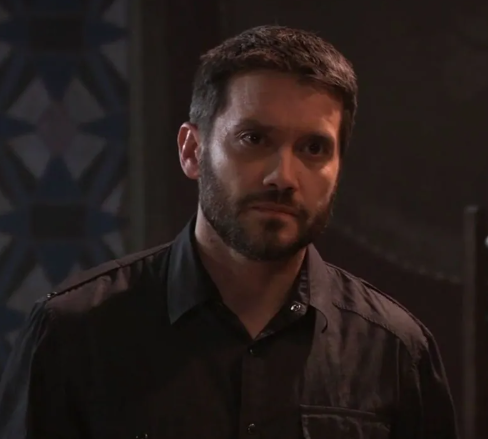
If this theory turns out to be true, the biggest turning point won’t come from proving Cullum’s crimes. The real explosion will happen the moment Dante finally understands why Cullum feels so hauntingly familiar. Recognition could instantly transform confusion into horrifying clarity. Once Dante realizes who Cullum truly is, their relationship changes forever. No longer investigator versus suspect—but something much darker: the weapon confronting the man who helped build it.
Ultimately, this story becomes far bigger than justice or revenge. It transforms into a battle over identity, freedom, and control. Dante’s greatest challenge may not be exposing Cullum—but proving he is no longer controlled by the damage of his past. And if Cullum truly helped shape the darkness Dante carries, defeating him may finally sever the last painful connection to the life Dante thought he escaped long ago.
