The arrival of Cassius Faison shook Port Charles to its core, especially after supposed evidence quickly convinced nearly everyone that he was connected to Nathan West. DNA results and fingerprint records appeared to settle the matter, making the claim feel undeniable. But beneath the emotional reactions and desperate hope lies one devastating oversight no one seems willing to confront. The one DNA test that should have mattered most was never actually done. Everyone accepted the story that Cassius was Nathan’s twin brother, yet nobody stopped to ask the most important question: was Cassius ever genetically tested against Liesl Obrecht herself? Shockingly, the answer appears to be no.

At the center of this growing mystery is a major misunderstanding about the DNA evidence. Matching Cassius to Nathan only establishes one thing — that the two men share similar genetic markers. That does not automatically confirm that Liesl is Cassius’ biological mother. A maternal DNA comparison would have been required to prove such a connection, but no such confirmation has ever been revealed. In fact, there has been no indication that Liesl even submitted a sample. For a story built entirely around the claim that Cassius is her long-lost son, the absence of that evidence feels impossible to ignore.
Even more troubling is the fingerprint evidence, which may completely dismantle the twin narrative. The official explanation insists Cassius and Nathan are identical twins, but science presents an enormous problem with that claim. Identical twins may share the same DNA profile, yet they do not possess matching fingerprints. Fingerprints develop uniquely before birth and remain exclusive to every individual for life. Reports suggesting Cassius’ fingerprints matched Nathan’s should have triggered immediate suspicion. There are only a handful of explanations, and none of them support the official story. Either the evidence was manipulated behind the scenes, or Cassius is somehow Nathan himself. Scientifically speaking, identical twins having perfectly identical fingerprints simply does not happen.
The timeline involving Cesar Faison creates another contradiction that feels impossible to explain away. Years ago, Liesl successfully hid her pregnancy from him, meaning Faison never knew Nathan existed. When Nathan was later shot, Faison reportedly learned for the first time that Nathan was his biological son — a revelation treated as a major turning point. But Cassius’ story creates a glaring inconsistency. If Faison allegedly stole him at birth and secretly separated twin brothers, how could he orchestrate that plan without even knowing Liesl had been pregnant? A man cannot steal a child he never knew existed, making the official explanation dangerously unstable.
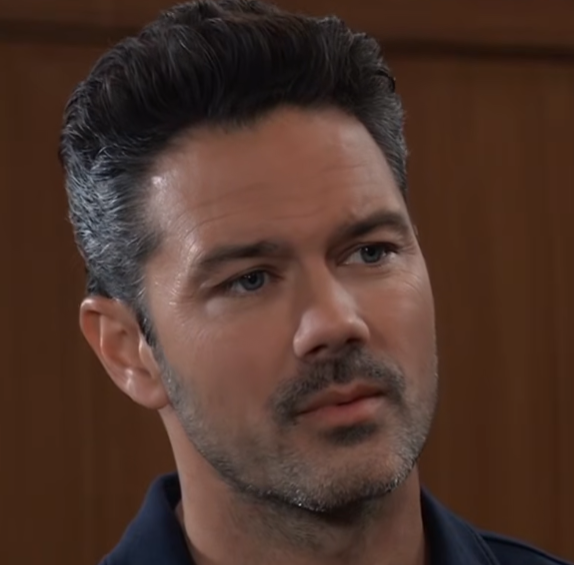
Liesl’s own history only adds more doubt. Throughout the years, she has spoken repeatedly about Nathan’s birth, the painful sacrifices she made, and the secrets she kept hidden from Faison. She revisited those memories countless times, discussing the heartbreak and regret tied to losing her son. Yet one detail has never surfaced — not once has Liesl ever mentioned giving birth to twins. There has been no grief over another missing child, no hidden trauma connected to a second baby, and no suggestion that Nathan ever had a sibling. Even her recent behavior feels unusual. Whenever Nathan’s family history comes up, Liesl seems reflective rather than emotional, almost like someone questioning information instead of remembering it.
So if Cassius is not Nathan’s twin brother, who is he really? One possibility immediately explains the fingerprint mystery: Cassius could actually be Nathan, somehow surviving after his presumed death, with altered memories and a fabricated identity. Under that theory, matching fingerprints suddenly make perfect sense because they belong to the same person. Another possibility is that Cassius is a completely different son of Faison, born to another woman and reshaped through false records or even cosmetic alterations to resemble Nathan. There is also the chance that Cassius has ties to Liesl’s past without sharing any biological connection to Nathan at all, meaning the DNA evidence may have been manipulated from the very beginning.
Perhaps the saddest part of this entire story is the emotional damage waiting to unfold for James West. Nathan’s son has slowly started accepting Cassius as family, embracing him as a connection to the father he lost too soon. Cassius has stepped into that role, building trust and emotional closeness with the child. But if the truth eventually proves the twin story false, James could suffer another heartbreaking loss. This would no longer be just a mystery about identity — it would become the story of a child forced to lose a father figure all over again.
Ultimately, Port Charles may have fallen for the deception because people desperately wanted hope. Liesl longed for another chance with Nathan. James wanted family. Even Lulu wanted answers. Someone like Sidwell could have easily understood those emotional vulnerabilities and used them to make an impossible story feel believable. Which raises the real mystery no one can ignore anymore: if the DNA evidence was manipulated, who arranged it? Because if the foundation of Cassius’ identity turns out to be fabricated, then everything he has told Liesl, James, and everyone else may have been part of a carefully constructed lie from the very beginning.
