General Hospital may have just planted one of the most devastating ironies in Willow’s political story, and almost everyone missed it. Moments before Joe Fitzpatrick appeared with a search warrant for Willow’s SUV, Curtis Ashford suggested that Aurora Media publish a profile celebrating her growing political career. At first, it sounded like the perfect opportunity to introduce Willow as Port Charles’ newest rising leader. But what if that article isn’t the beginning of her success? What if it becomes the document that destroys everything she has worked to build?
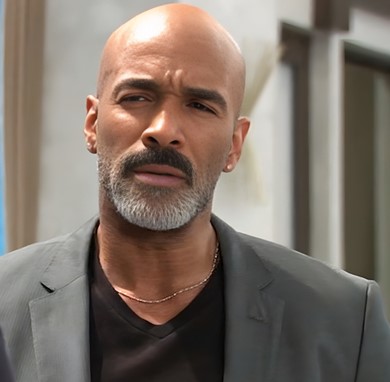
Curtis’ proposal wasn’t a casual conversation. As the head of Aurora Media, he wasn’t simply complimenting Willow or making small talk. He was talking about giving her positive media exposure at exactly the moment her political career seemed ready to take off. The timing made it feel like Willow was finally stepping into the spotlight as a respected congresswoman, a public servant dedicated to helping families through the universal daycare initiative, and someone voters could trust. Aurora’s profile had the potential to become the foundation of her public image.
Then General Hospital completely changed the tone of the scene.
Before Curtis and Willow could even enjoy that promising moment, Joe Fitzpatrick walked into Metro Court carrying a search warrant for Willow’s SUV. Suddenly, the conversation wasn’t about public service anymore. It was about a police investigation. Instead of discussing campaign goals or community projects, Willow found herself facing questions about where her vehicle had been and whether it could be connected to Jordan’s hit-and-run investigation. The emotional whiplash was impossible to ignore.
What makes this sequence so fascinating is that Curtis witnessed both versions of Willow within minutes. First, he saw the ambitious politician preparing for positive press coverage. Seconds later, he watched that same politician become the subject of a criminal investigation. It feels far too deliberate to be a coincidence. General Hospital could have introduced the search warrant anywhere, but the writers chose to place it immediately after Curtis suggested writing Willow’s profile. That creative decision may be the biggest clue of all.
If Aurora Media moves forward with the profile after news of the search warrant becomes public, the article could instantly become something completely different. Every sentence praising Willow’s honesty, leadership, and integrity would be read through a new lens. Readers wouldn’t see an inspiring political profile anymore. They would see glowing headlines about a congresswoman whose SUV had just become evidence in an active investigation. The contrast alone could be enough to destroy public confidence, regardless of whether Willow is ultimately proven innocent.
That possibility also creates an impossible position for Curtis. As a journalist and media executive, he cannot simply pretend the investigation never happened. If Aurora publishes a purely positive feature while ignoring the biggest news surrounding Willow, the publication risks losing credibility. On the other hand, if Curtis changes direction and reports on the investigation, he could become the very person responsible for dismantling the public image he had only just begun to build. The cruel irony is that Curtis may not need to attack Willow at all. He only has to do his job.
The search warrant itself may not even be the most dangerous part of this story. Search warrants don’t prove guilt, and investigations don’t automatically end political careers. However, public perception often changes long before legal conclusions are reached. In politics, reputation can collapse overnight, especially when carefully crafted campaign messaging collides with breaking news. Willow’s greatest loss may not be her SUV or even the investigation itself. It may be the trust she desperately needs from the people she hopes to represent.
Looking back at the sequence of events, the structure feels almost cinematic. Curtis offers Willow the media spotlight. Willow smiles, believing her future is brighter than ever. Then Joe arrives with a search warrant that changes the entire conversation. One hopeful scene instantly becomes a public relations nightmare. It’s difficult to believe the writers arranged those moments back-to-back without wanting viewers to notice the symbolic connection.
Of course, this remains a theory rather than a confirmed storyline. General Hospital has not revealed what Aurora Media will ultimately publish or whether Curtis will be forced to cover the investigation. Still, the timing of these scenes has sparked an intriguing possibility. The writers may be setting up a story in which Willow’s greatest enemy isn’t the police investigation itself but the collapse of the carefully crafted image surrounding her.
If that’s where General Hospital is heading, the tragedy won’t be that Curtis betrayed Willow. It will be far more heartbreaking than that. Curtis may never intend to hurt her. He may simply write the story the public deserves to read. And in doing so, the article that was supposed to launch Willow’s political future could become the very headline that buries it forever.
