Drew Cain and Ava Jerome could be heading toward the most outrageous wedding in General Hospital history, and love has absolutely nothing to do with it. With Jack Brennan dead, investigators closing in, and their carefully buried secrets threatening to explode, one shocking possibility is emerging from Monet’s legal strategy: a marriage designed to keep two desperate people from destroying each other in court. What should be a celebration of commitment could instead become a calculated attempt to escape prison, silence a dangerous witness, and protect a scandal neither Drew nor Ava can afford to expose.
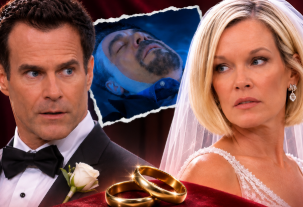
The trouble began long before anyone considered wedding bells. Drew and Ava made a devastating decision when they drugged Brennan, setting off a chain of events that ended with his body discovered in the Metro Court swimming pool. Rather than alerting authorities, they concealed his death and buried the evidence of what had happened. Now their involvement threatens to unravel, and the investigation has become a nightmare. Even without proof that either deliberately caused Brennan’s drowning, their actions have left them vulnerable to serious criminal consequences.
Drew understands the danger better than he wants to admit. His decision to hire Monet was not simply about defending his reputation. He needs someone capable of protecting his freedom while keeping his connection to Brennan’s death from destroying his relationship with Scout. Returning to prison would be devastating, but losing his daughter could be even worse. That desperation makes Drew willing to consider increasingly ruthless measures, especially when Ava represents the one weakness he cannot completely control.
Monet quickly identified the problem. Two people sharing a dangerous secret can become each other’s greatest enemies once prosecutors begin offering deals. If Ava believes Drew intends to sacrifice her, she has every incentive to cooperate with investigators. If Drew suspects Ava is preparing to talk, he could retaliate first. Their partnership is already built on mistrust, and the possibility of one turning against the other creates an explosive legal vulnerability that Monet cannot afford to ignore.
Then came the detail that changed everything. Drew revealed that he had secretly recorded a conversation with Ava, preserving potential evidence he could use against her. Instead of reassuring Monet, the recording demonstrated just how fragile their alliance had become. Drew was already preparing for betrayal, and Ava had no reason to believe he would protect her if his own freedom were threatened. Monet hinted at a way to keep Ava from testifying against Drew, opening the door to an extraordinary possibility.
A wedding could become the ultimate legal maneuver. Certain marital privileges can restrict compelled testimony or protect confidential communications between spouses, although those protections are limited and do not automatically cover earlier conversations or criminal conduct. A rushed marriage would not erase evidence or guarantee immunity. Nevertheless, Monet could attempt to use the relationship to complicate the prosecution’s strategy. For Drew, even the possibility of making Ava a less useful witness could be worth the risk.
But Ava would have every reason to hesitate. Marrying Drew would mean attaching her future to a man who already possesses a secret recording of her. She could find herself trapped between a criminal investigation and a husband whose loyalty extends only as far as his own survival. Ava has endured dangerous relationships before, but this arrangement could become something even more terrifying: a marriage where every promise carries an unspoken threat.
Meanwhile, the authorities are building pressure from another direction. Alexis Davis has provided information about Brennan’s troubling confrontation with Drew, raising questions about what Brennan knew concerning Drew’s political past. Investigators are also examining evidence that could connect Drew to attempts to redirect suspicion. The more they uncover, the harder it becomes for Monet to control the damage. A wedding might complicate testimony, but it cannot eliminate independent witnesses, physical evidence, or unanswered questions about Brennan’s final hours.
The greatest threat could come from something Drew and Ava never anticipated. Brennan’s death remains surrounded by uncertainty, and the exact circumstances of his arrival in the pool are crucial. If another person crossed his path after he left Ava, that encounter could transform the entire investigation. A single overlooked clue might expose a truth neither suspect knows, rendering their elaborate marriage strategy useless.
There is also the question of whether Ava would accept the proposal at all. She might recognize that cooperating with prosecutors offers a safer path than becoming permanently entangled with Drew. Alternatively, Drew’s secret recording could leave her feeling she has no choice. Either decision could ignite a confrontation powerful enough to destroy their fragile alliance.
Monet’s rumored marriage solution could therefore become a spectacular disaster. Instead of shielding Drew and Ava from prosecution, a sudden wedding might intensify suspicion and reveal how frightened they truly are. The ceremony could be lavish, the rings expensive, and the vows convincing, but none of it would change the deadly secret hanging over their heads.
Will Drew convince Ava to become his wife to protect their freedom, or will she recognize the wedding as another trap before it is too late? With Brennan’s death still unresolved and investigators moving closer to the truth, Port Charles could witness a marriage that begins with a promise of protection and ends with two arrests. The most dangerous part of this wedding is not who says “I do.” It is who decides to betray the other first.
