General Hospital is facing another explosive controversy, and Amanda Setton’s wardrobe has become the center of a backstage mystery that refuses to die! Brook Lynn Quartermaine has spent years appearing in oversized jackets, long trousers, and conservative outfits while other Port Charles women regularly enjoy glamorous fashion transformations. Now, an unsettling question continues to haunt the discussion: Is there an undisclosed agreement controlling what Amanda Setton can wear on screen? The rumors have never been officially substantiated, but one extraordinary detail surrounding Brook Lynn’s wedding dress has introduced a contradiction that demands a closer look.
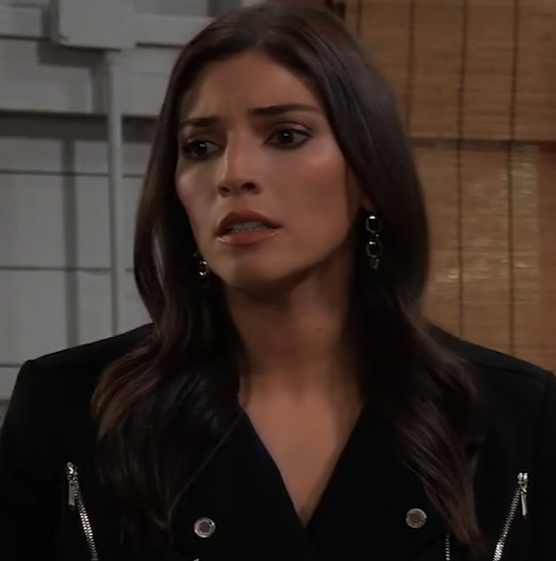
For a character born into one of Port Charles’ wealthiest families, Brook Lynn’s clothing choices have always seemed surprisingly restrained. The Quartermaines represent money, influence, and luxury, yet Brook Lynn frequently appears dressed for a corporate boardroom rather than the glamorous social events associated with her family. Her involvement with Deception makes the contrast even more striking. A woman working in the beauty industry would seemingly have endless opportunities to experiment with sophisticated fashion, but Brook Lynn’s wardrobe rarely ventures beyond familiar professional combinations.
The criticism intensified around 2022 as viewers began noticing the repetitive styling. Blazers became a defining feature of Brook Lynn’s appearance, accompanied by conservative necklines and trousers that seemed to dominate nearly every occasion. Romantic scenes, family celebrations, and important personal milestones often featured the same predictable aesthetic. What initially appeared to be a costume department preference eventually developed into a much larger debate about whether something behind the scenes was influencing these decisions.
That speculation produced one particularly controversial suggestion: Amanda Setton had supposedly negotiated a special clothing restriction into her General Hospital contract. The alleged arrangement, frequently described as a modesty clause, was said to limit revealing outfits and require more conservative wardrobe selections. Such a provision, if it existed, could provide a straightforward explanation for Brook Lynn’s unusually consistent appearance. However, the existence of this specific contractual restriction has never been established through verified public evidence.
Neither Amanda Setton nor General Hospital has publicly confirmed the rumored clause, and no authenticated contract demonstrating such requirements has emerged. That makes it essential to separate the ongoing wardrobe debate from claims about the actress’s personal preferences. Still, the unanswered questions have persisted because Brook Lynn’s styling has remained so recognizable. And an unexpected account from the production’s costume department has made the mystery considerably more intriguing.
The turning point involves Brook Lynn’s highly anticipated 2024 wedding to Harrison Chase. General Hospital costume designer Shawn Reeves previously shared details about selecting the character’s bridal gown. According to the account, Amanda Setton personally joined the shopping process, accompanied by her father. Surprisingly, the search did not require an exhausting series of fittings and rejected designs. The gown ultimately chosen was reportedly the very first dress they discovered.
That seemingly ordinary backstage detail becomes far more significant when considering the gown’s appearance. Brook Lynn’s wedding dress featured an elegant silhouette and a more open neckline than many of her everyday outfits. It represented a noticeable departure from the conservative styling that had generated years of discussion. Amanda’s personal participation in choosing the design therefore raises a compelling question: How does that decision fit with the suggestion that she insists on strict coverage whenever she appears on camera?
The bridal gown does not automatically eliminate the possibility that an actress could have specific wardrobe preferences or negotiated boundaries. A wedding dress might involve different considerations from everyday costumes. Nevertheless, the shopping story challenges the sweeping claim that Amanda categorically refuses more open designs. It also redirects attention toward the people responsible for developing Brook Lynn’s visual identity throughout the series.
Perhaps the explanation is rooted in character development rather than any contractual arrangement. Brook Lynn has changed significantly over the years, evolving from a rebellious personality into a businesswoman, wife, and mother. Her increasingly polished wardrobe could be intended to communicate maturity and stability. Yet viewers can reasonably question why those qualities must be represented through such a narrow selection of clothing. Elegance, professionalism, and individuality are not mutually exclusive.
Brook Lynn could wear luxurious dresses, distinctive accessories, sophisticated fabrics, and vibrant colors while maintaining a modest personal style. The issue does not have to involve revealing clothing at all. In fact, criticism focused on creative variety avoids unfairly placing pressure on Amanda Setton to expose more skin. Costume design should support a character’s personality, and Brook Lynn’s wealth, career, and family background offer numerous opportunities for more imaginative choices.
Ultimately, the controversy remains unresolved because the central allegation has not been verified. There is no confirmed evidence that a secret contract is forcing Brook Lynn into conservative clothing. What does exist is a long-running debate about her repetitive wardrobe and a fascinating wedding-dress account that complicates the speculation. So who is actually determining Brook Lynn’s appearance? Is Amanda Setton exercising personal influence, or has General Hospital’s costume department imposed a fashion formula that refuses to change? Until those questions receive a definitive answer, Brook Lynn’s wardrobe will remain one of the show’s most persistent backstage talking points.
