General Hospital January 6, 2026 — Deep Character Analysis & Spoiler Breakdown
There are moments in General Hospital that rely on explosive dialogue, shocking confessions, or sudden violence to leave an impact. And then there are episodes like January 6, 2026, where the most unsettling moment comes not from what a character says — but from what he doesn’t.
Michael Corinthos did not scream.
He did not protest.
He did not collapse under the weight of accusation.
Instead, he went quiet.
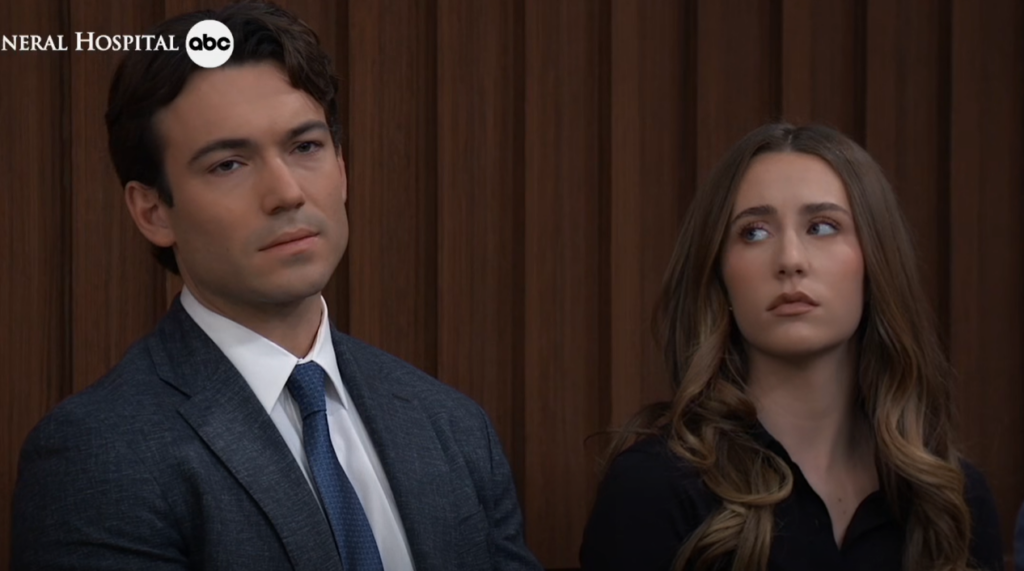
And in a courtroom drama built on words, testimony, and narrative control, Michael’s silence may be the most damning clue of all.
This episode did more than dismantle Michael’s legal alibi. It fundamentally altered how the audience is meant to view him — not as a victim of circumstance, but as a man who may have already accepted a darker truth about himself, his choices, or what is still to come.
The Collapse of an Alibi Is Not the Shock — Michael’s Reaction Is
From a purely procedural standpoint, the destruction of Michael’s alibi was inevitable. Soap operas do not spend weeks carefully constructing a defense only to let it stand untouched. The audience knew something would break.
But what wasn’t inevitable was Michael’s response.
When Jacinda’s testimony undercut the final pillar of his defense, the camera lingered on Michael just long enough to make one thing painfully clear:
this was not news to him.
There was no visible shock.
No whispered denial.
No instinctive attempt to reclaim control of the narrative.
Instead, Michael absorbed the blow with an expression that can only be described as resigned awareness.
That choice — by the writers, the director, and the actor — is not accidental. In serialized storytelling, reactions matter more than events. And Michael’s reaction suggests that the truth the court is uncovering is something he has already been living with.
A Corinthos Trait: Silence as Strategy
To understand why Michael’s quiet response is so unnerving, we need to place it in context — not just of this storyline, but of his lineage.
Michael Corinthos is Sonny’s son, whether he wants to be or not.
Sonny’s most dangerous moments have never been when he lashes out. They have been when he goes still, calculating, inward. Michael’s silence echoes that legacy — but with a crucial difference.
Sonny’s silence often precedes violence.
Michael’s silence feels like acceptance.
This distinction matters.
Michael has spent years positioning himself as the moral counterweight to Sonny’s criminal world. He rejected mob life, embraced legitimacy, and built an identity around being “better.” But General Hospital has always thrived on the idea that no one truly escapes their origins — they only find new ways to express them.
In this episode, Michael’s restraint does not read as innocence. It reads as someone who knows the battle has shifted beyond simple guilt or innocence.
Is Michael Protecting Himself — Or Someone Else?
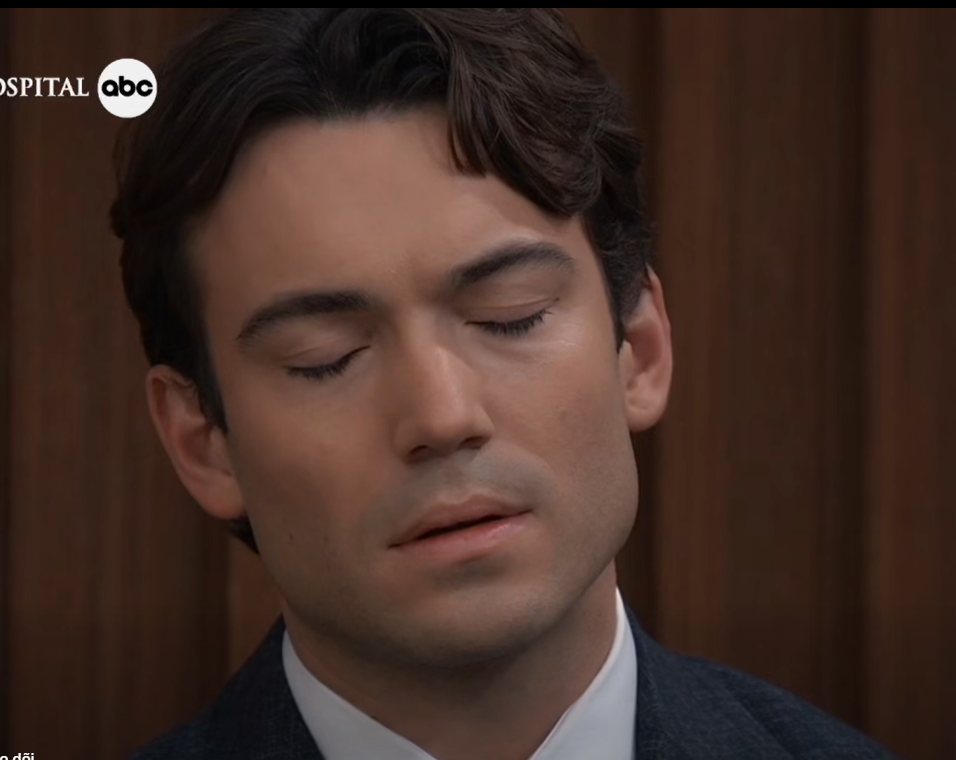
One of the most compelling questions raised by this episode is not “Did Michael shoot Drew?” but rather:
What is Michael protecting by allowing his alibi to fall apart?
If Michael were purely innocent, every instinct would push him to fight harder as the walls closed in. Yet he doesn’t. Instead, he allows the narrative to move forward without resistance.
There are several unsettling possibilities:
1. Michael Is Hiding a Different Crime
It is entirely possible that Michael did not shoot Drew — but committed another act that night that would be even more damaging if exposed. Destroying evidence? Confronting someone else? Being present when something irreversible happened?
If that’s the case, letting the alibi collapse may be a calculated decision to keep the larger truth buried.
2. Michael Believes the Truth Will Be Worse
Michael may believe that once the investigation goes further, the real story will implicate someone he cannot afford to lose — Willow, his children, or even someone he loves enough to sacrifice himself for.
His silence could be an act of containment.
3. Michael Has Already Lost Faith in the System
Years of betrayal, manipulation, and moral compromise may have finally convinced Michael that truth and justice no longer align. If so, his silence isn’t guilt — it’s disillusionment.
The Camera Tells a Story the Script Does Not
One of the most striking aspects of this episode is how much is communicated visually rather than verbally.
The camera consistently frames Michael slightly apart from others in the courtroom. He is present, but emotionally isolated. While attorneys argue and witnesses react, Michael’s stillness becomes a visual anchor — drawing the viewer’s eye back to him again and again.
This is not accidental blocking.
In television storytelling, isolation shots signal a character who is no longer fully participating in the shared reality of the room. Michael is physically there, but psychologically elsewhere — possibly already imagining the consequences of what comes next.
That visual language reinforces a chilling interpretation:
Michael may already be living in the aftermath of his own downfall.
Why Fan Reactions Are So Divided — And Why That’s the Point
Unsurprisingly, fandom reaction to Michael’s portrayal in this episode has been deeply polarized.
Some viewers see his restraint as proof of innocence — a man too exhausted to fight after being betrayed by circumstances and people he trusted.
Others see something far darker: a man who knows he’s been caught, even if the court hasn’t fully realized it yet.
This division is not a flaw in the writing. It’s the engine.
General Hospital thrives when characters exist in moral gray zones. Michael’s silence invites projection. Fans are forced to ask themselves what they want to believe about him — and why.
That discomfort is intentional.
Michael’s Silence as Narrative Foreshadowing
In soap operas, silence rarely exists in a vacuum. It foreshadows revelation.
Michael’s refusal to fight harder suggests one of two narrative paths ahead:
- A devastating confession that reframes everything we think we know
- Or a twist revealing that Michael’s guilt is not what it appears — but is rooted in a choice that was morally defensible yet legally damning
Either way, this episode marks a turning point. Michael is no longer the character who reacts to events. He has become the character around whom events orbit.
And that shift makes him infinitely more dangerous — to himself and to everyone around him.
Conclusion: A Man Standing at the Edge
The January 6, 2026 episode of General Hospital does not declare Michael Corinthos guilty.
It does something far more unsettling.
It presents a man who appears to have already accepted the cost of whatever truth is coming — and has decided not to run from it.
Whether that truth is a crime, a sacrifice, or a moral reckoning remains to be seen. But one thing is clear:
Michael’s silence is not weakness.
It is a warning.
And when a Corinthos stops fighting back, history tells us that the fallout is never small.
