General Hospital January 6, 2026 | Why the Quietest Scene May Be the Most Dangerous
Not every turning point announces itself.
Some arrive disguised as comfort.
Some sound like reassurance.
Some pass so quietly that only the most attentive viewers realize what just shifted.
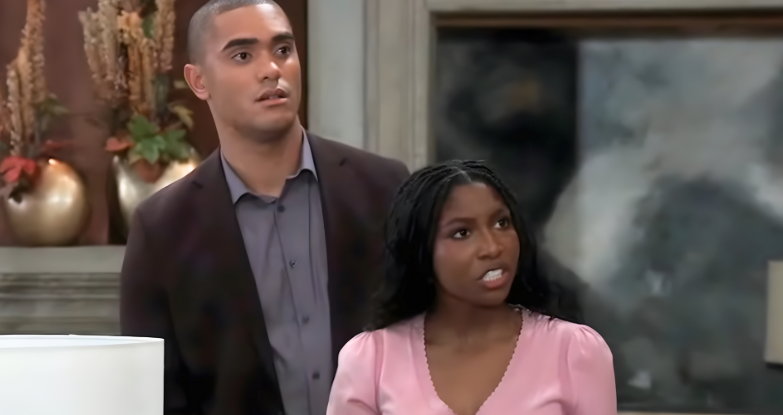
In the January 6, 2026 episode of General Hospital, the conversation between Kai and Trina barely registers on the surface. No courtroom tension. No raised voices. No obvious stakes.
And yet — this scene may ultimately prove more destructive to the case against Michael than any testimony, objection, or legal maneuver.
Because it introduces a detail no one was supposed to notice yet.
Why This Scene Is Easy to Underestimate
The show positions Kai and Trina as emotional ballast.
They are young.
They are thoughtful.
They speak quietly, carefully, with empathy rather than strategy.
For many viewers, their scene functions as a breather — a pause between heavier legal and familial confrontations.
That framing is intentional.
General Hospital has a long history of hiding major plot detonations inside “soft” scenes. And this one follows that tradition with surgical precision.
The Detail That Changes Everything (And Why It’s So Dangerous)
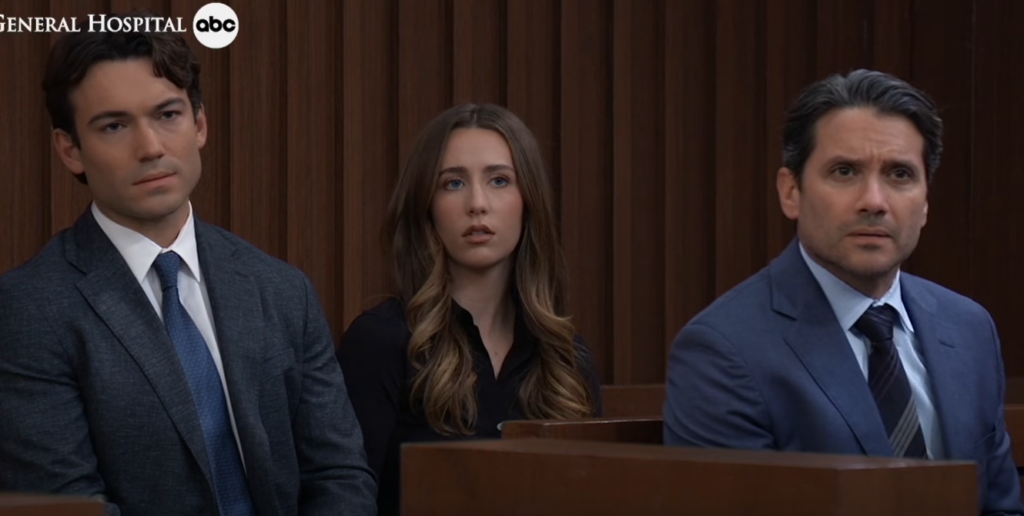
The conversation itself is simple. Trina references a moment — a time frame, a sequence, a memory — that subtly conflicts with the established version of events.
She doesn’t accuse.
She doesn’t question.
She simply recalls.
And Kai listens.
That is the danger.
Because Kai doesn’t challenge her. He absorbs the information — and in doing so, becomes a potential conduit for truth to travel where it shouldn’t.
This is not about what is said.
It’s about what is now known.
Why Trina’s Perspective Matters More Than She Realizes
Trina exists outside the central power structure of the case.
She is not:
- A legal strategist
- A direct witness under pressure
- A character known for manipulation
Which gives her perspective unusual credibility.
When Trina notices inconsistencies, viewers are meant to trust them — because Trina has no agenda.
And that makes her recollection far more dangerous than a calculated accusation.
Kai’s Role: The Listener Who May Become the Leak
Kai does not interrupt.
He does not dismiss.
He does not advise silence.
He validates.
That validation is subtle, but crucial.
In Port Charles, information doesn’t explode immediately — it migrates. And Kai is positioned perfectly for that migration.
He is:
- Close enough to the central players
- Emotionally intelligent enough to recognize significance
- Detached enough not to panic
Which means the detail Trina shares does not die in that scene.
It survives.
Why This Is Worse Than a Public Revelation
If Trina had raised her concern in court, it could be addressed, challenged, contextualized.
But she doesn’t.
She shares it privately — where it can grow, mutate, and resurface later under far more damaging circumstances.
This is how cases unravel:
Not through spectacle, but through whispers.
Foreshadowing Hidden in Plain Sight
The show telegraphs the importance of this scene through pacing, not dialogue.
The camera lingers.
The music drops.
The conversation ends without resolution.
That lack of closure is a warning.
Nothing about this exchange is finished.
Thematic Echoes: Memory vs. Narrative
One of General Hospital’s recurring themes is the conflict between what happened and what is being presented.
Trina represents memory.
The court represents narrative.
When memory refuses to align with narrative, narrative eventually collapses.
This scene plants that seed.
Fan Reaction: “Did Anyone Else Catch That?”
Within minutes of the episode airing, fan forums lit up with speculation.
Not outrage.
Not celebration.
Suspicion.
Fans replayed the scene. Compared timelines. Cross-referenced past episodes.
That reaction is telling — because General Hospital trained its audience to recognize danger when things feel “too normal.”
And this scene felt deceptively calm.
Why This Moment May Return at the Worst Possible Time
The most effective twists are delayed.
This detail doesn’t resurface immediately. It waits — until the case seems stable, until the narrative feels secure.
Then it returns.
Possibly through:
- A casual mention
- A moment of guilt
- A confrontation that wasn’t supposed to happen yet
And when it does, it will feel inevitable — because it was planted so carefully.
Trina’s Unintentional Power
Trina doesn’t realize she’s holding a thread that could unravel everything.
That innocence is what makes her dangerous.
She isn’t protecting a secret.
She isn’t exposing one.
She’s simply remembering.
And memory, in a case built on precision and omission, is lethal.
How This Impacts Michael Without Touching Him Directly
What makes this twist especially cruel is that it bypasses Michael entirely.
He doesn’t hear it.
He doesn’t react.
He doesn’t prepare.
Which means when the information surfaces, it will feel like betrayal — even though no betrayal occurred.
That emotional fallout will be devastating.
Narrative Craft: Trusting the Audience to Do the Work
This scene trusts viewers to notice what characters do not.
There’s no musical sting.
No reaction shot screaming importance.
Just a detail — floating.
That restraint is rare, and powerful.
Conclusion: The Loudest Consequences Come From the Quietest Moments
Kai and Trina’s conversation does not move the plot forward.
It destabilizes it.
And in General Hospital, destabilization is often far more dangerous than direct conflict.
The January 6, 2026 episode proves once again that the show’s most effective twists don’t come from confrontations — they come from conversations that feel safe.
This one was anything but.
