There is one lesson Drew Cain has never truly learned — and it is the lesson that ultimately destroyed his place in the very family he believed he belonged to.
Sharing DNA does not make you family. Loyalty does.
Drew’s downfall on General Hospital wasn’t sudden, and it wasn’t accidental. It was the inevitable result of a man who confused blood ties with entitlement and revenge with justice, long after both distinctions should have been clear.
The Betrayal That Lit the Fuse
Everything began with a betrayal that genuinely scarred Drew. Being turned into the SEC for insider trading, sent to prison, and stripped of his reputation was not a minor injustice — it was a life-altering blow. When it was revealed that Nina Reeves was the one who betrayed him, Drew’s anger became all-consuming.
But instead of processing that betrayal with restraint or strategy, Drew made a fatal decision: he chose revenge over resolution.
That choice changed everything.
Justice would have sought accountability.
Revenge sought pain.
Revenge Without Strategy Is Self-Destruction
Once Drew set his sights on payback, he stopped thinking beyond the immediate emotional payoff. He didn’t calculate long-term consequences. He didn’t consider collateral damage. He simply attacked — like a heat-seeking missile — toward the one person he believed would hurt Nina the most.
That person was Willow Tait.
In Drew’s mind, this was poetic symmetry. Nina hurt him, so he would hurt Nina through her daughter. What Drew failed to acknowledge was that Willow was not just Nina’s child — she was married to Michael Corinthos, Drew’s nephew and one of the most cherished members of the Quartermaine family.
By targeting Willow, Drew didn’t just strike at Nina.
He betrayed his own family.
The Quartermaine Myth Drew Believed
For years, Drew believed that being a Quartermaine by blood guaranteed him a place at the table — even when his actions violated the family’s core values. But the Quartermaines have always operated under an unspoken rule:
You do not destroy one of our own.
Michael was never expendable.
Willow was never collateral damage.
The moment Drew sacrificed them in his revenge campaign, he crossed a line he could not uncross. DNA could not save him from that betrayal.
When Envy Took Over
By the time Drew realized the damage he had done, something else had already taken root: envy.
Michael represented everything Drew no longer had — trust, stability, moral clarity, and unquestioned loyalty from the family. Instead of confronting his own loss, Drew redirected his resentment outward. Michael stopped being family and became a symbol of everything Drew felt denied.
That shift is crucial.
Once revenge turned into rivalry, Drew’s actions were no longer about Nina. They were about reclaiming power, relevance, and self-worth — even if it meant tearing down the very people who once stood beside him.
The Courtroom Was the Final Reveal
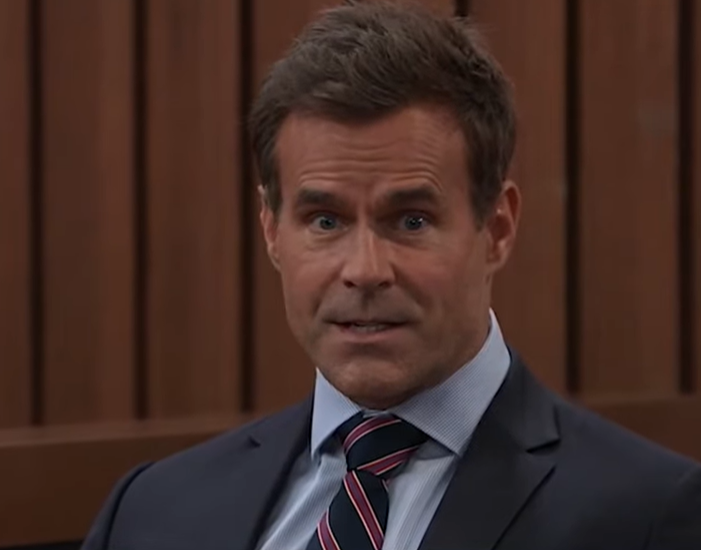
All of this finally came into focus in the courtroom.
Drew took the stand convinced he could control the narrative. He believed his anger would read as righteousness, that his obsession would be justified as moral outrage. Instead, what emerged was a man consumed by bitterness and ego.
He didn’t simply testify — he unraveled.
Every outburst exposed his lack of restraint. Every fixation on Michael confirmed that this was never about justice. By the time Drew realized how badly he had damaged himself, the jury — and the family — had already seen enough.
The courtroom didn’t destroy Drew.
It revealed him.
The True Cost of Revenge
Drew did get what he wanted. Nina paid a price. The truth came out. His revenge was complete.
But at what cost?
- He lost the trust of the Quartermaines
- He destroyed his moral authority
- He sacrificed his self-respect
- He forfeited the place in the family he believed he deserved
What remains is not a misunderstood hero, but a man hollowed out by resentment — angry, vindictive, and isolated.
Revenge did not heal Drew.
It defined his collapse.
Why Drew’s Story Matters
Drew Cain’s arc is not simply about betrayal. It is about what happens when a person allows vengeance to become their identity.
He didn’t lose the Quartermaines because they rejected him.
He lost them because he rejected their values.
He didn’t fall because Nina betrayed him.
He fell because he chose destruction over restraint.
Final Thought: Family Is Earned, Not Claimed
Drew Cain wanted to believe that blood alone entitled him to loyalty. But General Hospital has always made one thing clear:
Family is not inherited.
It is earned through loyalty, restraint, and protection of one another.
When Drew chose revenge over Michael and Willow, he made his choice.
And once that choice was made, everything else followed.
What stands now is not the man Drew once was — but the man he allowed himself to become.
