Why the Drew shooting didn’t break Willow… it unleashed a darker, more determined woman who will do anything to get her children back.

The New Willow Has Arrived — And She’s Done Playing by the Old Rules
For years on General Hospital, Willow Tait has been framed as the moral center of the storm — compassionate, restrained, endlessly forgiving, and often defined by what she would not do rather than what she would. That version of Willow is now gone. In the wake of the Drew Cain shooting reveal, the show is deliberately pivoting the character into far darker, sharper territory, and according to actress Katelyn MacMullen, this transformation is not temporary, accidental, or misunderstood. It is the point.
A Line That Cannot Be Uncrossed
The revelation that Drew Cain was shot by Willow does more than resolve a mystery; it permanently alters the audience’s relationship with her. This is not a misunderstanding, not an act of self-defense framed conveniently after the fact, and not a morally ambiguous gray area the show can later soften. It is an action that forces Willow out of the passive role she has long occupied and into one of accountability — or defiance.
MacMullen’s comments make it clear that Willow herself has crossed a psychological line. She is no longer operating under the illusion that restraint will save her. Instead, she appears to have reached a point where survival — emotional, maternal, and existential — overrides the need to be liked or morally approved of.
Loss of Custody as the True Catalyst
What makes this evolution compelling is that the shooting itself is not framed as the root cause of Willow’s change. The real trigger is loss — specifically, the loss of her children.
According to MacMullen, Willow is no longer the woman who believes patience and goodness will eventually be rewarded. Losing custody shattered that belief. It didn’t just anger her; it reorganized her priorities. When a character’s entire moral framework is built around motherhood, the threat of permanent separation is not a plot device — it is a psychological breaking point.
From this lens, the shooting becomes less about violence and more about desperation. Willow is no longer negotiating with the world. She is reacting to it.
The End of “Good Willow”
One of the most revealing aspects of MacMullen’s commentary is her acknowledgment that Willow is no longer trying to be “good” in the traditional sense. That doesn’t mean she sees herself as a villain. On the contrary, Willow still believes she is right.
This distinction matters.
Villains know they are crossing lines. Willow appears convinced that the lines themselves were unjust. That belief makes her far more dangerous than a character acting out of pure malice. She is operating from moral certainty — not guilt.
And that certainty puts her directly on a collision course with nearly everyone around her.
The Nelle Shadow Returns — Whether Willow Likes It or Not
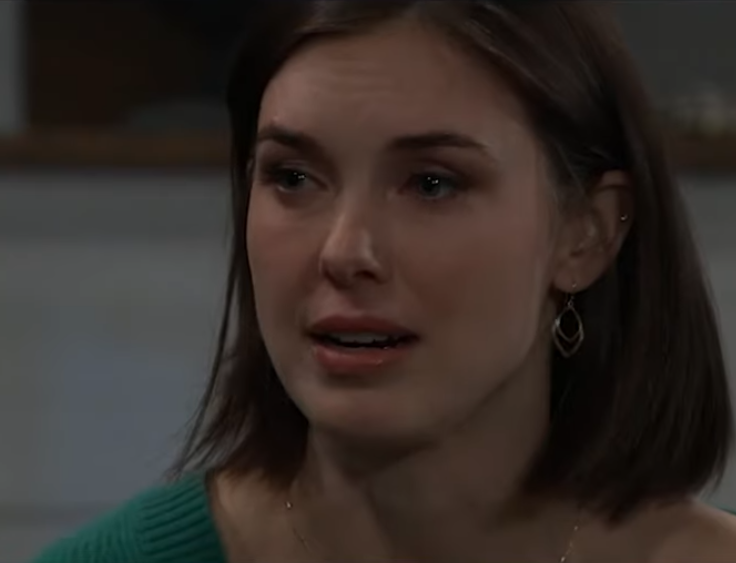
MacMullen’s comparison between this new Willow and Nelle Benson is not incidental. For years, the show positioned Nelle as Willow’s dark mirror — the sister she could never be, the cautionary tale of what unchecked rage and entitlement could become.
Now, that separation is thinning.
The difference is not in motivation, but in justification. Where Nelle acted from resentment and chaos, Willow acts from perceived righteousness. She believes she is protecting something sacred — her children — and that belief gives her actions a sense of moral inevitability.
This is where the writing becomes most interesting. The show isn’t asking viewers to suddenly hate Willow. It’s asking them to sit with the discomfort of understanding her — even when they can’t defend her.
What This Means for Michael
Willow’s transformation cannot be separated from her relationship with Michael Corinthos. For much of their relationship, Michael has been the stabilizing force — the one who absorbed chaos, extended grace, and waited for Willow to choose calm over conflict.
That dynamic no longer works.
The new Willow does not want to be managed or protected. She wants control. And that puts Michael in an impossible position: support her and risk moral compromise, or oppose her and become an obstacle.
MacMullen’s comments suggest that Willow will choose her children over everyone, including Michael. That is not a threat — it is a statement of intent. Any character who stands between Willow and what she believes she deserves is now expendable.
A Performance Shift, Not Just a Plot Shift
From an acting standpoint, this arc represents a significant evolution for MacMullen. Willow has long been written as reactive — responding to crises rather than initiating them. The “new Willow” is proactive. She decides. She moves. She pushes.
That shift allows MacMullen to explore anger, resolve, and emotional volatility that the character previously suppressed. It also reframes past scenes retroactively, suggesting that Willow’s gentleness was not innate, but learned — a survival mechanism rather than a personality trait.
Now that mechanism is gone.
The Show’s Intent Is Clear: This Isn’t Temporary
Perhaps the most important takeaway from MacMullen’s comments is that this version of Willow is not a short-term detour. The language used — “a new Willow,” “more determined,” “willing to do anything” — signals a long-term recalibration of the character.
General Hospital is not teasing a redemption arc yet. It is building a transformation arc.
That means consequences are coming, not just legally, but relationally. Willow will likely alienate allies, force uncomfortable truths into the open, and challenge the audience’s loyalty in ways the show hasn’t attempted with her before.
Why This Makes the Story Better — Not Worse
Some viewers may resist this shift, longing for the softer version of Willow they rooted for. But from a storytelling perspective, this evolution is necessary.
Static goodness is not sustainable drama.
By allowing Willow to become morally complex — even frightening at times — the show breathes new life into a character who risked becoming predictable. It also deepens the emotional stakes for everyone around her, because loving Willow now requires reckoning with who she has chosen to become.
Final Thought: Willow Is No Longer Asking for Permission
The most unsettling aspect of this transformation is not the violence or the anger. It’s the clarity.
Willow is no longer seeking approval — from Michael, from the court, or from the audience. She believes she knows what she must do, and she is prepared to live with the consequences.
Whether those consequences destroy her or elevate her remains to be seen. But one thing is certain: the Willow who emerges from this storyline will not be the same woman who entered it.
And neither will Port Charles.
