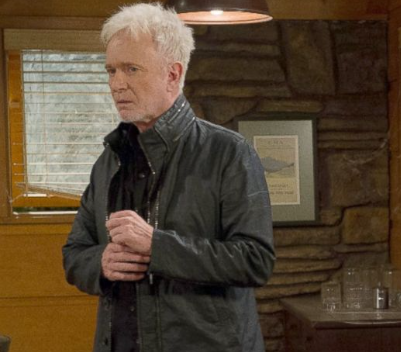
For a character as legendary as Luke Spencer, his death has always felt strangely unfinished.
Luke wasn’t killed onscreen.
There was no final showdown.
No last heroic sacrifice.
Just a reported cable car “accident” in Austria—delivered to the audience as fact, not truth.
And in a show built on secrets, reversals, and buried conspiracies, that should have been a warning sign.
The Problem With Luke’s “Accident”
From a storytelling perspective, Luke’s death violates one of General Hospital’s oldest rules: important characters don’t die quietly.
Luke survived mob wars, international espionage, the Cassadine family, and decades of enemies who actively wanted him dead. To suggest he simply vanished in a random accident not only feels unearned—it feels deliberately incomplete.
Even within the narrative, doubt has always lingered. The show quietly hinted that Victor Cassadine may have orchestrated the incident. But those hints were never pursued, never tested, and never proven.
That unresolved space is exactly where a powerful story can—and should—begin.
Why Sonny and Laura Are the Perfect Investigators
Reopening Luke’s death shouldn’t be a police procedural. It should be personal, emotional, and dangerous. That’s why Sonny Corinthos and Laura Collins are the only characters who make narrative sense.
Laura: The Emotional Truth-Seeker
Laura doesn’t need evidence to start questioning Luke’s death—she needs closure. As Luke’s great love and moral equal, she knows his instincts, his habits, and his enemies. Laura would never accept a vague explanation without answers, especially if her intuition tells her something is wrong.
Her role in the story wouldn’t be brute force—it would be memory. Remembering what Luke was investigating, who he feared, and what he would never ignore.
Sonny: The Man Who Understands Power
Sonny understands something Laura doesn’t: how deaths are staged.
If Luke was silenced, Sonny would recognize the patterns—money trails, offshore players, intermediaries, and cleanup operations. Sonny’s underworld connections would allow the investigation to move beyond Port Charles and into the international shadows Luke once navigated so easily.
Together, Sonny and Laura create a perfect balance:
- Laura follows why Luke was targeted
- Sonny uncovers how it was done
The Cassadine–Sidwell Connection: Where the Story Gets Dangerous
The most compelling version of this story doesn’t stop with Victor Cassadine.
Victor may be dead, but Cassadine operations never truly end—they mutate. This is where Sidwell becomes crucial.
Sidwell represents the modern face of Cassadine-style power: quieter, more corporate, and harder to trace. If Luke uncovered a financial or political scheme tied to Cassadine assets—or something Victor intended to keep buried—his death may have been less about revenge and more about containment.
In this version of events:
- Luke discovers something he shouldn’t
- Victor orders the problem “handled” indirectly
- Sidwell (or an associate) ensures Luke disappears without a body, without witnesses, and without questions
A cable car accident is perfect.
Remote. International. Final.
The Emotional Payoff General Hospital Has Been Missing
Revisiting Luke’s death isn’t about resurrecting the character—it’s about honoring him properly.
This storyline would:
- Give Laura real emotional resolution
- Allow Sonny to confront a loss he never fully processed
- Reframe Luke’s final chapter as heroic, not accidental
- Expose a long-running Cassadine shadow that still affects Port Charles today
Most importantly, it restores Luke Spencer to what he always was:
A man whose story mattered until the very end.
Final Thought
If General Hospital truly wants to respect its legacy, it doesn’t need to bring Luke back.
It just needs to tell the truth about how he died—and let Sonny and Laura uncover the consequences.
Because Luke Spencer didn’t just vanish.
Someone made sure he couldn’t come home.
