The truth she’s protecting is finally pushing back.

Anna Devane has never been just a witness to secrets in Port Charles — she has been their guardian, their filter, and at times their final barrier. For decades, Anna’s value has not come from what she says, but from what she chooses not to reveal. That restraint is what makes her uniquely dangerous now. Sidwell didn’t capture Anna because she knows everything. He captured her because she knows which truths matter.
Anna’s history places her at the crossroads of intelligence, power, and legacy. As a former WSB agent and later police commissioner, she has spent her life separating real threats from manufactured ones. She knows how false narratives are built to protect institutions, how inconvenient truths are buried under “official versions,” and how silence can be weaponized more effectively than violence. That experience makes her irreplaceable in a story centered on Spoon Island and Wyndemere — places designed not just to dominate, but to conceal.
This is why Anna isn’t interchangeable with Valentin or Ava. Valentin understands ownership. Ava understands manipulation. Anna understands truth architecture — how lies are structured, how secrets are layered, and how power hides behind plausibility. Sidwell needs her alive because he doesn’t just need access to Wyndemere; he needs confirmation. He needs Anna to recognize something hidden there and react to it. Her recognition would validate that the secret is real.
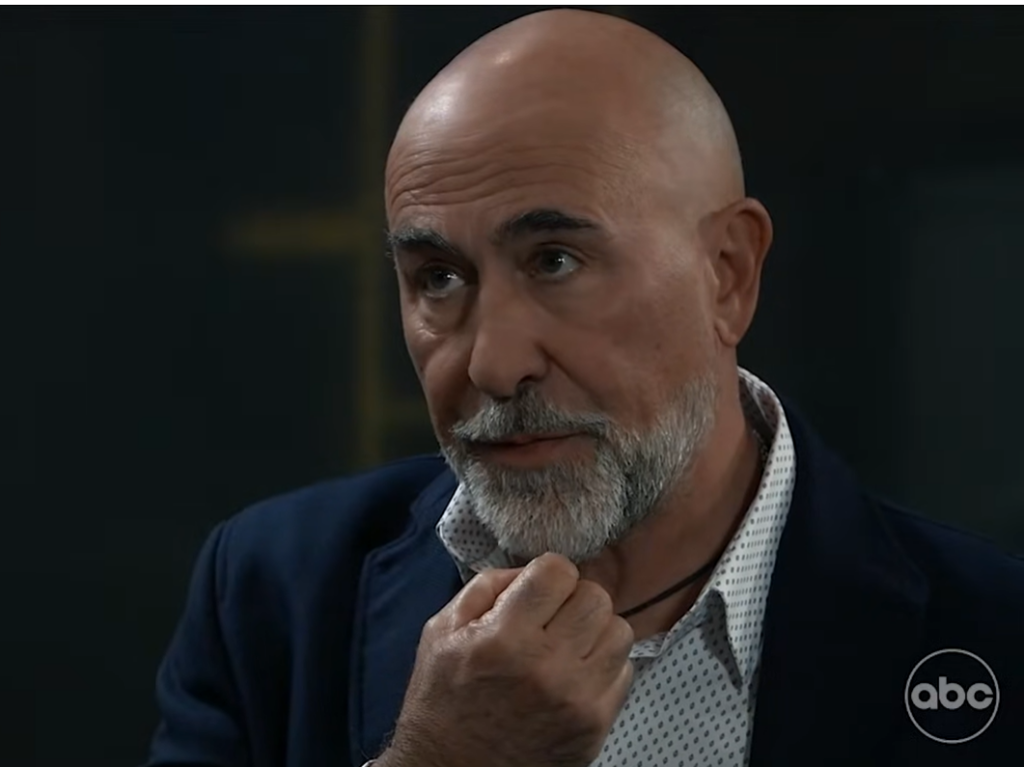
The nosebleed Anna suffers in the January 14 episode is not incidental. In soap language — especially in stories rooted in espionage and conspiracy — a sudden physical symptom during captivity is a warning sign, not a medical footnote. The timing matters. Anna bleeds not during struggle, but during confinement. That strongly suggests pressure, stress, or exposure rather than injury. It implies that Anna is being pushed beyond emotional limits — or that something in her environment is actively affecting her.
Symbolically, the nosebleed functions as a visual metaphor. Anna’s body is reacting the same way her mind is: under strain from suppressed truth. She is holding something in. She is resisting disclosure. And that resistance is becoming physically unsustainable. In crime storytelling, blood appears when containment fails — when a secret is pressing too hard against the person holding it.
Narratively, the scene also humanizes Anna without weakening her. She does not collapse. She does not panic. She bleeds — and continues. This reinforces the idea that Anna is not fragile, but finite. Even the strongest keeper of secrets has limits. That detail raises the stakes because it introduces urgency: Anna cannot endure indefinite silence. Something will have to give.

The nosebleed also serves a darker function. It signals to Sidwell and the mysterious man that time is a factor. Anna’s value is not endless. If they push too hard, they risk destroying the very key they need. That imbalance of power — where the captors suddenly need to be careful — subtly shifts control back toward Anna, even in captivity.
Most importantly, the scene reframes Anna’s role in the larger mystery. She is no longer just a prisoner waiting to be rescued. She is a ticking clock. Every second she remains silent increases the cost of the truth she’s holding. And when that truth finally emerges, it won’t simply expose a hidden room or a forgotten file — it will expose a legacy built on suppression.
Anna Devane has always carried secrets for the greater good. But this time, the secret is bigger than protection. It is older than Spoon Island as we know it. And the blood on her face is the show’s way of telling us something crucial: this secret does not want to stay buried anymore.
