The Young and the Restless heads into deeply unsettling territory as one character’s private thoughts take a disturbing turn—while power plays, ultimatums, and emotional pressure ripple across Genoa City.
The episode centers on Mariah Copeland, who finds herself battling an internal storm she can no longer ignore. Grief, unresolved trauma, and lingering emotional scars push her into a dangerous headspace, where her thoughts drift toward an action she knows is wrong—but can’t fully silence. This isn’t a fleeting mood or a bad day; it’s a sustained psychological struggle that leaves Mariah frightened by her own imagination.
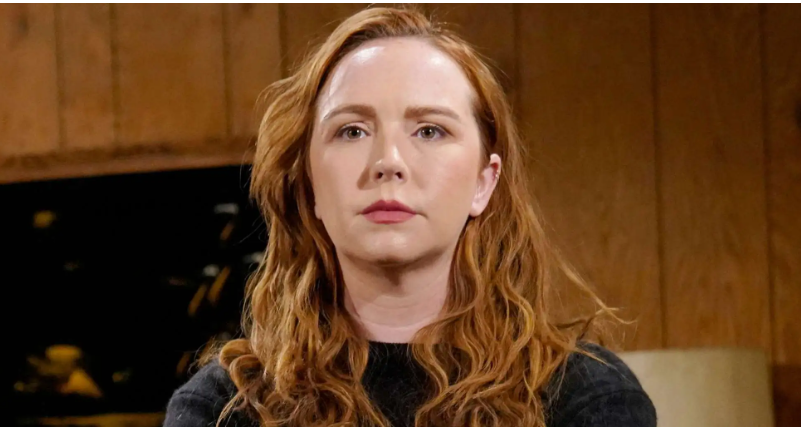
At the heart of Mariah’s turmoil is baby Dominic Newman-Abbott-Winters. Her bond with Dominic becomes emotionally complicated, crossing from comfort into obsession. In her darkest moments, Mariah imagines a reality where Dominic belongs only to her—a fantasy she immediately recognizes as dangerous. The show makes it clear: these are thoughts, not actions, but the fact that they exist at all signals just how close Mariah is to losing her emotional footing.
What makes this storyline especially chilling is Mariah’s self-awareness. She understands the moral and emotional consequences of giving in to these impulses. She knows it would devastate multiple families and permanently damage her own future. Yet knowing something is wrong doesn’t automatically make the thoughts disappear. The tension lies in whether Mariah can pull herself back before the line between imagination and reality starts to blur.
While Mariah’s crisis unfolds quietly, power struggles explode elsewhere. Victor Newman makes it unmistakably clear that he’s done tolerating interference. He issues a firm warning that no one manipulates Newman Enterprises without consequences. This isn’t bluster—it’s a declaration of control, reminding everyone that Victor always keeps score and always strikes back.
That warning lands directly on Phyllis Summers, who refuses to back down. Instead of retreating, Phyllis doubles down, convinced she can outmaneuver Victor if she stays aggressive. Her confidence, however, may be misplaced. Victor’s threats aren’t emotional—they’re strategic, and Phyllis risks underestimating just how far he’s willing to go to protect his empire.
Caught in the crossfire is Cane Ashby, who begins to feel the weight of what these games could cost. Unlike Phyllis, Cane’s concern extends beyond business fallout. He worries about how Victor’s retaliation could impact Lily and their children, forcing him to question whether this battle is worth the collateral damage. Cane’s hesitation introduces cracks into an alliance that was already under pressure.
On a more personal front, patience runs out for Sally Spectra. Tired of indecision, she confronts Billy Abbott with a stark choice: step up or step aside. Sally doesn’t want promises or explanations—she wants action. Her demand strips away Billy’s usual deflections and forces him to face the reality of his emotional paralysis.
Billy, once again, stands at a crossroads of his own making. Sally’s ultimatum highlights a recurring pattern in his life—hesitation at the exact moment decisiveness matters most. Whether he can finally choose clarity over chaos remains uncertain, but the pressure is undeniable. In this moment, doing nothing may be more damaging than making the wrong choice.
Together, these storylines paint a grim picture of a town on edge. From Mariah’s internal battle with forbidden thoughts, to Victor’s tightening grip on power, to relationships pushed to breaking points, every character is standing inches away from irreversible consequences. This episode doesn’t rely on explosions or public confrontations—it thrives on quiet danger, unspoken threats, and the terrifying realization that sometimes the most destructive moments begin entirely in the mind.
One dark impulse. One warning ignored. One decision delayed. In Genoa City, that’s all it takes for everything to fall apart.
