Port Charles has seen ghosts return before, but this time the threat feels far more calculated. In the January 27 episode of General Hospital, Anna Devane comes face to face with what appears to be her worst nightmare: the shadow of Cesar Faison. The question is no longer whether the moment is terrifying — it’s who is daring to wear Faison’s name and weaponize it against her.
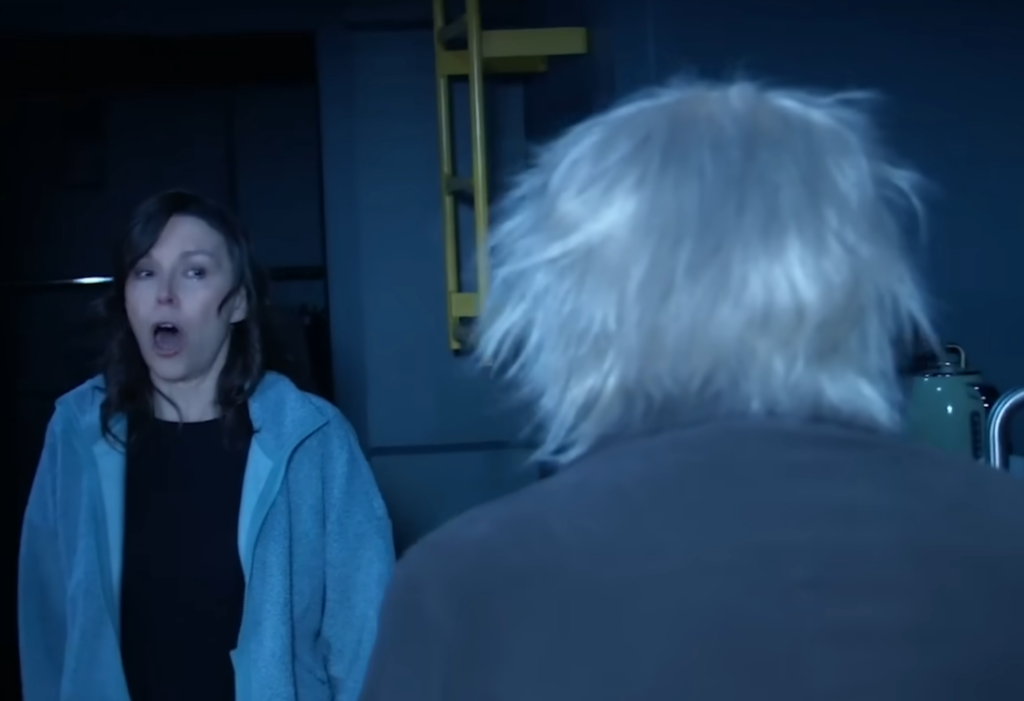
The setup is deliberate and cruel. A blizzard traps multiple players at Wyndemere, the power goes out, and isolation becomes the perfect breeding ground for fear. Anna is left behind while others flee, turning the castle into a psychological prison. This isn’t chaos for chaos’ sake — it’s a controlled environment designed to strip Anna of certainty, safety, and control.
When a figure associated with Faison finally “appears,” the show immediately blurs the line between reality and manipulation. Anna has already been subjected to hallucinations and psychological torment. She has seen faces from her past, heard voices meant to weaken her resolve, and questioned her own perceptions. That context matters, because it allows the villain to hide behind plausible deniability: is Faison really back, or is someone exploiting Anna’s trauma?
One possibility is the most obvious — that this is not Faison at all, but someone intentionally masquerading as him. Faison’s name carries decades of terror, especially for Anna. Invoking it is a shortcut to fear. Whoever is behind this understands Anna intimately: her history, her guilt, her unresolved scars. This is not random intimidation. It is personal.

Another unsettling option is that the person using Faison’s identity is someone Anna already knows. The most dangerous villains in Port Charles are rarely strangers. They are allies, partners, or “helpers” who move close enough to gather trust before striking. By hiding behind Faison’s legend, the real culprit can stay invisible while Anna spirals, second-guessing every instinct.
There is also the psychological warfare angle. Even if no one is physically pretending to be Faison, the threat may still be very real. Anna’s mind has become the battlefield. Someone has orchestrated events to trigger her memories, using darkness, isolation, and timing to force a breakdown. In that scenario, Faison’s “return” is symbolic — a ghost summoned to do damage without ever stepping into the room.
What makes this storyline especially chilling is how methodical it feels. The blackout. The storm. The removal of witnesses. The choice to leave Anna alone. These are not impulsive decisions. They point to a mastermind who understands pressure points and knows exactly when to apply them. Whoever is responsible wants Anna destabilized, vulnerable, and afraid — not dead. At least, not yet.
That distinction matters. This isn’t an assassination attempt. It’s a slow burn. A test. Someone is probing Anna’s limits, seeing how far they can push her before she breaks. That suggests long-term plans, not a one-night stunt. Faison’s name is merely the opening move in a much larger game.
The most frightening truth may be this: the real enemy doesn’t need to be Faison to destroy Anna. All they need is her belief that he might be back. Fear does the rest. Every shadow becomes a threat. Every sound becomes a warning. Anna’s strength — her memory, her experience — is being turned against her.
So the central mystery remains: who benefits from Anna’s terror? Who gains power while she questions her sanity? And who is bold enough to resurrect one of the darkest names in Port Charles history just to watch her unravel?
Because one thing is clear — whether Faison is alive, imagined, or impersonated, someone is actively using his legacy as a weapon. And Anna Devane is exactly where they want her: alone in the dark, facing a nightmare that refuses to stay buried.
This isn’t a ghost story.
It’s a message.
And it was meant for Anna alone.
