From a mother’s perspective, the confrontation between Portia Robinson and her daughter Trina Robinson is not a debate about manners. It is a reckoning about motherhood — about what happens when love, protection, fear, and control collide, and the child you raised becomes the one who judges you.
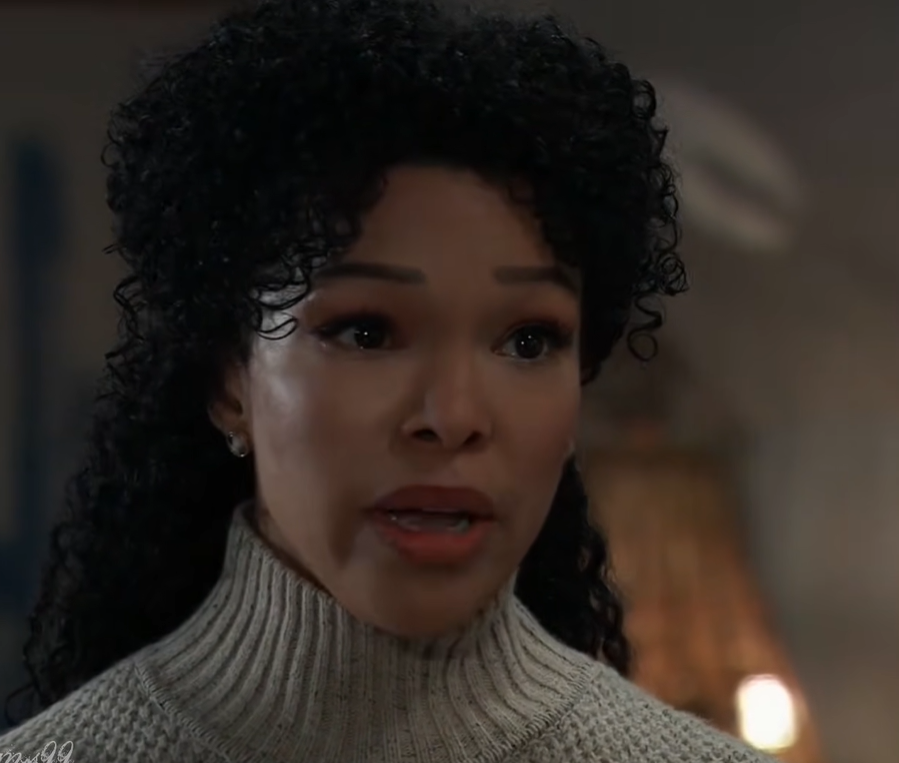
Portia is not just a woman being confronted; she is a mother being undone. Everything she has done — right or wrong — has been filtered through the instinct to protect her child. Mothers watching this scene recognize that instinct immediately. It is the voice that says, If I control the damage, my child will survive it. Portia believed that by deciding when the truth came out, she was shielding Trina from pain. What she failed to see was that control, even when motivated by love, is still a form of betrayal when it robs a child of agency.
From Portia’s point of view, Trina’s words cut deeper than any accusation could. Not because they are false, but because they strip away the one identity Portia has always clung to: being a good mother. When a child says, “You lied,” a mother hears failure. When a child says, “You are a liar,” a mother hears erasure — the suggestion that her sacrifices, her sleepless nights, her years of care no longer matter. That is not a moral argument; it is an emotional earthquake.
Yes, Trina’s tone is harsh. From Portia’s eyes, it feels disrespectful, even cruel. Mothers are conditioned to believe that respect is the bare minimum owed to the woman who gave everything. And when that respect disappears, the pain is almost physical. But what makes this moment unbearable for Portia is that she cannot hide behind indignation. She cannot say, “You don’t understand.” Trina understands too well. The truth Portia buried did not vanish; it matured, hardened, and came back with teeth.
Portia’s silence after the confrontation is not weakness — it is recognition. She knows that defending herself would only center her own feelings again, repeating the same pattern that led here. For a mother, that realization is devastating: the moment you understand that your child’s anger is not rebellion, but clarity. Trina is not lashing out to hurt her mother; she is protecting herself from further manipulation. And Portia sees that. That recognition is what drains her of words.

For mothers watching, this storyline asks an uncomfortable question: At what point does protection become possession? Portia did not lie because she didn’t love her daughter. She lied because she loved her too much — or at least, she loved the version of motherhood where she remained in control. Many mothers will see themselves here. The desire to manage pain, to soften reality, to decide what a child is “ready” to know is deeply human. But this moment exposes the cost of that instinct when it crosses into deception.
Is Trina wrong for speaking to her mother that way? From a moral standpoint, many will say yes. Children should not speak to their parents with contempt. But motherhood complicates morality. When a parent breaks the foundational trust they taught their child to value, they cannot be shocked when the child mirrors that rupture in tone as well as content. Respect cannot survive where truth has been withheld for too long.
Portia’s greatest tragedy is not that her daughter spoke harshly. It is that her daughter no longer believes softness will be heard. That is the moment every mother fears — when the child stops hoping you will understand and starts speaking as if you never will. That shift does not happen overnight. It is built quietly, over years of withheld truths and postponed conversations.
This story resonates so deeply because it doesn’t villainize motherhood — it humanizes it. Portia is not a monster. She is a mother who made fearful choices and is now facing the one judgment she cannot outrun: her child’s clarity. And Trina is not ungrateful. She is a daughter demanding ownership of her own story.
For mothers watching, the message is painful but vital: love does not excuse secrecy, and protection does not justify erasing a child’s right to the truth. Because when the truth finally comes — it will not arrive gently. It will arrive in the voice of the person you love most, and it will ask the hardest question of all: Did you trust me enough to tell me who I am?
And sometimes, the most devastating moment of motherhood is realizing that your child’s harshest words are not an act of cruelty — but a mirror you taught them to hold.
