Sally Spectra has officially reached the breaking point—and this time, it’s not about insecurity, jealousy, or bad timing. It’s about clarity. In The Young and the Restless, Sally’s growing frustration with Billy Abbott isn’t just a relationship issue anymore; it’s a warning sign that his obsession with power may cost him far more than he realizes.

For months, Billy has been consumed by one thing: control. The fight over Chancellor, the shadowboxing with Cane, and the need to prove himself have overtaken every other priority in his life. While Billy frames this as ambition, Sally increasingly sees it for what it is—an emotional dead end. She isn’t asking for perfection. She’s asking to matter.
Sally’s internal conflict becomes painfully clear when she opens up to Audra Charles. This isn’t idle venting. It’s a moment of self-recognition. Sally admits that no matter how long she waits, Billy may never choose them over his latest corporate war. That realization shifts her mindset from reactive to proactive. For the first time, Sally isn’t trying to fix Billy—she’s trying to save herself.
What makes this turning point so dangerous for Billy is that Sally doesn’t implode. She pivots. Instead of issuing ultimatums or staging emotional confrontations, she starts planning a future that doesn’t revolve around Billy’s chaos. Her growing alignment with Audra isn’t just personal solidarity—it’s strategic. Two women who know how the game is played are quietly positioning themselves to rewrite the rules.
This potential partnership threatens Billy on multiple levels. Professionally, Sally and Audra together could challenge the existing power structure at Abbott Communications. Sally understands branding and vision. Audra understands leverage and timing. Billy, meanwhile, is distracted—too focused on winning old battles to notice a new one forming right beside him. If Sally moves forward without him, Billy won’t just lose a partner; he may lose control of the narrative he thinks he owns.
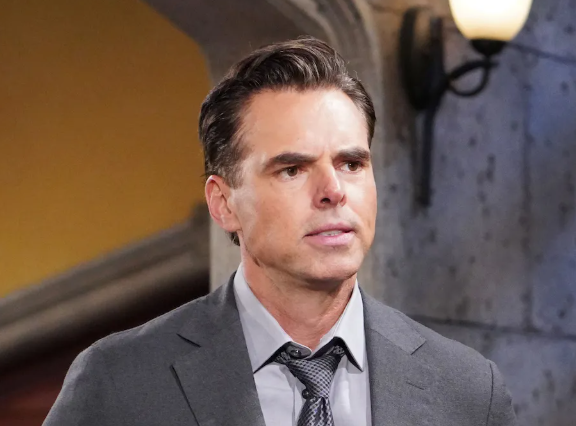
Emotionally, the timing couldn’t be worse. Sally receives troubling news about Jill Abbott’s declining health—information Billy should arguably be handling himself. Instead, he’s absent, buried in schemes and grudges. This contrast cuts deep. Sally is dealing with real-world consequences while Billy remains locked in theoretical victories. It reinforces her growing belief that she and Billy are no longer living in the same reality.
Billy’s tragedy is that he doesn’t see the danger yet. He assumes Sally’s patience is infinite because it always has been. But patience isn’t loyalty—it’s a resource. And Sally’s is nearly depleted. The woman standing in front of him now is not the same woman who once waited, hoped, and compromised. She’s sharper. More self-aware. And far less willing to sacrifice her future for someone else’s obsession.
From a storytelling perspective, this arc reframes Sally in a powerful way. She’s no longer defined by who she loves but by what she refuses to tolerate. Her choices are not impulsive—they’re calculated. And that makes her infinitely more compelling. Sally isn’t walking away in anger; she’s walking forward with intention.
Billy, on the other hand, is racing toward a reckoning. If he continues to prioritize ego over connection, he risks ending up exactly where he’s been so many times before: victorious on paper, alone in reality. The difference now is that Sally may not be there when he finally looks up.
This storyline isn’t just about a relationship cracking under pressure. It’s about a woman realizing that love without partnership is just endurance—and she’s done enduring. Sally Spectra isn’t forcing Billy Abbott’s hand by demanding change. She’s forcing it by changing herself. And that may be the most dangerous move of all.
