The January 28 episode of General Hospital didn’t just raise the stakes — it ripped open one of the show’s darkest graves and dared fans to look inside. In the middle of a brutal blizzard, with power cut and fear amplified by isolation, a face that should never be seen again appeared at Wyndemere. Cesar Faison is dead. Or at least, that’s what everyone believed. What unfolded instead was a chilling reminder that in Port Charles, the past never stays buried.
The setting did half the work. Wyndemere, already steeped in gothic history, became a pressure cooker once the lights went out. Snow battered the island, communication failed, and every shadow felt alive. The storm wasn’t just weather — it was a narrative weapon, stripping away safety and forcing characters to confront their worst fears with no escape. In that darkness, reality itself became unreliable.
Then came the moment that changed everything. Anna Devane, a woman who has survived espionage, betrayal, and loss, froze when she saw him. The posture. The voice. The unmistakable presence. Cesar Faison — the man who haunted her life, destroyed her family, and defined her trauma — stood before her. Not in a flashback. Not in a memory. In the present. Breathing. Watching.
Anna’s reaction told the story better than any dialogue. This wasn’t shock alone. It was terror layered with history. Faison isn’t just an enemy to her; he’s a psychological scar. The show made it clear: whether real or not, this apparition was designed to break her. And it worked. In that instant, the question stopped being “Is Faison alive?” and became “Who wants Anna to believe he is?”
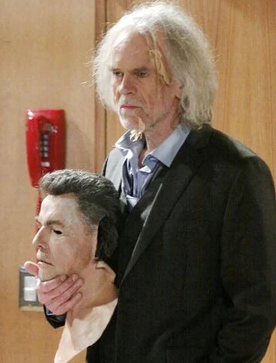
The episode smartly refused to give easy answers. Was this truly Cesar Faison resurrected yet again, defying death as he’s done before? Or was this something far more insidious — technology, illusion, or a psychological weapon tailored specifically to Anna? Wyndemere’s history with secret rooms, hidden systems, and experimental tech makes every possibility disturbingly plausible.
Adding to the unease, the house itself seemed to turn against its occupants. Screens flickered to life, displaying ominous symbols tied to Faison’s legacy. A countdown appeared, silent but threatening. The message was unmistakable: this wasn’t a hallucination meant to fade. This was a plan. A performance. And someone was controlling the stage.
Elsewhere on the island, danger escalated. Josslyn Jacks and Brick were moving through Wyndemere’s hidden passages, trying to locate Anna as systems failed one by one. Their technology glitched. Signals dropped. Every step forward felt like walking deeper into a trap. Whoever orchestrated this wanted isolation — not just physical, but strategic.
What makes this twist so effective is that it weaponizes legacy. Faison doesn’t need to be alive to still be dangerous. His image alone is enough to destabilize alliances, cloud judgment, and reopen old wounds. By invoking him now, the show taps into decades of history and reminds viewers that some villains never truly leave — they evolve.

This storyline also reframes the blizzard arc entirely. What initially looked like a classic disaster setup has become something far more personal and psychological. The storm isn’t the threat. The threat is manipulation. Control. Fear engineered with precision. Someone knows exactly who Anna is, what she’s survived, and how to make her doubt her own senses.
Most importantly, the episode leaves fans with a brutal choice: accept the impossible, or fear the alternative. If Faison is alive, Port Charles is facing a nightmare reborn. But if he isn’t, then someone else has learned how to wear his face — and that might be even worse. Because it means the next enemy won’t need guns or bombs. They’ll just need memory.
One thing is certain. After this episode, General Hospital has drawn a line in the snow. The past is back. The rules are broken. And whatever is haunting Wyndemere isn’t finished yet.
