In The Young and the Restless, power has always been currency—but this time, the price may be too high. Victor Newman has unleashed a scheme so ruthless it forces his own son to question who he’s becoming. The plan is simple in design and terrifying in implication: make Cane Ashby believe his family is in danger. No real kidnapping. No physical harm. Just a disappearance so convincing it bends Cane to Victor’s will. It’s classic Victor—brilliant, cold, and morally radioactive.
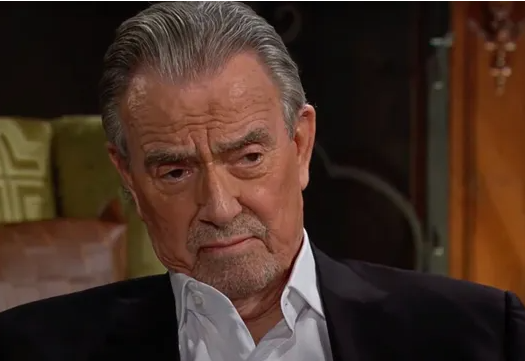
At the center of the storm stands Adam Newman, the Newman who always gets asked to do the dirty work. Victor doesn’t frame this as cruelty; he frames it as strategy. If Cane thinks Lily Winters, Charlie Ashby, and Mattie Ashby have vanished “off the radar,” panic will do the rest. Deals will be signed. Concessions will be made. And Victor will win—again. But Adam hears the unspoken truth: the plan works only because it weaponizes a parent’s worst fear.
What makes this different isn’t the danger—it’s Adam’s reaction to it. For once, he isn’t eager to prove himself. He sees the edge he’s being pushed toward and recognizes it for what it is: a moral cliff. Adam knows how fear operates; he’s lived inside it. He understands that terror doesn’t end when the ruse does. Even if Lily and the kids are safe, the psychological damage is real. Cane will never forget the hours he believed his family was gone—and Adam would be the architect of that nightmare.
The pressure intensifies when Chelsea Lawson forces the truth into the open. Chelsea doesn’t just react—she detonates. To her, Victor’s plan sounds indistinguishable from a kidnapping, and the distinction doesn’t matter. She hears danger, illegality, and a future where Adam loses himself all over again. Worse, she sees the pattern: Victor protects some children at all costs, while others are sent into the fire. That realization cuts Adam deeper than any threat ever could.
Chelsea’s confrontation exposes the real stakes. This isn’t about Cane. It’s about Adam’s identity. Is he Victor’s instrument, or his own man? Chelsea reminds him that every line crossed becomes easier the next time—and that the fallout never lands on Victor. It lands on Adam. On his conscience. On his family. And suddenly, the plan’s brilliance looks like a trap designed to keep Adam exactly where Victor wants him: useful, compromised, and expendable.
Meanwhile, Victor remains unmoved. He insists there’s no real danger, no permanent harm—only leverage. To him, fear is a tool like any other, and success justifies the method. But this time, the method threatens to backfire. If Adam refuses, Victor risks losing control of the one son who understands his game better than anyone. If Adam complies, Victor may win the battle with Cane—and lose Adam forever.
The brilliance of this storyline lies in its tension. The plan hasn’t even fully unfolded, yet the damage is already happening. Trust is eroding. Lines are blurring. Adam is standing at a crossroads that could redefine him, while Victor doubles down on a worldview that has cost him more than he’ll ever admit. One choice will secure power. The other will preserve a soul.
And that’s the shocker fans can’t look away from: Victor’s darkest move may not destroy Cane—it may finally break Adam.
ChatGPT can make mistakes. Chec
