In a moment that could redefine their marriage, Brook Lynn finally saw the side of Chase she never imagined — and what she learned may haunt them both for years to come.
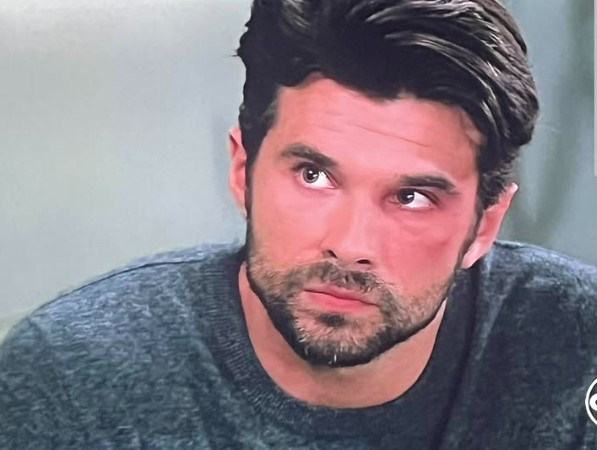
In the privacy of their bedroom, Brook Lynn tried to balance loyalty with truth. She assured Chase that she would always stand by him, but she refused to ignore Michael’s accusation that Chase had attempted to pin Drew’s shooting on him. Chase denied trying to frame Michael, yet his evasiveness about the mysterious key immediately raised red flags. Brook Lynn pressed him, sensing that there was more he wasn’t saying.
When she demanded full honesty, Chase admitted something far more damning than she expected. He confessed that while he hadn’t physically planted the key, he was responsible for the PCPD obtaining the warrant. He knew they would find a key connected to the Cain house, and he deliberately pushed the investigation in that direction. What he framed as helping the investigation sounded dangerously close to manipulation.
Chase then revealed how he discovered that Michael possessed a key to Drew’s front door. In his mind, this was concrete proof that Michael had shot Drew. But Brook Lynn wasn’t convinced. She pointed out the obvious flaw in his logic: Michael wouldn’t be reckless enough to frame Willow and then keep such incriminating evidence. To her, Chase wasn’t presenting facts — he was clinging to a theory he desperately wanted to believe.
As the conversation deepened, Chase’s confession grew even more troubling. He admitted that he knew he had compromised the chain of evidence and that anything he personally discovered would be inadmissible in court. So instead of backing off, he found a workaround. He suggested to Nathan that the PCPD investigate whether Michael had a key to Drew’s home, effectively orchestrating the discovery through another officer. What Chase described as a procedural necessity sounded, to Brook Lynn, like calculated manipulation.
Brook Lynn was furious. She accused her husband of crossing a line that no cop should ever cross, especially one who claims to care about justice. She couldn’t understand why he would knowingly break the rules when Willow was already free and reunited with her children. To her, the case was no longer about evidence or duty — it was about obsession.
She confronted Chase with the truth she believed he was avoiding: this wasn’t justice, this was revenge. In her eyes, Chase was driven by his anger over what he believed Michael did to Willow. She suggested that his desire to see Michael punished had clouded his judgment and pushed him into ethically dangerous territory.
Chase fired back, insisting that Michael shouldn’t be allowed to walk free after allegedly shooting a congressman twice in the back and framing Willow for the crime. But Brook Lynn refused to accept assumptions as facts. She reminded him that they still didn’t know whether Michael was truly guilty. The certainty Chase clung to felt less like evidence-based reasoning and more like a personal crusade.
As the weight of his actions sank in, Brook Lynn shifted the conversation to the consequences he seemed unwilling to face. She worried that his manipulation of the investigation could eventually destroy his career. Worse, she feared it could jeopardize their plans to adopt a child — the future they had dreamed of building together. In one reckless move, Chase may have put everything they were working toward at risk.
Then Brook Lynn delivered an ultimatum that cut deeper than any argument. She told Chase he needed to choose: continue his relentless pursuit of justice at any cost, or protect their future as a family. To her, the path he was on wasn’t just risky — it was self-destructive.
For the first time, Brook Lynn saw a man who was willing to bend the law, manipulate colleagues, and gamble his marriage to prove a point. The hero she believed in now looked dangerously close to becoming the very thing he claimed to despise.
And as Chase stood by his choices, one thing became painfully clear: in trying to expose Michael, Chase may have just exposed himself — and dug a hole he might not be able to climb out of.
