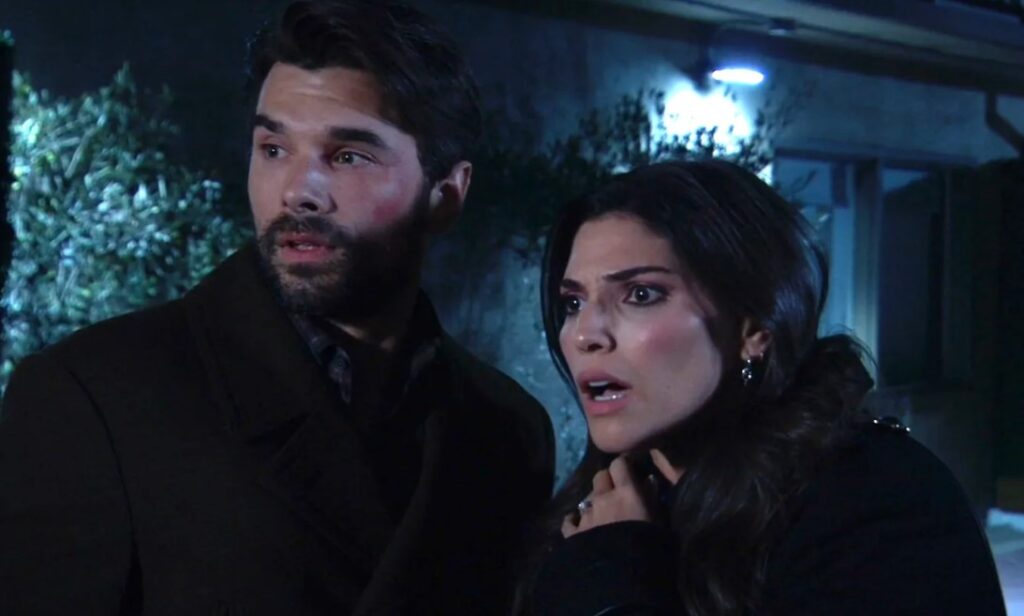
When Brook Lynn gasped, “Is that a body?” the camera didn’t go for a dramatic reveal. It stayed tight on shock. That choice matters. In a show like General Hospital, when producers avoid an immediate face reveal, it usually means the victim is important enough to matter but not so central that the promo campaign would spoil it. That is exactly why Pascal fits. Not Dalton. Not Spencer. Not a resurrected fan favorite. Pascal.
Pascal has quietly been positioning himself as a problem for multiple power players. He has hovered on the edges of dangerous deals, stepped on the wrong toes, and inserted himself into conflicts that were never truly his. In soap structure, that is the classic profile of a character about to be eliminated. He is significant enough to cause ripple effects but expendable enough to be sacrificed for momentum. When a character becomes a thorn to both criminals and officials, their survival window shrinks fast.
Unlike Dalton, whose body was definitively disposed of, Pascal remains unresolved territory. Reviving Dalton would require rewriting established events and undermining characters who were shown covering their tracks carefully. Pascal, however, has no such narrative baggage. His death would not contradict canon. Instead, it would feel like a payoff. Soap writers love payoff.
Pascal’s recent tensions make him a believable target. He has irritated the wrong men and potentially learned things he should not know. If someone wanted to silence a liability before he exposed something damaging, Pascal would be the logical choice. A body at a street corner suggests urgency, not ceremony. This was not a dramatic assassination staged for spectacle. It looks more like cleanup.
If Pascal is the victim, the suspect list becomes explosive. Sidwell immediately rises to the top. Pascal has been more nuisance than ally. If Pascal knew sensitive information or became unpredictable, eliminating him would serve as damage control. Sidwell benefits from stability and control, and removing a destabilizing element protects both his power and his secrets. It would also send a message to anyone else considering disloyalty.
Sonny cannot be ruled out. If Pascal interfered with territory, alliances, or leverage, Sonny may have seen him as expendable. A quick removal prevents long-term complications. However, Sonny usually calculates risk carefully. A public body could invite scrutiny he does not want. That makes him possible but not automatic.
Jason is less likely but not impossible. If Pascal posed an immediate threat to someone Jason protects, action could have been taken swiftly. Yet Jason tends to leave minimal exposure. A body left in view suggests either a rushed situation or someone wanting it found. That detail may point away from Jason’s typical precision.
Michael as a suspect would ignite maximum emotional fallout. Even if he is innocent, the optics could reignite Chase’s suspicions and shatter Brook Lynn’s fragile peace. If someone wanted to manipulate tensions within the Quartermaine orbit, framing Michael through Pascal’s death would be a ruthless but effective move.
The real narrative power of Pascal’s death lies in what it does to Chase. He promised to step back. He promised to choose his marriage. But finding a body tied to criminal activity pulls him straight back into investigative mode. This is how a marriage test begins. Not with betrayal, but with a trigger.
If Pascal is indeed the man at the corner, his death is not random. It is strategic. It destabilizes criminal networks, pressures law enforcement, and tempts Chase into breaking his word. In Port Charles, bodies are never just bodies. They are chess pieces. And if Pascal has fallen, someone just made a bold move.
