Fans have been pushed to believe that Nathan is no longer himself—that he has become Cassius, a darker and more dangerous version tied to Sidwell and his growing web of control. But the deeper you look, the more this storyline starts to unravel in a completely different direction. What if this isn’t a fall-from-grace story at all? What if Nathan never turned evil… and everything we’re seeing is part of a calculated undercover mission?
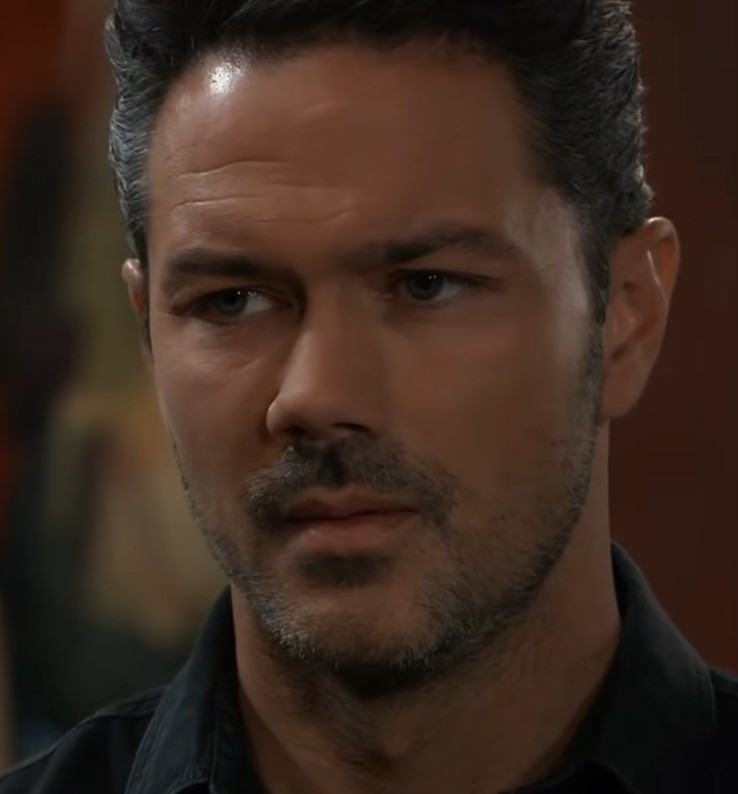
The most important clue that cannot be ignored is the fingerprint verification. In the world of science, fingerprints are unique—no two individuals, not even identical twins, share the same patterns. That means if Nathan’s identity was confirmed through fingerprint analysis, then logically, this has to be Nathan. Not a twin. Not a clone. Not an imposter. The show could try to suggest manipulation, but that would require a level of rewriting that feels far more complicated than the simplest answer: he is exactly who the evidence says he is.
Then there’s the detail that has quietly lingered without explanation—the empty grave. Nathan was buried, mourned, and accepted as gone. Yet when the truth began to surface, there was no body. That is not a small continuity error. That is a deliberate narrative gap. In soap storytelling, an empty grave almost always signals one thing: the character never truly died. If Nathan was never in that grave, then the foundation of the “Cassius identity” theory begins to collapse.
What makes this even more compelling is the way Nathan has been behaving. At first glance, his actions seem completely out of character. He’s distant with Maxie, emotionally detached, and willing to align himself with dangerous figures. But when viewed through the lens of an undercover operation, those choices suddenly make sense. To infiltrate someone like Sidwell, Nathan would have to become someone unrecognizable—even to the people who know him best. The coldness, the distance, the moral ambiguity… it’s not who he is. It’s what he has to become.
And yet, despite all of that, there are moments where the real Nathan slips through. He protects Rocco. He withholds key information from Sidwell. He makes subtle choices that don’t benefit the villains, even when it would be easier to stay fully committed to the role. These are not the actions of a true antagonist. They are the instincts of someone still holding onto his core identity, even while pretending to be someone else.
This is where the deeper theory begins to take shape. What if Nathan has been working with the WSB this entire time? What if this isn’t just survival—but a mission? Taking down someone like Sidwell from the outside would be nearly impossible. But from within? That’s where the real damage can be done. If Nathan is embedded inside this operation, then every sacrifice he’s making—his reputation, his relationships, his love for Maxie—is part of a much bigger plan.
Of course, there are still details that raise questions. The baseball scene, where he couldn’t perform a skill Nathan once mastered, stands out to many fans. His failure to rush to Maxie’s side, even when she needed him most, feels wrong. But even these moments can be reinterpreted. Years of captivity, trauma, or even intentional behavioral shifts could explain the changes. Or more chillingly—he may be deliberately suppressing those instincts to avoid blowing his cover.
When all of these clues are put together—the fingerprint confirmation, the empty grave, the inconsistent but telling behavior—they don’t feel like random writing choices. They feel like setup. Carefully planted details designed to mislead the audience while quietly building toward a major reveal. This isn’t chaos. It’s construction.
If this theory proves true, the payoff could be massive. Nathan wouldn’t be a villain—he would be a hero who sacrificed everything to protect the people he loves. Maxie and James wouldn’t be victims of betrayal, but part of a story about survival, endurance, and ultimately, redemption. And Sidwell’s downfall wouldn’t come from the outside—it would come from the man he trusted most.
So the real question isn’t whether Nathan has changed. It’s whether we’ve been looking at him the wrong way all along. Because what if the biggest twist isn’t that he became someone else… but that he never stopped being Nathan at all?
