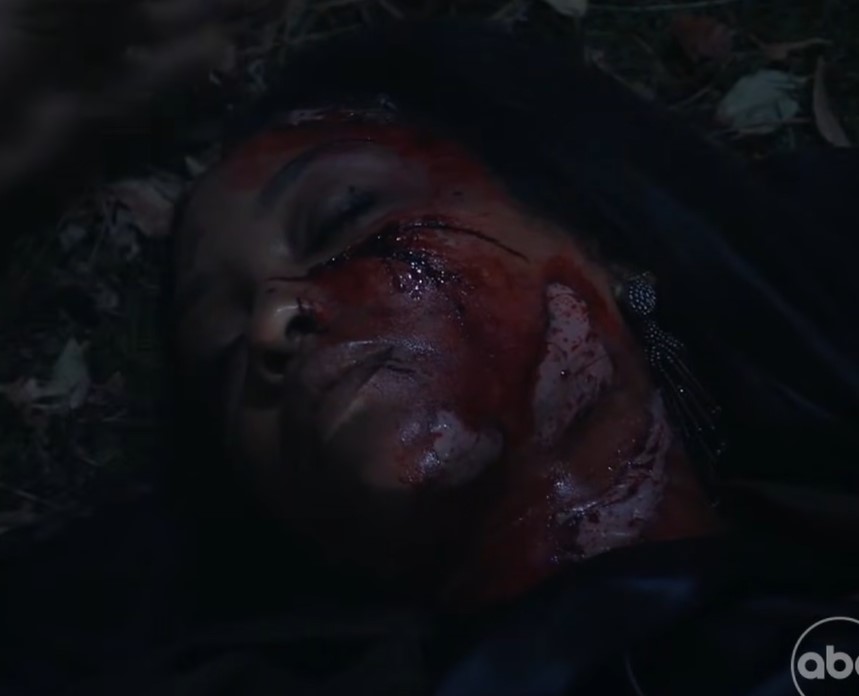
The crash that left viewers shocked seemed, at first glance, like a simple case of distraction. Curtis and Jordan, caught in a moment, took their eyes off the road—and disaster followed. That’s the version most fans accepted immediately. It’s clean, it’s logical, and it fits what we were shown. But what if that’s exactly what the writers wanted us to believe? Because buried beneath the chaos of that scene is a tiny, almost invisible detail that could completely dismantle that explanation: a single horn blast.
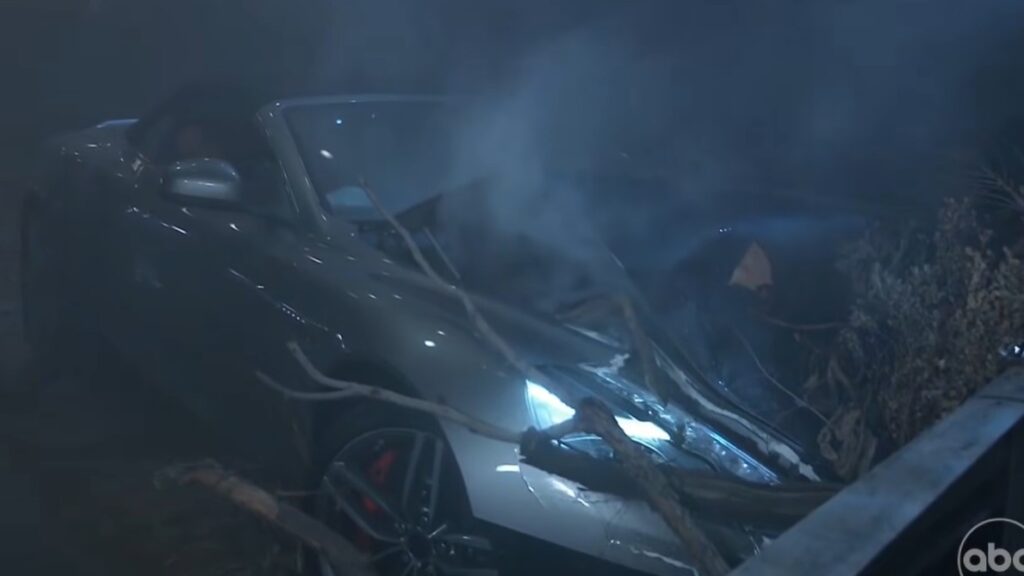
That honk, heard just before impact, is the kind of clue most viewers register subconsciously and then forget. It’s not dramatic enough to stand out, not visual enough to replay in your mind. But in storytelling—especially in a show like General Hospital—sound design is never accidental. A horn doesn’t exist in a vacuum. It means there was another car, another driver, another moment of awareness. Someone saw something coming and reacted. That alone proves the crash wasn’t just about distraction. It was about interaction.
If this had truly been a one-car mistake caused by inattention, there would be no reason for a warning signal. No honk. No attempt to alert or avoid. The presence of that sound shifts the entire framework of the scene. It suggests that multiple vehicles were in close proximity, that at least one driver was aware of danger before the collision, and that the crash was the result of a chain of reactions rather than a single error. In other words, what looked like a simple accident may actually be a multi-layered event.
This is where the suspects begin to matter in a very different way. Danny and Charlotte immediately drew suspicion from fans, especially with the visible damage to their car and the implication that Danny may have been driving recklessly. It’s easy to connect them to the honk—young drivers, possibly panicked, reacting too late. But their behavior afterward complicates that theory. They didn’t act like people who knew they had caused harm. They seemed confused, even disconnected. That doesn’t align with someone who just triggered a major crash. It points more toward them being part of the situation, not the source of it.
Brook Lynn presents a more layered possibility. Her rushed departure, the emphasis on the wine glass, and her unsettled demeanor upon arriving at Charlie’s all suggest something happened before she got there. Some fans even speculate that Jordan may have swerved to avoid her vehicle. If that’s the case, then the honk could have been hers—or directed at her. A warning. A near miss. A split-second decision that forced another driver into a catastrophic maneuver. What’s crucial here is that Brook Lynn doesn’t have to directly hit anyone to be involved. Her presence alone could have created the conditions for the crash.
But the most intriguing possibility is the one the majority of viewers aren’t even considering: the involvement of a third, unseen driver. The honk may not belong to Danny, Charlotte, or Brook Lynn at all. It could be coming from someone we haven’t identified yet—someone whose role hasn’t been revealed. That opens the door to darker theories, including sabotage or intentional interference. Some fans have even floated the idea of tampered brakes or a planned setup, which would transform this from an accident into something far more deliberate.
When you combine the honk with inconsistencies in location and timing, a much bigger picture begins to form. Multiple comments from fans suggest that not all characters were in the same place when the crash occurred, raising the possibility that there wasn’t just one accident, but more than one. The honk, in this context, becomes the connecting thread between separate events. It’s the moment where paths crossed, where one situation bled into another. A warning that came too late to prevent what followed.
So why did most viewers miss it? Because the scene was designed to distract. The emotional tension between Curtis and Jordan, the visual focus on their interaction, and the buildup around other suspects like Brook Lynn pulled attention away from the background details. The audience was guided toward a conclusion before they had time to question it. And that’s exactly how the best twists are built—not by hiding the truth, but by burying it in plain sight.
In the end, that single honk may be the most important clue in the entire storyline. It challenges the obvious explanation, introduces the possibility of multiple vehicles, and hints at a deeper, more complex chain of events. This wasn’t just a crash caused by one mistake. It was a moment where multiple choices, movements, and reactions collided at once.
One sound. One second. One overlooked detail. And if fans start listening more closely, they may realize the truth was never hidden—it was just drowned out.
