Fans have been locked in the same debate for weeks: who should save Britt Westbourne — Robin Scorpio or Hamilton Finn. On paper, it feels obvious. Robin has a history of creating near-impossible cures, while Finn specializes in rare and complex diseases. Either one stepping in would make perfect sense for a medical crisis like Britt’s. But the deeper you look at the recent episodes, the more unsettling a different question becomes: if Britt’s condition is real and urgent, why hasn’t the show brought either of them into the story at all?
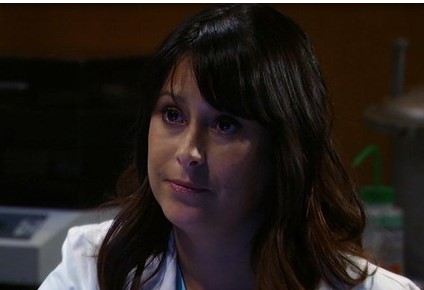
That absence is no longer just a writing choice—it’s starting to look like a clue. General Hospital rarely ignores its top medical minds when a life-or-death case is unfolding. Robin and Finn aren’t just random doctors; they are the exact characters the show leans on when things get complicated. Their complete lack of involvement doesn’t feel accidental anymore. Instead, it suggests that whatever is happening to Britt may not be a straightforward medical mystery, but something far more controlled and deliberately hidden.
One of the strongest pieces of on-screen evidence comes from Lucas Jones, who made a subtle but critical observation that many viewers initially brushed off. Lucas noted that he didn’t see clear signs consistent with Huntington’s disease. That line wasn’t framed as a dramatic reveal, but in hindsight, it may be one of the most important clues the writers have planted. This isn’t speculation from fans—it’s dialogue spoken directly within the show, quietly challenging the entire diagnosis.
Britt’s own behavior only deepens the mystery. She isn’t reacting like someone who believes she is running out of time. There is no frantic search for answers, no desperate push for experimental treatments, and most importantly, no attempt to involve her own mother, Liesl Obrecht, who would stop at nothing to save her. Instead, Britt appears controlled, almost calculated, as if she is managing a situation rather than fighting a terminal illness. That emotional disconnect is difficult to ignore, and it raises the possibility that Britt knows more than she is saying—or that she is being forced to follow a very specific path.
Then there is the issue of the medication itself. Britt continues to rely on injections, yet the show has provided almost no concrete information about what those drugs actually are, where they come from, or how they were verified. In a series where medical details are often highlighted, that lack of clarity stands out. It opens the door to a darker interpretation: what if the “treatment” isn’t treating anything at all? What if it’s maintaining control, suppressing symptoms, or even creating them?
This is where Robin and Finn become even more significant—not as saviors, but as missing pieces. If Britt’s condition were genuine and progressing, someone would have called Robin by now. Her expertise in developing antidotes would make her the first choice. The same goes for Finn, whose background in infectious and rare diseases makes him uniquely qualified to step in. The fact that neither of them has been consulted suggests that this case is being kept away from the very people who could expose it.
That possibility reframes the entire storyline. Instead of asking who can cure Britt, the real question becomes who benefits from keeping her isolated. If Robin or Finn were brought in, they might not just fail to find a cure—they might uncover that there was never anything to cure in the first place. Their absence begins to look less like a missed opportunity and more like intentional avoidance.
In that light, the biggest twist may not be Britt’s survival, but the truth behind her condition. The show has quietly layered clues through dialogue, behavior, and missing connections, all pointing toward something that doesn’t add up. Robin and Finn aren’t being ignored because they aren’t needed. They’re being kept out because they might see too much.
And if that’s true, then Britt isn’t just a patient waiting to be saved. She may be at the center of a much larger game—one where the cure was never the goal, and the real danger lies in whoever is controlling the narrative behind her illness.
