Everyone is asking the wrong question. Who killed Marco? That’s the surface-level mystery the show wants us to focus on. But the real, far more unsettling question is this: who went back to the crime scene and took his phone? Because if that detail is true—that the phone was still sitting on the desk when Alexis and Danny first found Marco—then the killer didn’t take it. And that changes everything.
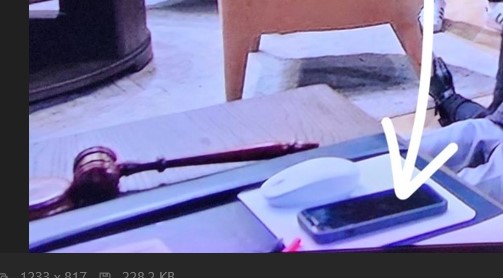
Marco was murdered inside the law office, a controlled environment where every movement matters. When Alexis and Danny discovered his body, the scene hadn’t yet been processed or sealed. That alone creates a critical narrative gap. A window of time where the scene was vulnerable. And if the phone was present at that moment, then whoever removed it did so after the murder. Not in the heat of the crime, but in the silence that followed.
This detail completely breaks the logic of a typical cover-up. If the killer wanted to erase evidence, the phone would have been the first thing taken. It’s the most obvious source of messages, recordings, contacts, and last-minute clues. Leaving it behind makes no sense—unless the killer either didn’t know its importance or wasn’t the one trying to control the narrative. That suggests something far more complex: the murder and the clean-up were done by two different people.
The gap between the murder and the official police response becomes the most dangerous part of the timeline. In that unguarded stretch, someone had the opportunity to enter the office, see Marco’s body, and make a decision. Not to call for help. Not to alert authorities. But to remove one specific item. That’s not panic. That’s intent. That’s someone who knew exactly what they were looking for.
And there’s only one reason anyone would take that risk. The phone contained something they couldn’t afford to let anyone else see. Not money, not jewelry—just data. A message that hadn’t been sent yet. A name. A location. A piece of evidence that could expose the truth behind Marco’s final moments. Whoever took that phone didn’t just stumble upon it. They understood its value.
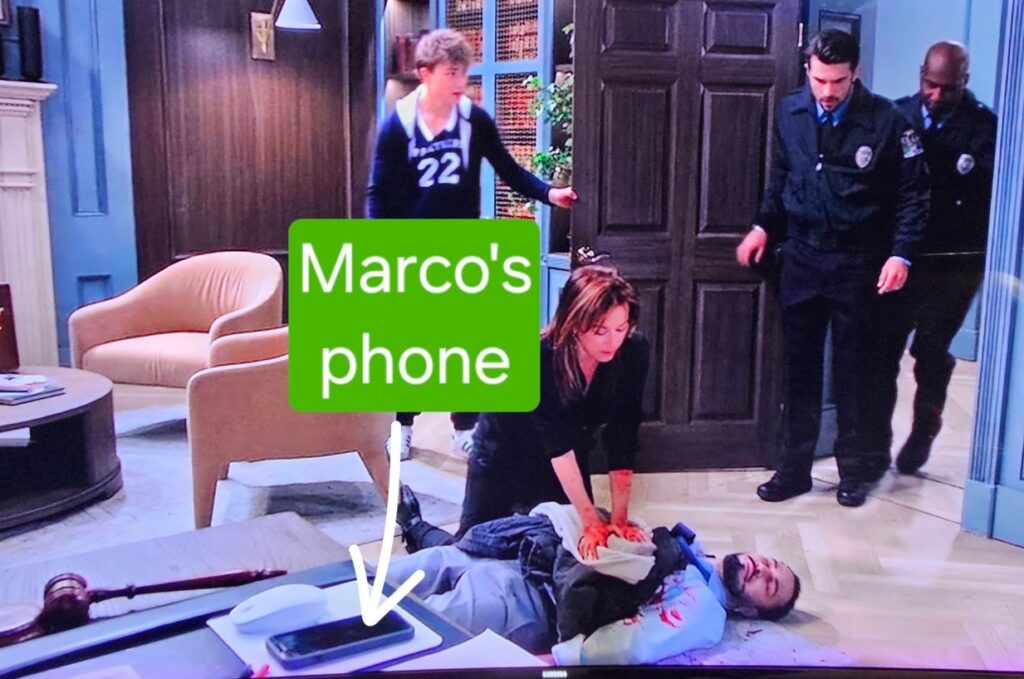
This narrows the suspect pool in a very specific way. There are only two groups with both the access and the awareness to act in that moment. The first is someone inside the PCPD. A person with knowledge of how crime scenes are handled, someone who could approach the situation without raising suspicion, and who would know exactly what kind of evidence to eliminate. If that’s the case, then this isn’t just a murder—it’s a systemic cover-up.
The second possibility may be even more dangerous. Someone within the law office itself. A colleague. A superior. Someone who knew what Marco was working on and what he might have uncovered. They wouldn’t need to search blindly. They would already know where to look. And more importantly, they would know why the phone mattered before anyone else did.
This leads to the most chilling realization of all. Marco’s death may not be the center of the story—it may just be the beginning. One person committed the crime. But another stepped in afterward to erase the truth. Two actions. Two motives. And potentially, two very different enemies operating in the same space.
So the question isn’t just who killed Marco. It’s who was watching closely enough to move in after it was done. Who had the awareness, the access, and the nerve to walk into a fresh crime scene and quietly remove the one piece of evidence that could expose everything.
Because Marco didn’t just die. His story was silenced. And that missing phone might be the only thing powerful enough to bring it back.
