Was Jack Brennan really the “Donkey of the Day”… or did we just watch one of the smartest slow-burn setups on General Hospital? On the surface, it looked like a collapse. He had the leverage, the footage, the receipts — and yet somehow, he walked out of that confrontation without pulling the trigger. Fans saw hesitation. They saw weakness. But what if that entire moment was designed to look exactly like that?
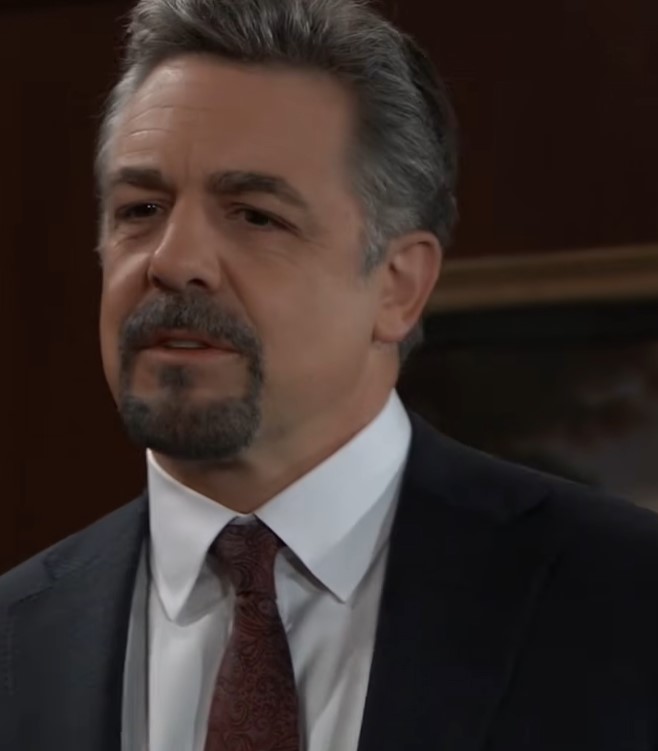
Let’s be honest about what played on screen. Willow pushed hard, flipped the pressure, and forced Jack into a corner — at least visually. He didn’t counter. He didn’t threaten. He didn’t expose her. The simplest solution was right there: press play, release the footage, end her political career instantly. That’s why so many viewers felt frustrated. From that angle, it absolutely looked like Jack fumbled the bag in real time. If you judge the scene purely by action, he lost.
But here’s where things stop adding up. Jack never behaved like someone who was actually losing control. He didn’t spiral, didn’t panic, didn’t even raise his voice. His energy stayed measured, almost detached. In fact, there were subtle beats where he looked more like an observer than a man under pressure. That matters. In high-stakes scenes like this, body language is everything — and Jack’s didn’t match the narrative of defeat.
Even more telling is what he allowed Willow to do. He let her talk. He let her push. He let her outline exactly what she wanted, what she feared, and how far she was willing to go. He didn’t interrupt or shut her down — he gave her space to expose herself. That’s not passivity. That’s information gathering. The longer she spoke, the more she revealed. And in a world where leverage is built on proof, letting your opponent incriminate themselves can be far more powerful than firing your shot too early.
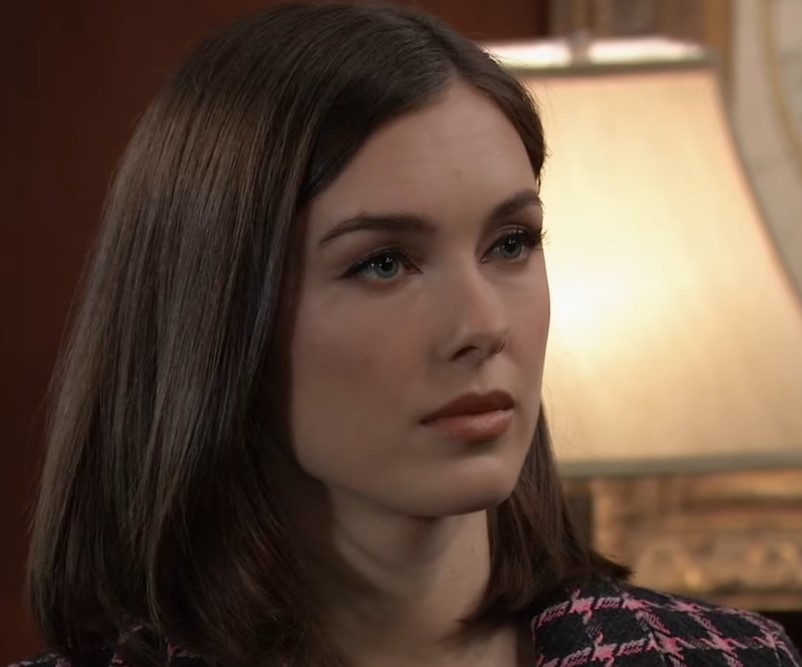
There’s also a crucial layer of logic that can’t be ignored. That footage isn’t clean. If Jack obtained it through questionable means — especially involving PCPD access — then releasing it outright could blow back on him. Suddenly, the “easy win” isn’t so easy. It becomes a lose-lose scenario: expose Willow and risk exposing himself, or hold back and find a safer angle. When you factor that in, his restraint starts to look a lot less like weakness and a lot more like calculation.
This is where the “giving her rope” theory becomes impossible to ignore. What if Jack isn’t trying to win this moment… because he’s trying to win the entire game? By letting Willow believe she has the upper hand, he encourages her to keep pushing, keep threatening, keep making moves that dig her deeper. Confidence can be a weapon — but overconfidence is a liability. And right now, Willow is leaning hard into that second category.
Of course, there’s another complication: Carly. Jack’s hesitation may not be purely strategic. If exposing Willow risks fallout with Carly — emotionally, personally, or politically — then his delay carries an added layer of conflict. He’s not just playing against Willow. He’s balancing power, consequences, and relationships. That kind of pressure doesn’t lead to impulsive decisions. It leads to controlled ones.
So what does the endgame look like? If this is truly a long play, Jack won’t strike until the board is fully set. He won’t just take down Willow — he’ll wait until the damage spreads wider, until more players are implicated, until one move can collapse multiple targets at once. That’s the difference between reacting and orchestrating. One ends a problem. The other reshapes the entire power structure.
In the end, the real question isn’t whether Jack lost that moment. It’s whether that moment was ever meant to be won. Because sometimes the loudest move isn’t the smartest one, and sometimes doing nothing is the most dangerous move of all. If this was a setup — and all signs suggest it might be — then Willow didn’t beat Jack Brennan. She just walked exactly where he wanted her to go.
