What if everything we’ve been told about Anna’s “mental collapse” is a lie? Not just a misunderstanding, not just a cover story—but a carefully constructed illusion designed to fool everyone watching, including her enemies. The narrative has always felt too convenient: Anna isolated, unstable, removed from the board just as the stakes around Sidwell and the WSB reach a boiling point. For a character defined by control, precision, and long-game strategy, this sudden breakdown doesn’t track. It never did.
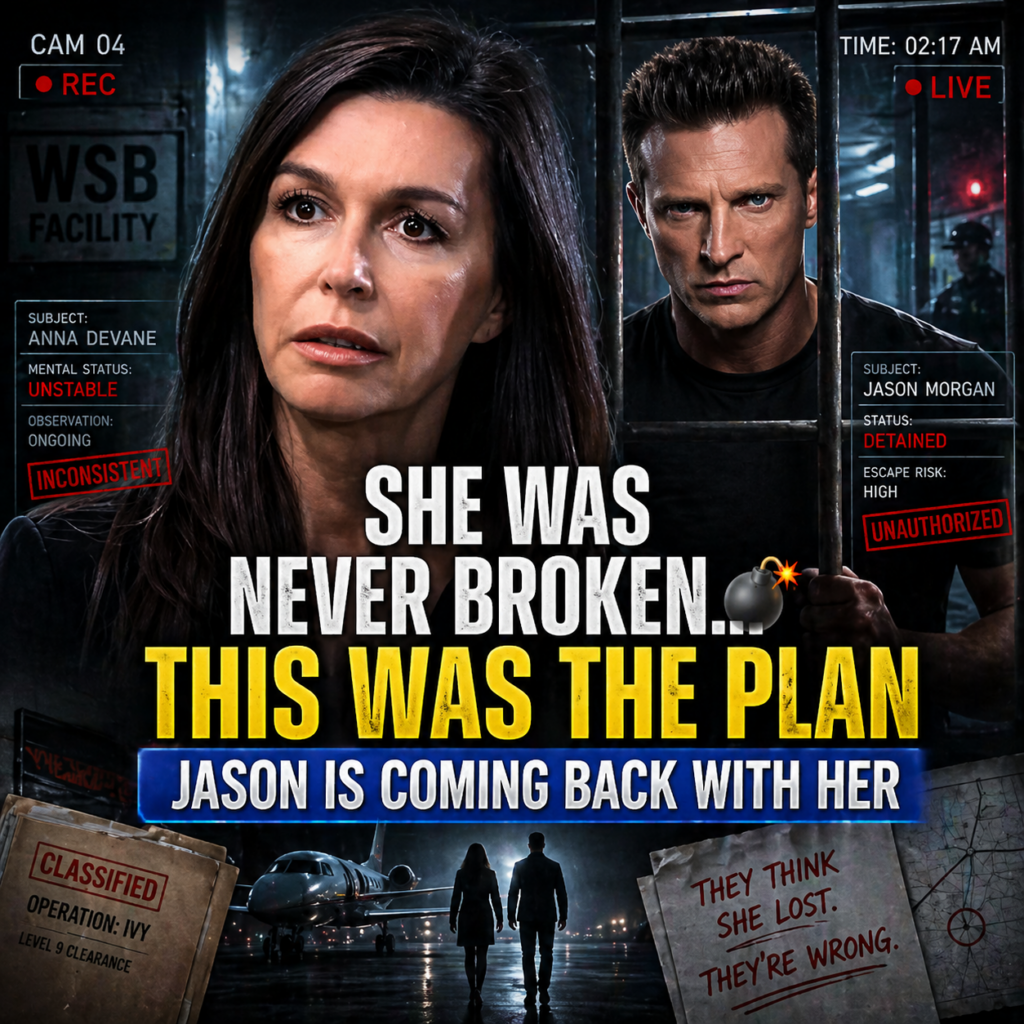
The official version paints Anna as a victim—fragile, confused, and no longer a threat. But the cracks in that story are impossible to ignore. Key figures like Jason and Brennan have shown hesitation in fully buying into it, sensing that something doesn’t add up. Then there are the inconsistencies: manipulated updates, questionable reports, and visuals that feel staged rather than real. When the evidence itself starts to feel curated, the question becomes unavoidable—who benefits from everyone believing Anna has lost control?
There is another possibility, one that aligns far more closely with everything we know about Anna Devane. She isn’t broken. She’s performing. Every erratic moment, every sign of instability could be part of a calculated act meant to mislead the very people who think they’ve already won. Anna has spent her life operating in shadows, mastering deception, and outmaneuvering enemies who underestimated her. If anyone could weaponize vulnerability as a strategy, it would be her.
Playing unstable may be the safest position Anna could take. In a world where knowledge is power and threats are eliminated quickly, appearing harmless becomes a shield. If Sidwell and his network believe Anna is no longer capable of fighting back, they stop treating her as a target. They lower their guard. They talk more freely. They make mistakes. And that is exactly where Anna thrives—not in open confrontation, but in the quiet moments where her enemies think they are safe.
Meanwhile, the illusion serves another critical purpose: access. If Anna is being held, monitored, or even manipulated, then pretending to break could grant her proximity to the very information she needs. Every conversation overheard, every detail revealed in front of someone deemed “unreliable,” becomes ammunition. Instead of being shut out of the game, Anna may have embedded herself deeper into it than ever before. Not as a prisoner—but as a silent observer collecting everything.
But even the most brilliant long game needs a trigger, and that’s where Jason comes in. Unlike others, Jason doesn’t rely on official narratives. He trusts instinct, patterns, and what doesn’t feel right. His refusal to accept Anna’s condition at face value positions him as the one person capable of seeing through the illusion. While others react, Jason investigates. And as he begins to connect the dots, the story starts to shift—not toward rescue, but toward revelation.
Because this isn’t about Jason saving Anna. It’s about Jason recognizing that Anna doesn’t need saving. What she needs is the right moment. His return could be the catalyst that brings her plan into motion, the point where everything she has been building in silence finally surfaces. Instead of pulling her out of danger, Jason may be the one who helps expose the truth she’s been gathering all along.
And when that truth comes out, it won’t just clear Anna’s name—it will detonate everything around Sidwell, the WSB, and anyone else involved in the deception. The longer the act continues, the more dangerous the payoff becomes. Because if Anna has truly been pretending this entire time, then every second of weakness we’ve seen has been a lie. And every lie has been leading to one explosive reveal.
Anna’s return won’t look like a comeback. It will look like a takeover. Not a woman recovering from collapse—but a strategist stepping out of the shadows with proof, power, and a plan that was never broken to begin with.
