Isaiah didn’t just become a suspect overnight… he made himself one. The moment he deliberately scraped his car against the guardrail in the hospital parking area, something shifted. This wasn’t clumsy or accidental. It felt controlled, intentional, almost staged. And what makes it even more unsettling is what he did next. He didn’t hide it. He ran straight to Lucas and made sure the damage was seen, explained, and remembered. That’s not panic. That’s planning.
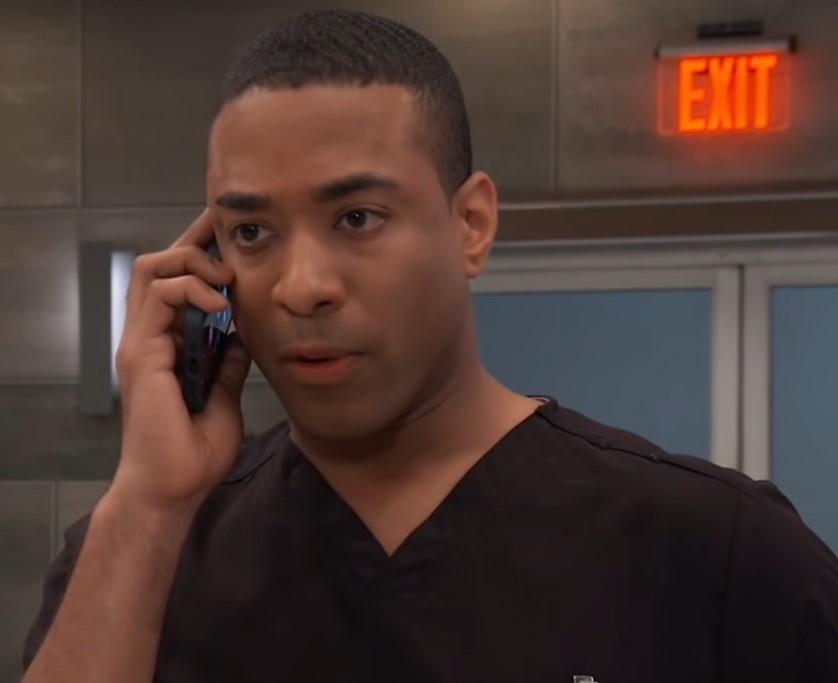
Because no one creates evidence unless they need a story to go with it. Isaiah’s behavior doesn’t match someone dealing with a random mishap. It mirrors someone trying to get ahead of a question that hasn’t even been asked yet. By showing the damage immediately, he controls the narrative before anyone else can challenge it. He defines when the damage happened, where it happened, and why it exists. And in doing so, he quietly removes the possibility that it came from somewhere far more dangerous.
That’s where the logic starts to turn. If Isaiah were truly uninvolved in the crash, why would he need to recreate anything at all. Why risk drawing attention to his vehicle. The answer becomes uncomfortable very quickly. Because the simplest explanation is that the damage already existed. And not from a parking garage. From that night. From that road. From the moment everything went wrong.
The timeline only deepens the suspicion. Isaiah was near the cabin the night of the accident. He left suddenly under the excuse of an emergency house call. That alone places him within reach of the incident. Now add the damaged vehicle, the urgency to explain it, and the strangely perfect alignment with what investigators are looking for. It starts to feel less like coincidence and more like revision. As if Isaiah isn’t just remembering the timeline… he’s rewriting it.
What truly gives him away is the psychology behind the move. Innocent people don’t rush to construct alibis. They respond when questioned. They explain when necessary. Isaiah did the opposite. He moved first. He planted the explanation before suspicion could grow. That kind of preemptive defense doesn’t come from nowhere. It comes from fear. Or worse… from knowledge.
And suddenly, the missing piece of the entire mystery begins to take shape. There has always been another car. Another driver. Someone who was there and then disappeared. Someone who didn’t stay long enough to be identified. Someone who may have seen everything… or caused more than they admitted. Isaiah fits that outline with terrifying precision. The proximity. The timing. The damage. And now, the cover.
The question then becomes why he ran. Because not every hit-and-run begins with intent. Sometimes it begins with confusion. A split-second decision. A moment where survival overrides responsibility. Maybe he didn’t realize how bad it was. Maybe he thought it wasn’t his fault. But once he left, everything changed. Because going back would mean explaining everything. And that’s a risk he clearly wasn’t willing to take.
Instead, he chose control. While attention shifts toward Brook Lynn and theories spiral around other possible drivers, Isaiah operates quietly in the background. Adjusting details. Managing perception. Building a version of events that keeps him just outside the center of suspicion. And that might be the most dangerous move of all. Because the person no one is watching… is often the one shaping everything.
But here’s the detail that could destroy him. It’s not the scratch itself. It’s when it appeared. If the damage were real and tied to the accident, there would be no need to recreate it later. No reason to stage a second version in a controlled environment. The timing exposes the truth. Because the moment he tried to replicate the damage… he revealed that the original story wasn’t enough.
Isaiah didn’t just lie. He rebuilt the lie. And in doing so, he may have left behind the very clue that will bring everything crashing down.
