Drew’s condition appeared exactly as everyone expected: motionless, voiceless, unresponsive. That’s the version the scene encouraged viewers to accept. But beneath that still exterior, something far more disturbing was unfolding. His blinking wasn’t accidental or involuntary. It carried purpose. It was measured, intentional, and urgent. The real twist isn’t that Drew was trying to communicate—it’s that nearly everyone present witnessed it and chose to overlook it. Everyone, that is, except Elizabeth.
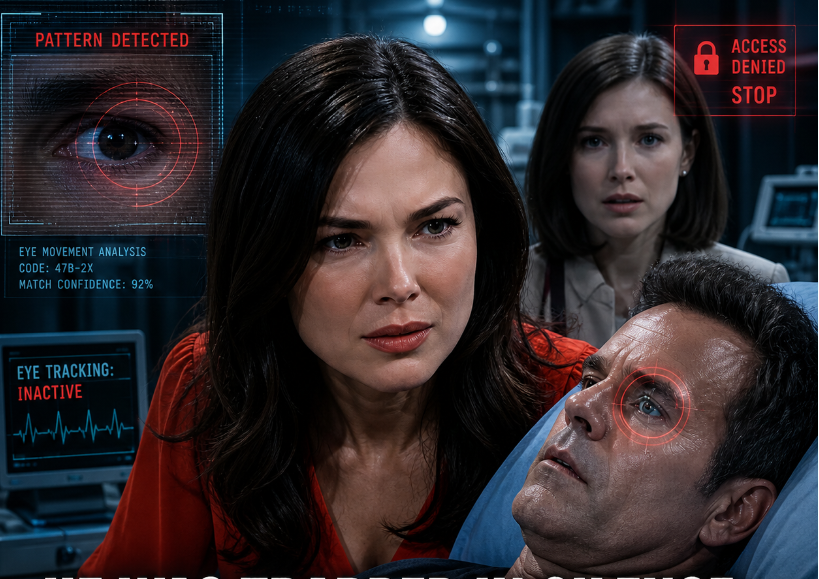
What elevates the moment isn’t simply the act of blinking, but the structure behind it. There was consistency in timing, a clear rhythm that suggested design rather than randomness. This wasn’t a symptom—it resembled a coded plea. In a room filled with medical expertise and people who cared about him, no one paused to analyze it. No one questioned what they were seeing. That collective dismissal becomes just as meaningful as the signal itself, because it creates the perfect environment for something critical to go unnoticed.
Elizabeth’s response is where the narrative truly pivots. She doesn’t react emotionally or jump to conclusions. Instead, she observes. That brief stillness—her decision to watch rather than speak—is the key clue. While others saw a helpless patient, Elizabeth recognized intention. She understood that Drew wasn’t slipping further away, but actively trying to regain control in the only way left to him. In that moment, she shifts from observer to the only person in the room who grasps that something deeper is wrong.
Then comes the suggestion that changes the entire dynamic: the use of an eye-tracking communication system. On the surface, it’s a logical and compassionate proposal—a way to give Drew a voice without requiring speech. But beneath that practicality lies something far more powerful. It removes the silence. It allows Drew to confirm truths, deny assumptions, and potentially expose something hidden. It transforms him from passive victim to active witness. And the instant this possibility is introduced, the tone of the scene shifts dramatically.
Willow’s reaction is immediate—and that’s what makes it unsettling. She doesn’t pause to consider. She doesn’t weigh the benefits. She shuts it down instantly. Her explanation sounds emotional, suggesting it would be too overwhelming for Drew to confront his reality. But the speed and firmness of her refusal feel calculated rather than compassionate. If the blinking truly meant nothing, there would be no need to block further communication. Yet Willow doesn’t just dismiss the idea—she actively prevents it. That response raises a critical question: is she protecting Drew, or controlling him?
Equally telling is Elizabeth’s restraint. She doesn’t argue. She doesn’t challenge Willow in front of others. Instead, she steps back. But this isn’t surrender—it’s calculation. She internalizes what she witnessed and later shares her concerns with Lucas. This marks the beginning of a quieter, more strategic shift. Elizabeth isn’t abandoning the idea. She’s gathering evidence, connecting patterns, and waiting for the right moment to act. Her silence isn’t weakness—it’s preparation.
From that point on, a hidden plan begins to form. Elizabeth doesn’t need approval to trust her instincts. If anything, Willow’s resistance reinforces her suspicions. Whether through Lucas, an alternative medical approach, or a private attempt to test Drew’s responses again, she now has direction. She doesn’t need to expose anything immediately. All she needs is one opportunity—one undeniable moment—to prove that Drew is still communicating.
The central mystery remains: what is Drew trying to say? Is he identifying the person responsible for what happened to him, or is he revealing something even more dangerous about the people around him? The content of the message is still unknown, but the intention is undeniable. He is reaching out, fighting against enforced silence. And if that’s true, then someone benefits from keeping him unheard. That realization shifts the story entirely—from a medical crisis to something far more controlled and deliberate.
In the end, this moment isn’t just about a man trapped without a voice. It’s about suppression, perception, and who chooses to see the truth. Everyone else witnessed the same signs and moved on. Willow saw them and shut them down. But Elizabeth saw them—and understood. That distinction changes everything. Because when the truth finally surfaces, it won’t come through confrontation or chaos. It will come through persistence, quiet observation, and one signal that refused to disappear.
