Brick’s abrupt departure during his time with Jordan wasn’t just a casual interruption—it felt loaded, almost like something urgent had snapped into place. One second he was easing her tension, grounding her in a moment of calm, and the next he was gone, pulled away by a call that clearly outweighed everything else. That kind of shift doesn’t happen without cause, especially not with someone like Brick. He doesn’t move without purpose, and he certainly doesn’t return without answers. The moment he walked out wasn’t random—it was the beginning of something much bigger unfolding behind the scenes.
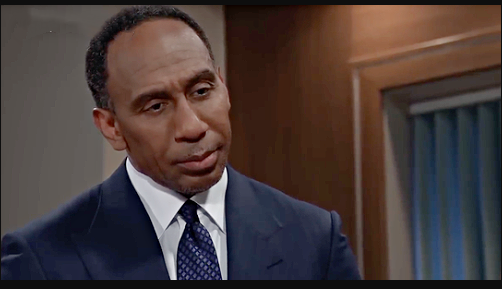
When Brick comes back, he isn’t guessing—he’s analyzing. While everyone else is caught up in the emotional chaos surrounding Jason’s arrest and the narrative being pushed by the WSB, Brick notices inconsistencies. The story is too polished, too quickly finalized, as if it were designed to shut down questions rather than answer them. Jason is already detained in a black site in Jakarta, labeled as the shooter who nearly killed Cullum. But to Brick, it doesn’t feel like justice—it feels like a rushed attempt to seal the truth away. And that distinction is everything.
The shooting itself is where the story begins to unravel. Jason Morgan has a reputation for precision and control—he doesn’t act recklessly, and he doesn’t leave behind confusion. Yet this incident was chaotic, almost careless, completely out of sync with his known behavior. Even Sonny senses that something doesn’t add up. This wasn’t how Jason operates. And when someone so consistent suddenly breaks pattern, it’s rarely accidental. It suggests outside pressure, or worse, a deliberate choice to act against his own instincts.
That realization opens the door to a far more unsettling truth. Jason wasn’t the actual shooter—he stepped in after the fact. The one who fired the shot was Rocco. In a split-second decision, Jason chose to shield him, taking control of the situation and deliberately placing himself at the center of the blame. He handled the weapon, left behind evidence, and reshaped the entire scene to ensure that suspicion would fall on him instead of a child. It wasn’t panic—it was calculated sacrifice. And it worked so effectively that no one questioned it… until now.
But that decision didn’t just end the crisis—it created a deeper, more dangerous one. Sonny has been led to believe that Jason might have been protecting Britt, especially since she never corrected that assumption. Her silence has redirected suspicion, but it hasn’t protected the truth—it’s buried it. And buried truths have a way of becoming more explosive over time. The longer this false version of events stands, the more fragile everyone’s safety becomes—especially Rocco’s.
Then there’s Cullum, the supposed victim, who may actually be the most dangerous player in all of this. On the surface, he’s a high-ranking target who survived an attack. But beneath that image lies something far more complicated. There are signs that Cullum isn’t loyal to the WSB at all—that he may be operating as a double agent with connections beyond their control. That changes everything. Because if he isn’t what he claims to be, then the narrative surrounding the shooting isn’t just flawed—it’s weaponized.
Brick is the only one who sees how these pieces connect. If Cullum regains influence over the situation, he could rewrite the entire story to his advantage. He could solidify Jason’s role as the attacker, erase any trace of Rocco’s involvement, and manipulate the WSB into protecting him instead of investigating him. In that version of events, Jason’s sacrifice doesn’t save anyone—it hands Cullum the perfect shield to operate without suspicion.
This is why Brick’s return is so critical. He isn’t reacting emotionally or relying on assumptions—he’s reading the structure beneath the chaos. He understands that Jason isn’t the aggressor, that Rocco is dangerously exposed, and that Cullum is far from innocent. While everyone else is trapped in partial truths and silence, Brick sees the entire framework of deception that’s holding this situation together.
And once that framework begins to crack, everything changes. Jason is no longer just a prisoner—he becomes the key to unraveling a much larger conspiracy. Rocco shifts from being protected to being at risk. And Cullum transforms from victim to threat. Brick didn’t just chase a lead—he traced the lie back to its origin.
Jason didn’t fail. He covered. And now Brick might be the only one capable of proving it before the truth is buried for good.
