Jack didn’t just stumble into infidelity — he stepped into a room frozen mid-event, like a crime scene that hadn’t finished telling its story. Carly lay in bed, another man’s presence undeniable from the clothes discarded nearby, yet Valentin himself was nowhere to be seen. Not fleeing, not captured — simply erased. That’s what transforms this from a predictable confrontation into something far more unsettling. Because nothing about that scene reflects a clean or calculated exit. It feels interrupted, like something — or someone — forced the moment to stop.
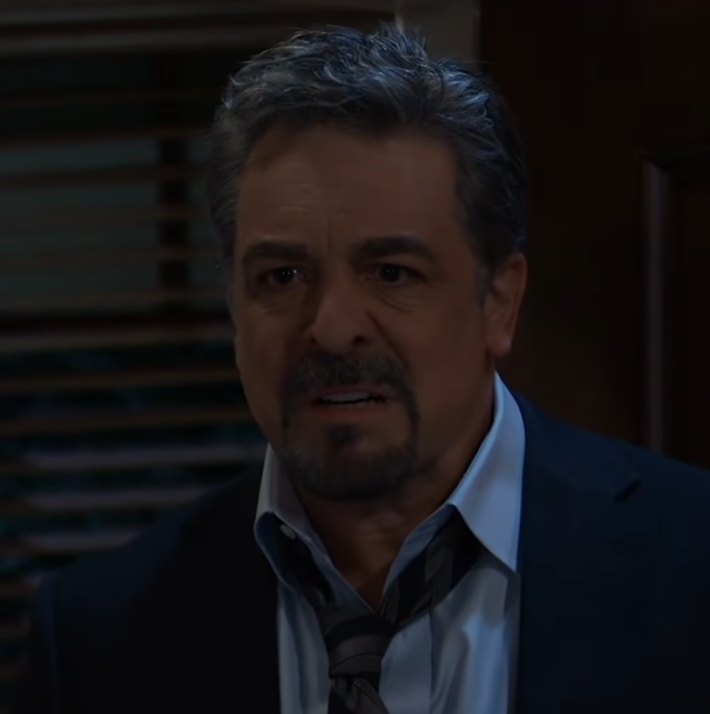
The first and loudest clue sits in plain sight: Valentin’s clothes. They weren’t hurriedly grabbed, partially missing, or concealed. They were left out, fully visible, almost deliberately so. That single detail dismantles any theory of a planned getaway. Someone experienced doesn’t abandon everything unless time is brutally limited. This wasn’t a quiet escape. This was a vanishing act under extreme pressure. And when seconds are all you have, distance becomes impossible. Which leads to a chilling conclusion — he couldn’t have gone far.
Then there’s the untouched wine. Two glasses, left exactly where they were, untouched since the moment everything shifted. It’s not just evidence of another person — it’s evidence of exposure. If Valentin had even a brief window, those glasses would’ve been cleared. If Carly had panicked, she would’ve tried to fix something — anything. But the room remained unchanged, like time itself had been cut off mid-motion. That doesn’t suggest chaos. It suggests interruption so sudden that no one had the chance to react.
Carly’s behavior only deepens the mystery. She stayed in bed. No attempt to delay Jack, no effort to chase Valentin, not even a reflex to block or distract. That’s not how someone reacts when their secret just ran out the door. That’s how someone behaves when they believe the situation is already under control. Her stillness isn’t shock — it’s awareness. And that raises a dangerous question: how can she be so composed if Valentin truly escaped?
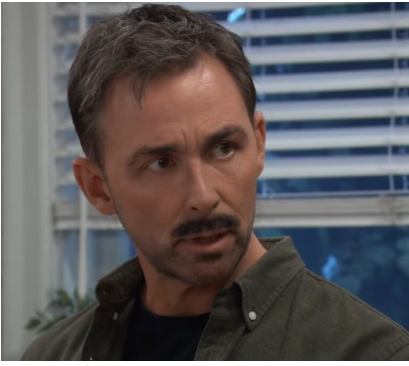
Her voice adds another layer. When she calls out Jack’s name, it seems like fear at first glance. But timing changes everything. She speaks before Jack fully processes what he’s seeing, before he takes command of the room. That moment isn’t just emotional — it’s functional. It feels like a signal, not a reaction. A warning delivered at exactly the right second. And if Valentin heard it, then he didn’t need minutes to get away — he only needed a few seconds to move somewhere he couldn’t immediately be found.
Now consider what’s missing. No open window. No hurried footsteps. No disturbance that suggests someone rushed out. Every logical escape route leaves traces — and there are none. That absence collapses the most obvious explanation: that Valentin ran. Because the environment contradicts it completely. The room feels sealed, the interruption too precise, the disappearance too clean. That doesn’t suggest an exit. It suggests concealment.
From there, the theories become more unsettling. The simplest one is also the most terrifying — Valentin never left at all. He could have been hidden within the same space, tucked into blind spots or overlooked corners. Close enough to hear everything. Close enough to act. If that’s true, Jack wasn’t chasing a man who fled — he was standing within arm’s reach of him, completely unaware.
Another possibility shifts the movement, but not the logic. Instead of escaping outward, Valentin could have moved upward — into an attic or a concealed vertical space. A pre-planned fallback point. Fast, silent, effective. That kind of move fits someone trained to react instantly under pressure. It’s not about escape — it’s about repositioning, disappearing into the structure itself.
And then comes the most dangerous interpretation of all: none of this was accidental. The clothes left behind. The untouched glasses. The perfectly timed interruption. What if this wasn’t a failed escape? What if it was intentional? What if Valentin didn’t try to avoid discovery — but engineered it? Leaving just enough evidence to ignite suspicion, to provoke Jack, to push him into exactly the reaction he wanted.
Valentin didn’t vanish by mistake. He placed himself exactly where he needed to be. Every detail in that room points to control, not panic. Jack saw everything — the betrayal, the clues, the setup. But he missed the one thing that mattered most. And that blind spot may be the very thing that destroys him.
