A confrontation that should be impossible
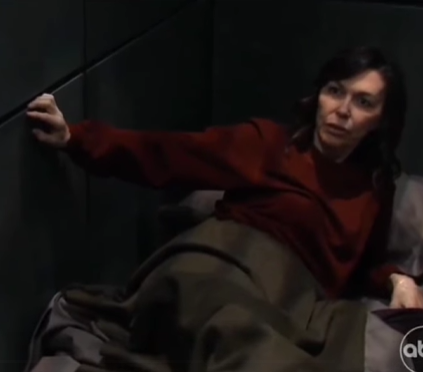
In the January 23 episode of The Rinse, General Hospital delivers a moment that instantly fractures reality: Anna Devane comes face-to-face with Peter August, the man believed to be unquestionably dead. There is no dream sequence warning, no visual distortion, no soft fade to signal unreality. Instead, the show presents the encounter plainly — two characters in the same space, arguing as if death were merely a misunderstanding.
Anna’s denial is the first red flag
What makes the scene unsettling is not Peter’s presence, but Anna’s reaction. She does not scream. She does not panic. She does not accept what she sees. Anna immediately labels Peter an illusion — a product of exhaustion, trauma, and unresolved guilt. Her certainty feels logical, even responsible. Yet that very composure becomes suspicious. If this were truly a hallucination, would Anna’s mind construct something so grounded, so controlled, so resistant to fantasy?
Peter weaponizes doubt, not fear
Peter does not behave like a ghost or a nightmare. He argues. He challenges. He reasons. Instead of threatening Anna, he plants doubt — reminding her that Port Charles has a long history of people declared dead who later walked back into the light. By invoking names like Nathan and Britt, Peter reframes death not as final, but as negotiable. The implication is chilling: if others returned, why couldn’t he?
This is not the Obrecht hallucination — and that matters
Anna has hallucinated before. When Obrecht appeared, the tone was unmistakable — surreal, emotionally loaded, fleeting. That encounter existed to expose Anna’s grief. Peter’s appearance, by contrast, serves a different function. It is structured, linear, and sustained. The dialogue advances logic rather than emotion. This is not memory replaying itself. This is a confrontation that demands answers.
The physicality problem no one can ignore
One of the most telling details is how Peter occupies space. He does not flicker. He does not fade. He does not vanish once Anna looks away. When the scene ends, Peter simply walks off — like a living man exiting a room. In soap language, that detail is loud. Hallucinations usually dissolve. This one obeys physics. And that forces viewers to confront an uncomfortable possibility: the show may be intentionally breaking its own visual rules.
If Peter is alive, the implications are massive
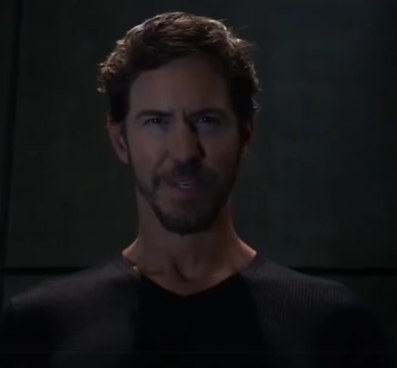
Should Peter truly be alive, this moment retroactively rewrites years of narrative certainty. His “death” would not just be another fake-out — it would represent one of the most elaborate deceptions the show has pulled. It would also explain the precision of his dialogue and the absence of dreamlike cues. Peter would not be haunting Anna. He would be testing her — watching how quickly she rejects the truth.
But if Peter is not alive, Anna’s mind is far more fractured than she admits
The alternative is equally disturbing. If Peter is a hallucination, then Anna’s psyche has crossed into dangerous territory. This is no longer grief manifesting as memory. This is her mind constructing an adversary capable of logic, strategy, and emotional manipulation. That suggests Anna’s guilt has evolved into something autonomous — a force capable of rewriting reality to punish her.
The show refuses to answer — on purpose
Crucially, the episode offers no confirmation either way. SoapHub’s analysis leaves the question open, and the episode itself reinforces that ambiguity. This is not sloppy writing. It is strategic. By withholding clarity, General Hospital forces the audience to debate not just Peter’s fate, but Anna’s reliability as a witness to her own reality.
Death may no longer be the point
What makes this storyline powerful is that it may not be about whether Peter lives or dies at all. It may be about the collapse of certainty — the idea that even the most definitive events can be questioned. Whether Peter is flesh and blood or psychological reckoning, the result is the same: Anna is destabilized, and the audience is no longer allowed to trust what they see.
One truth remains undeniable
Alive or not, Peter has returned in the only way that truly matters. He has reopened wounds Anna thought were sealed. He has forced the past into the present. And he has reminded viewers of a brutal truth about Port Charles: in General Hospital, death is never the end — it’s just another story waiting to be rewritten.
