The moment Danny and Charlotte shared a kiss on General Hospital, the internet did exactly what the writers knew it would do: explode. This wasn’t a sweet, innocent teen moment tucked into a blizzard episode. This was a deliberate, provocative choice that instantly reignited one of daytime television’s oldest taboos—the “kissing cousins” trope—and forced fans to confront how far the show is willing to push moral discomfort in the name of drama.
On the surface, the scene played like classic soap storytelling. Two teens stranded by a storm, isolated from adults, emotionally raw, and desperate for connection. The lighting was soft, the dialogue intimate, the pacing slow and deliberate. If you removed the family tree entirely, this would read as a standard coming-of-age beat. That’s exactly why the kiss landed so hard. General Hospital didn’t stumble into controversy by accident—it staged it carefully.
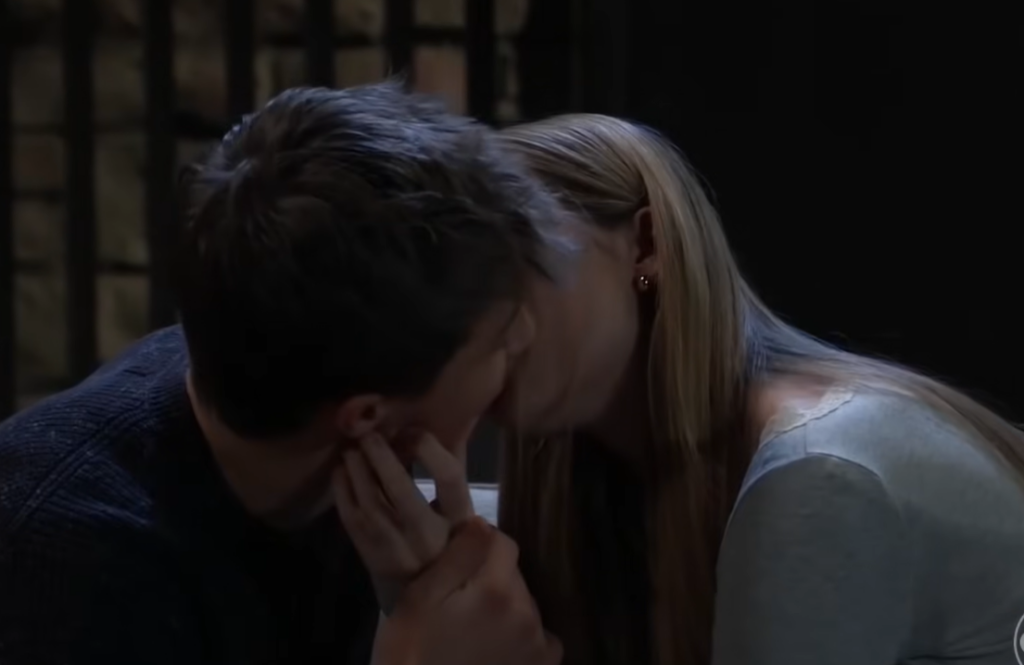
The discomfort comes from the word the fandom can’t stop repeating: cousins. Danny and Charlotte are connected through the sprawling Cassadine web, a dynasty infamous for blurred moral lines, secret identities, and questionable romances. By invoking that lineage, the show intentionally activated decades of viewer memory. Fans aren’t just reacting to this kiss—they’re reacting to what Cassadine bloodlines represent: danger, obsession, and a history of “wrong” relationships justified by passion.
What complicates the outrage is that the show also planted its defense inside the story itself. Danny and Charlotte didn’t grow up together. They don’t share a sibling bond or childhood familiarity. Their connection has been forged through shared trauma, abandonment, and emotional neglect. In soap logic, that matters. The writers are clearly leaning into the gray area, daring viewers to ask whether biology alone defines what’s acceptable—or whether emotional reality matters more.
Still, the timing makes the move feel strategic rather than organic. General Hospital is deep in a ratings-hungry stretch, and nothing drives engagement like moral debate. The kiss wasn’t just written for character development; it was written for social media, comment sections, and spoiler headlines. “Kissing cousins” is a phrase designed to travel fast, spark outrage, and keep the show trending beyond its usual fanbase.
There’s also a generational angle at play. Danny and Charlotte represent the next wave of Port Charles stories, and the show seems determined to mark them as “different” from the teens before them. This isn’t puppy love or innocent flirting. This is complicated, messy, and ethically uncomfortable—exactly the tone modern soaps are chasing to stay relevant in a prestige-TV era that rewards darkness over simplicity.
Importantly, the show didn’t frame the kiss as triumphant or romanticized. There was hesitation. There was uncertainty. The aftermath matters more than the act itself, and that’s where the real story lies. The writers aren’t asking viewers to cheer—they’re asking them to watch what happens next. Guilt, confusion, fallout, and family reaction are the real payoff, not the kiss itself.

Fan reaction has split predictably. Some viewers are furious, calling the move lazy shock value and accusing the show of recycling tired taboos. Others defend it as classic soap provocation, pointing out that daytime drama has always lived in morally uncomfortable spaces. What both sides agree on is this: the scene worked. People are talking. People are watching. And people are emotionally invested, even if that emotion is anger.
The real test will be whether General Hospital commits to the consequences. If the kiss is brushed aside or retconned away, it will confirm critics’ worst fears—that this was controversy without courage. But if the show allows the discomfort to linger, forcing characters and viewers alike to wrestle with what happened, the storyline could evolve into something deeper than shock value.
“Kissing cousins” isn’t just a headline—it’s a challenge. It dares the audience to decide where their moral line actually sits and whether soaps should respect it or bulldoze through it. General Hospital has made its choice. Now the question isn’t whether the kiss was wrong. The question is whether the fallout will be brave enough to justify it.
