For weeks, General Hospital has asked viewers to accept a miracle: Nathan West is alive. His DNA matches. His fingerprints match. On paper, the man who walked back into Port Charles is exactly who he claims to be. And yet, nothing about him feels right. The unease isn’t accidental. It’s the story whispering that the truth is far darker — and that Peter August may have just given the game away.

At first glance, the “Nathan returns with amnesia” trope feels familiar. Soap operas love memory loss. But this version comes with a disturbing twist. This Nathan doesn’t just lack memories — he has new ones. Knowledge that doesn’t align with his past. Skills that don’t fit his history. And explanations that crumble the moment anyone looks too closely.
The biggest red flag is his sudden, advanced scientific knowledge. Nathan casually recalls complex chemistry concepts, including the periodic table, with ease. This isn’t the Nathan viewers knew — the cop, the protector, the man defined by instinct and heart rather than academic brilliance. When questioned, he explains that his father pushed him hard in science as a child. It sounds plausible until you remember one key thing: that version of his father never existed. Nathan’s upbringing simply doesn’t support this story.
That’s where the lie begins to crack.
Lulu Spencer becomes the audience’s surrogate, voicing what everyone at home is thinking. She remembers Nathan’s past. She remembers the man he was. And she knows that this explanation doesn’t line up. Her confusion isn’t just emotional — it’s logical. If Nathan truly lost memories, why did he gain an entirely different intellectual profile?
This is where Peter August enters the picture like a ghost from a nightmare. Peter’s life was shaped — and warped — by his father’s obsessive control, intellectual conditioning, and psychological manipulation. If anyone in Port Charles embodies forced learning, scientific indoctrination, and identity distortion, it’s Peter. The parallels are impossible to ignore.
The most unsettling possibility isn’t that Nathan is lying — it’s that he believes he’s telling the truth. This doesn’t feel like a simple imposter story. It feels like something far more invasive. Conditioning. Programming. Or even memory transfer. General Hospital has a long history of playing with identity, brainwashing, and medical experiments, especially where the Faison legacy is concerned. This storyline fits that pattern perfectly.
Jack Brennan’s cryptic comments only deepen the mystery. His suggestion that “Nathan West” may not truly be a West at all — but a Faison — reframes everything. Suddenly, the scientific knowledge, the emotional disconnect, and the strange gaps in memory don’t feel random. They feel engineered.
What if this isn’t Nathan pretending to be someone else? What if this is Peter — or someone shaped by Peter — wearing Nathan’s life like a mask?
Even the DNA evidence no longer feels reassuring. In a world where twins, lab manipulation, and illegal experimentation are common, DNA proves biology, not identity. A body can be real while the mind inside it is not. The show is daring viewers to separate the man from the memories, and that’s where the horror lives.
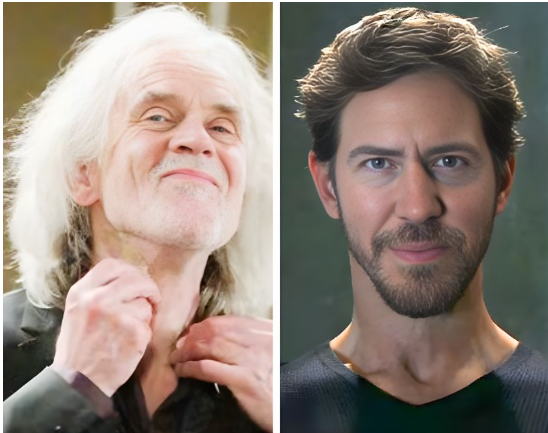
Peter’s potential slip isn’t a confession — it’s a thematic exposure. The story keeps circling one idea: that trauma can overwrite identity. That a person can be broken down and rebuilt into something unrecognizable. If Peter survived longer than anyone believed, if his influence endured beyond his physical presence, then “Nathan’s return” may actually be Peter’s legacy coming home to roost.
This also explains why the emotional beats feel off. Why connections don’t spark the way they should. Why the man standing in front of loved ones feels hollow, distant, and wrong. The show isn’t failing to recreate Nathan — it’s intentionally showing us that this isn’t him.
And that’s what makes this storyline so chilling. It’s not about whether Nathan is alive. It’s about whether he ever truly came back.
If Peter really did slip up, it wasn’t with a single line of dialogue. It was through the structure of the story itself. The clues are layered. The inconsistencies are loud. And the implication is brutal: Port Charles may be embracing a man who looks like Nathan West, but the shadow behind his eyes belongs to someone far more dangerous.
This isn’t a resurrection.
It’s an invasion.
