Billy Abbott’s latest emotional struggle reveals a painful truth that longtime viewers have watched unfold repeatedly throughout his life. His recent grappling decision surrounding Chancellor Industries and his mother Jill shows that, despite his apparent growth and promises to do better, Billy continues to fall into the same destructive pattern. While he presents himself as conflicted between professional responsibility and personal happiness, his actions suggest that ambition, family legacy, and corporate loyalty will always outweigh his romantic relationships. The situation exposes not just a difficult choice, but a deeply rooted character flaw that Billy seems unable — or unwilling — to overcome.
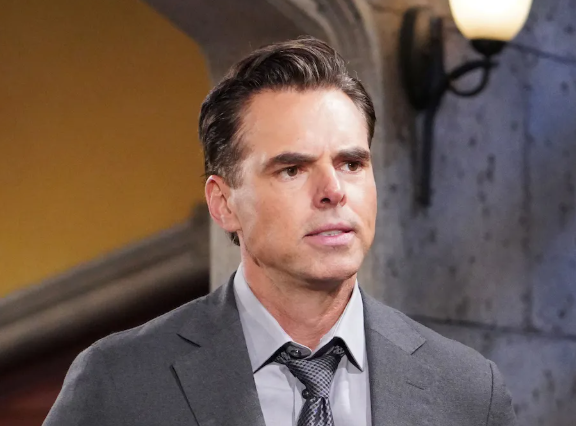
The turning point centers around Billy’s internal battle regarding Chancellor and Jill’s deteriorating health. Billy openly expresses fear about losing his mother and feels a powerful obligation to protect what she and Katherine built. The company represents far more than business success to him; it symbolizes family identity, emotional security, and personal redemption. Billy’s need to preserve that legacy becomes overwhelming, overshadowing every other priority in his life. His emotional vulnerability makes his motivations understandable, but it also highlights his inability to balance personal relationships with his sense of duty, something that has haunted him for years.
Billy attempts to show concern for Sally by reaching out and acknowledging that he may have made her feel abandoned when he pursued opportunities connected to Cane. On the surface, this moment appears to demonstrate growth and self-awareness. However, the timing and sincerity of his outreach raise serious questions. Billy’s apology feels reactive rather than proactive, as if he is trying to ease guilt rather than truly protect the relationship. His attention quickly returns to Chancellor, Jill, and the looming decisions about power and control. Sally is left emotionally stranded, forced to watch Billy prioritize obligations that once again take precedence over their relationship.
His conversation with Jack further exposes Billy’s emotional and psychological state. Billy admits he is terrified of losing Jill and acknowledges that stress could worsen her condition. He feels responsible not only for preserving the company but also for shielding his mother from further harm. This sense of obligation reinforces Billy’s identity as someone who equates love with sacrifice and responsibility rather than emotional connection. Jack encourages Billy to spend time with Jill instead of throwing himself into corporate battles, suggesting that personal connection might offer more healing than business control. Unfortunately, Billy reveals that Jill does not want to see him, which intensifies his emotional desperation and likely pushes him further toward focusing on Chancellor as a way to regain purpose.
The most heartbreaking aspect of Billy’s decision-making process is Sally’s near complete absence from his ultimate priorities. Despite acknowledging her feelings, Billy repeatedly drifts back toward corporate responsibility and family loyalty. His departure to handle business matters without addressing the emotional consequences for Sally underscores a painful reality: Billy may care about her, but caring has never been enough to change his behavioral patterns. Sally becomes another casualty of Billy’s compulsive need to prove himself through ambition and family devotion.

This storyline reinforces a recurring theme that has followed Billy throughout his romantic history. Time and time again, he becomes consumed by grand missions — whether it involves revenge, redemption, or saving family legacies — and these obsessions consistently push his partners to the sidelines. Billy often convinces himself that his actions serve a greater good, allowing him to justify emotional neglect. The cycle has repeated across multiple relationships, showing that Billy’s greatest enemy is not external conflict but his own inability to redefine what truly matters.
Billy’s fixation on legacy also reveals his struggle with identity. He repeatedly seeks validation through achievements tied to family approval and corporate success. Instead of building stability through emotional partnerships, Billy chases symbolic victories that temporarily satisfy his need for purpose. These victories, however, rarely bring lasting fulfillment. Instead, they leave a trail of broken trust and abandoned partners who realize they will always rank below Billy’s larger battles. Sally’s growing emotional distance suggests she may soon reach the same conclusion others before her have faced.
The tragedy of Billy’s storyline lies in the fact that he appears aware of his flaws but remains powerless to change them. His moments of self-reflection offer glimpses of potential growth, yet those realizations never translate into sustained behavioral transformation. Each time Billy promises to balance love and responsibility, he ultimately chooses duty and ambition. This repetition creates a heartbreaking inevitability that viewers have come to expect from his character arc.
Ultimately, Billy’s current struggle proves that his relationships will continue to suffer as long as he defines success through control, legacy, and family obligation rather than emotional vulnerability. His choice regarding Chancellor and Jill does not simply affect business or family dynamics; it exposes a man trapped in a cycle of repeating past mistakes. By once again placing ambition and responsibility above love, Billy confirms that despite years of lessons, heartbreak, and second chances, he remains destined to sabotage the very relationships he claims to value most.
