This is no longer a love story gone wrong. It’s not even a tale of betrayal and heartbreak. What we’re watching unfold between Willow and Drew is something darker — a psychological war between two people who have both crossed moral lines so many times that “victim” and “villain” no longer apply. Willow drugged her husband. Drew may have emotionally engineered the collapse that led her there. So the real question isn’t who fell first — it’s who fell further.
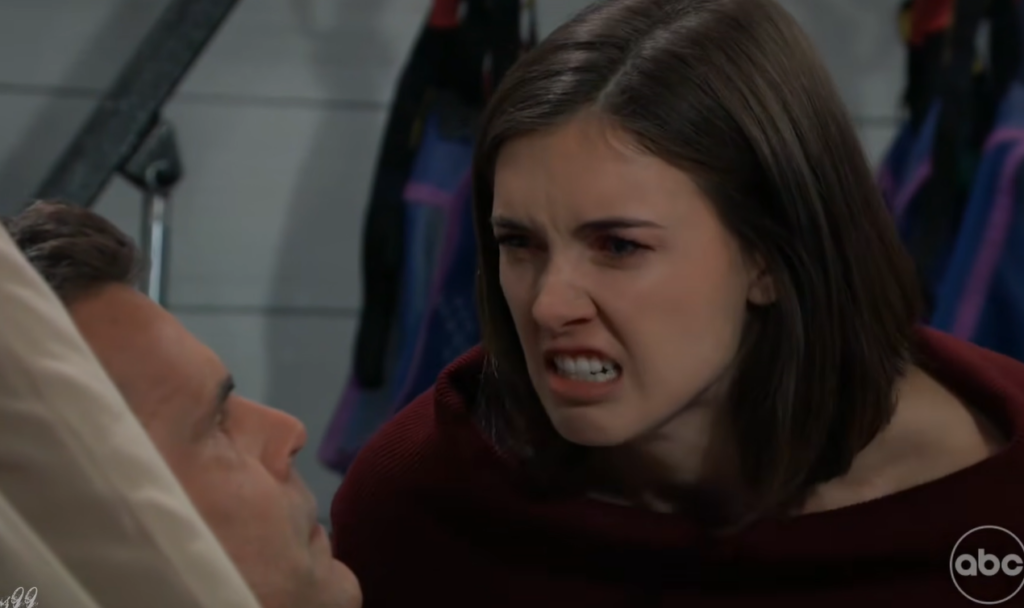
Willow’s actions are impossible to soften. She didn’t just shoot Drew in a moment of panic. She admitted it. She didn’t just let him lie there incapacitated. She revealed he never had a stroke — she drugged him. And not once, but repeatedly, injecting medication into his IV while he lay there conscious, terrified, unable to move or speak. She calmly explained that she needs him like this — compliant, silent, frozen — so she can use his money and influence to rebuild her life with her children. That isn’t desperation. That’s strategy. That’s control.
And yet, the story doesn’t begin with the syringe. It begins with betrayal. Drew slept with Willow’s mother. That single act shattered whatever fragile emotional stability she had left. He inserted himself into her custody battle, positioning himself as protector and savior while simultaneously becoming the source of her humiliation. He allegedly manipulated situations involving Wiley. He allegedly used influence in legal matters. Whether every accusation is true or not almost doesn’t matter — Willow believes he is capable of anything if it means keeping her dependent on him. In her mind, he was isolating her, cornering her, binding her to him with power and pressure.
So when Willow confronts him, accusing him of potentially orchestrating Judge Heran’s death, it’s not just paranoia. It’s the culmination of distrust. She sees a man who controls outcomes behind the scenes. A man who smiles while pulling strings. And if she truly believes he would eliminate a judge to control her custody fate, then in her logic, shooting him wasn’t madness — it was preemptive survival. Twisted? Yes. But internally consistent.
Still, Drew’s current reality cannot be ignored. He is lying in bed, conscious but paralyzed, fully aware of what Willow has done and plans to continue doing. He cannot defend himself. He cannot speak. He cannot warn anyone. He is trapped inside his own body, forced to process the fact that the woman he loved has decided he is better off incapacitated than free. Whatever he may have done before, this is undeniably abuse. This is imprisonment. This is chemical restraint without consent.
The uncomfortable truth is that both of them weaponized pain. Drew used influence, proximity, and emotional manipulation — whether subtly or overtly — to maintain relevance and control in Willow’s life. Willow used a gun and a needle. Drew may have operated in boardrooms and legal gray zones. Willow operates at a hospital bedside with medication. One uses power structures. The other uses chemistry. Different tools. Same objective: dominance.

What makes this storyline explosive is that neither character is clean. If Drew truly manipulated custody proceedings or interfered in legal matters, he planted the seeds of mistrust and retaliation. If Willow is exaggerating or projecting to justify what she’s done, she has crossed into calculated villain territory. She isn’t hysterical. She isn’t broken. She is frighteningly composed. That composure is what shifts her from tragic heroine to something far colder.
And that’s the moral cliff the audience is standing on. If someone betrays you, humiliates you, possibly manipulates your children and legal fate — how far is too far to fight back? Does betrayal justify poisoning? Does manipulation justify immobilization? If Drew created a psychological cage around Willow, does that excuse her building a physical one around him? Or does revenge simply transform victims into reflections of their abusers?
Perhaps the most haunting element is that this doesn’t feel impulsive. Willow didn’t snap. She planned. She calculated dosage. She evaluated timing. She reassured Chase in the living room and then returned to Drew’s bedside to continue the sedation. That duality — calm public face, controlled private cruelty — is what makes her more chilling than chaotic villains of the past. Meanwhile, Drew’s silence forces the audience to sit in discomfort. We cannot hear his defense. We can only see his fear.
So who is right? Who is wrong? The easy answer is: both. The harder answer is: it depends on when you start counting sins. If you begin with the affair, Drew struck first. If you begin with the gunshot, Willow did. If you begin with the drugging, Willow escalated beyond justification. If you begin with long-term emotional manipulation, Drew laid groundwork.
This is not a battle of good versus evil. It is a collision of two morally compromised people who loved each other poorly and are now destroying each other methodically. Drew may have lit the match. Willow may be the one holding the gasoline. And in the ashes of this war, the real casualties won’t just be reputations — they’ll be whatever humanity either of them had left.
