Chase has suspected Michael from the very beginning. Long before the key fit the lock at Drew’s house, Chase had already decided who the likely shooter was. So when he tried each key and one of them opened Drew’s door, it didn’t create suspicion — it confirmed what he already believed. That moment wasn’t about discovering truth. It was about validating a narrative he had built in his head. This is classic confirmation bias. Chase wasn’t searching for facts. He was searching for proof that he was right.
And yet, if he was so convinced, why didn’t he immediately turn Michael in? Why didn’t he secure the keys as evidence? Why didn’t he file a formal report? A police officer who truly believes he’s uncovered a critical link to a shooting doesn’t casually walk away. The answer lies in Chase’s hesitation. Deep down, he wasn’t fully certain. He suspected Michael — but suspicion isn’t proof. Turning Michael in would mean putting his own career on the line, especially after he had already overstepped boundaries before. Chase knew that if he admitted he took the keys without permission and tested them at Drew’s house, he could face consequences. So he paused. He chose instinct over protocol.
There’s also the matter of trust — or lack of it. Dante is Michael’s brother. If Chase handed over the keys, would the investigation truly remain objective? Or would it quietly shift? Chase may not have trusted the system to handle this fairly. Keeping the knowledge to himself gave him control. It allowed him to observe reactions, to watch Michael, to watch Willow, to gather more before making a move. But control built on incomplete information is fragile. And Chase’s version of control was already cracking.
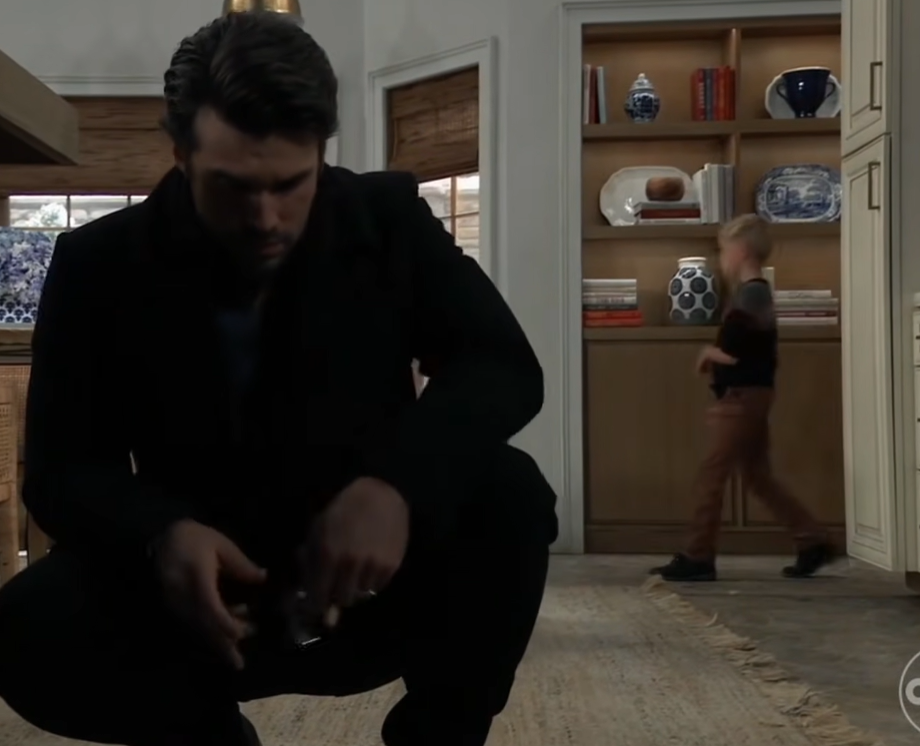
Then comes the detail that fans can’t ignore: why didn’t he put the keys back where he found them? A disciplined officer would restore the scene exactly as it was. Instead, Chase dropped the key ring on the kitchen floor. Not on the table. Not discreetly back in place. On the floor — visible, out of order, disruptive. That action feels small, but it’s loaded. Was it stress? He had just broken into a house, confronted tension, and walked away with a heavy suspicion. His mind was racing. Maybe the drop was unconscious — a sign of inner chaos.
But what if it wasn’t unconscious? What if dropping the keys was a silent message? Leaving them on the floor creates attention. It guarantees they’ll be noticed. It says: “Something has changed.” It’s a psychological move. Chase may not have said to Michael, “I know.” But the displaced keys say it for him. It creates pressure. It plants paranoia. It forces someone to ask questions. That’s not clean policing. That’s emotional maneuvering.
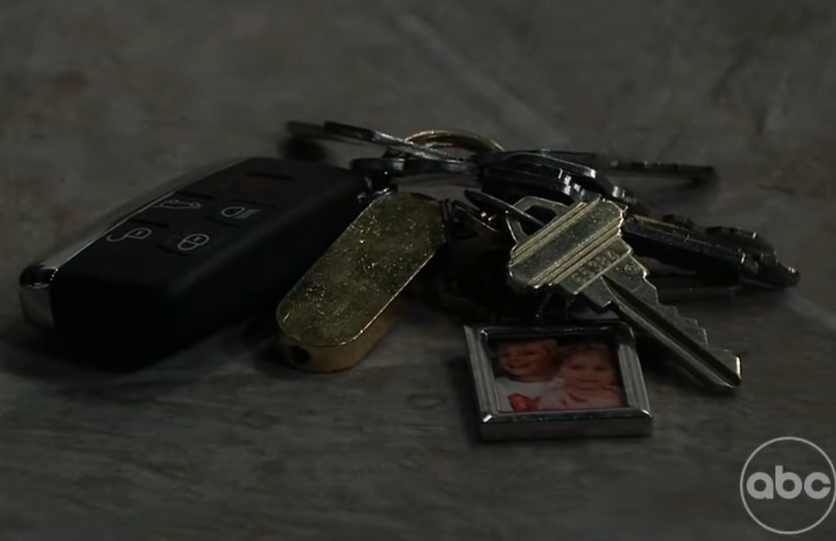
There’s also the symbolism. Chase once stood firmly for rules and order. Yet he took the keys without consent. He tested them without authorization. He entered a home without a warrant. And he chose not to report what he discovered. When the keys hit the floor, it felt like more than metal hitting tile. It felt like principle hitting reality. The neat moral lines Chase once operated within are no longer intact. He’s operating in gray territory now — and he doesn’t even realize how far he’s drifted.
The tragedy deepens when you consider what Chase doesn’t know. If Willow planted that key in Michael’s key ring to frame him, then Chase is acting on a manipulated piece of evidence. He believes he’s protecting justice. In reality, he may be accelerating an injustice. He’s building a case in his mind around something deliberately staged. And if the truth eventually comes out — if it’s revealed that the key was planted — Chase will have to face the fallout. He will have to confront the fact that he doubted the wrong man.
And the consequences won’t be abstract. His career could be questioned if his unauthorized entry is exposed. His integrity could be challenged. And his marriage could suffer. Brook Lynn has already seen Chase act on impulse before. If she learns he crossed legal lines again, not out of proof but out of assumption, trust will fracture. This isn’t about Willow anymore. It’s about Chase’s judgment. About his inability to separate instinct from evidence.
Then there’s Wiley. The child who saw the keys on the floor. Soap storytelling never wastes a detail like that. Wiley noticing the keys creates a quiet ripple. If he mentions it later, if Michael realizes someone handled them, that tiny moment could unravel everything. The smallest witness may trigger the biggest collapse.
So the real questions linger. Why didn’t Chase report Michael immediately if he was so sure? Why risk everything to test a theory but stop short of official action? And why drop the keys on the kitchen floor instead of restoring them to their place? Was it hesitation? Was it defiance? Or was it the first visible crack in a man who believes he’s right — but may be catastrophically wrong?
If Chase is wrong about Michael, he’s not just mistaken. He’s standing at the edge of professional ruin and personal heartbreak. And when the truth finally surfaces, the collapse won’t be quiet.
