Cane Ashby’s decision to tell Victor Newman “You win” wasn’t just a business concession — it was an emotional detonation. In one of the most jaw-dropping power shifts Genoa City has seen in months, Cane agreed to trade corporate control for the safe release of Lily and their twins. On paper, it looks like surrender. But emotionally? It’s a father choosing flesh and blood over legacy. And in the ruthless world of Newman warfare, that kind of vulnerability is either heroic… or fatal.
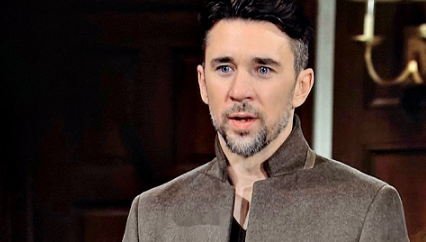
Victor Newman engineered the ultimate psychological trap. He didn’t threaten Cane’s money. He didn’t attack his pride. He went straight for the heart — Lily and the children. By presenting proof that they were being held somewhere under his control, Victor forced Cane into a corner with no clean exits. Whether the kidnapping was a bluff, an exaggeration, or a calculated intimidation tactic doesn’t even matter at that point. The fear was real. And fear is the one currency even billionaires can’t outbid.
Cane’s declaration that Victor “wins” wasn’t just resignation — it was strategy wrapped in desperation. He didn’t sign blindly. He demanded confirmation that Lily and the twins were safe and released. That detail matters. It shows that Cane wasn’t collapsing under pressure; he was negotiating under duress. There’s a difference. He may have ceded the empire, but he made sure the hostages — literal or symbolic — were freed first. That’s not weakness. That’s a controlled sacrifice.
Still, the optics are brutal. In the court of public perception inside Genoa City, Victor looks invincible again. The Mustache regained dominance not through boardroom brilliance, but through emotional leverage. Nikki, Nick, and even Adam have shown discomfort with how far Victor is willing to go. But discomfort has never stopped Victor from executing a plan. He believes the ends justify the means. And once again, the ends are victory.
The real question isn’t whether Cane lost. It’s what this loss transforms him into. A man who gives up power to protect his family doesn’t walk away unchanged. There’s humiliation in handing over a company. There’s rage in knowing you were cornered. There’s simmering resentment in realizing someone weaponized your children against you. Cane may have saved Lily and the twins, but he may have created a darker version of himself in the process.
And then there’s Phyllis. Watching her investment in Cane’s corporate rebellion collapse in real time was its own explosion. She believed Victor would never truly endanger Neil’s family. She thought she could outmaneuver the patriarch through confidence and bravado. But Victor proved something chilling: he doesn’t need to physically harm someone to control the narrative. Phyllis now faces the fallout of backing the wrong horse in a high-stakes war.
Billy Abbott is caught in the undertow as well. The Chancellor deal, the power plays, the carefully aligned alliances — all of it shifts once Cane folds. Billy thrives on chaos, but this isn’t chaos he controls. Victor just re-established himself as the apex predator, and that resets every dynamic in the corporate ecosystem. Anyone who thought the Newman throne was vulnerable just got reminded why it rarely stays that way for long.
But here’s the twist that lingers: did Victor actually win, or did he expose a fracture within his own kingdom? His family has seen the lengths he’s willing to go. Leveraging children — even under the claim that no real harm would occur — plants seeds of doubt. Nikki doesn’t endorse this cruelty. Nick questions it. Adam calculates it. And when power starts to isolate the king from his own bloodline, the throne becomes unstable in ways money can’t fix.
Cane’s surrender may not be the end of the war. It may be the prologue to something far more dangerous. A man who sacrifices everything for his family doesn’t forget who forced his hand. He recalibrates. He waits. He studies the battlefield. If Victor believes this is permanent victory, he may be underestimating the quiet fury of a father who was pushed too far.
This wasn’t just a trade of a company for a release. It was a moral collision between power and love. Victor chose dominance. Cane chose family. In the short term, Victor stands tall. But in the long term, history has shown that the most dangerous enemy is the one who has already lost everything.
And Cane just lost it all — except the one thing that matters most.
