For years, the answer felt obvious. If you crossed Sonny Corinthos, you feared Jason Morgan. Jason is the enforcer, the silent storm, the man who walks into a room and changes the temperature without raising his voice. His presence alone signals consequence. But as recent developments continue to peel back layers of Brick’s past, a more unsettling question has emerged: what if the most dangerous man in Sonny’s orbit isn’t the one holding the gun?
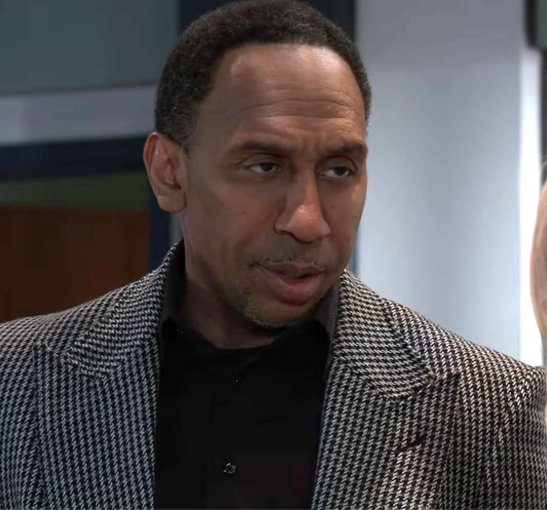
Jason is the weapon. Brick is the war plan.
There is no denying Jason’s power. His loyalty is absolute, forged through years of sacrifice and bloodshed. When a threat surfaces, Jason does not hesitate. He acts. He eliminates. He absorbs the fallout so Sonny does not have to. In a world fueled by violence and betrayal, Jason represents certainty. If you make a move against Sonny, Jason will respond. Directly. Decisively. Permanently.
But certainty can be predicted.
What makes Brick different is not noise, not intimidation, not physical force. It is foresight. Brick rarely raises his voice. He does not posture. He observes. He calculates. And more importantly, he anticipates. That distinction alone shifts the balance of power.
Recent hints about Brick’s connection to Jack Brennan in Los Angeles were not random narrative filler. Brennan operates in intelligence-adjacent territory, brushing against covert networks and high-level operations. People do not simply “know” figures like Brennan without having navigated similar spaces. Brick’s casual familiarity with him suggests a past far beyond mob accounting and surveillance consulting. It implies experience in environments where information is currency and miscalculation is fatal.
Then there’s Jordan’s acknowledgment of Brick’s intelligence background. That confirmation reframes everything. Brick is not merely technologically skilled; he is strategically conditioned. Intelligence training is not about reacting — it is about identifying patterns before they manifest into threats. It is about understanding behavioral shifts, financial irregularities, and network vulnerabilities long before they explode into crisis.
Jason reacts to danger. Brick prevents it.
When Josslyn’s behavior began to raise subtle red flags, Brick didn’t explode into confrontation. He watched. When Brennan and Cullum’s names surfaced around attacks targeting Sonny, Brick didn’t panic. He connected dots. That pattern recognition does not come from street instinct. It comes from structured, disciplined training.
And here’s where the comparison becomes uncomfortable.
Jason ends men. Brick ends empires.
Jason’s power is visible. Brick’s is systemic. If Jason is deployed, you know war has begun. If Brick is involved, the war may already be over before anyone realizes it started. He does not dismantle individuals; he dismantles infrastructure. Financial channels. Communication lines. Strategic alliances. In the wrong hands, that skill set would be terrifying. In Sonny’s circle, it becomes invaluable.
Emotion also separates them. Jason’s loyalty is deeply personal. It is rooted in history, sacrifice, and unwavering devotion to Sonny. Brick’s loyalty feels different. It is chosen. Deliberate. Measured. That does not make it weaker — it arguably makes it colder. Brick stands beside Sonny not out of obligation, but because he has calculated that this is where he intends to be.
Cold loyalty can be more formidable than emotional loyalty.
Imagine facing Jason. You know what to expect. Direct confrontation. Immediate consequence. Now imagine facing Brick. You may never see him. You may not know you are being monitored. Your assets may vanish. Your allies may disappear. Your operations may crumble without a single bullet fired.
Which scenario feels more dangerous?
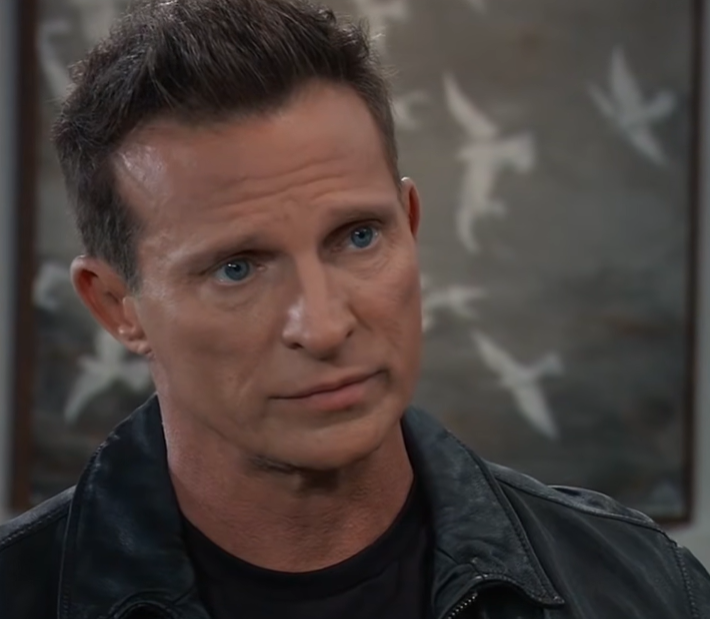
To be clear, this is not about diminishing Jason. Port Charles would not be what it is without him. He is the shield, the frontline defense, the necessary force in a brutal world. But the shield only works when someone identifies where the attack will land. That someone increasingly appears to be Brick.
If Jason is the trigger, Brick is the targeting system.
And perhaps the real reason Sonny continues to survive crisis after crisis is not because he has muscle alone, but because he has balance. Execution and anticipation. Reaction and prevention. Firepower and foresight.
Still, if you had to choose the one you would least want working against you, the answer may not be as obvious as it once was. Facing Jason means a battle. Facing Brick might mean you’ve already lost without realizing it.
So the better question isn’t who is more loyal. It isn’t who is more feared. It’s this: would you rather confront the man you see coming — or the one who’s been three moves ahead all along?
Port Charles may fear Jason.
But it might be time they start fearing Brick just a little more.
