The moment Maxie Jones opened her eyes and learned that Nathan West was alive, General Hospital fans expected tears, joy, and a miraculous reunion. Instead, what unfolded is shaping up to be one of the darkest psychological twists the show has delivered in years. While science claims Nathan is real, Maxie’s heart may be screaming a terrifying truth: the man who returned is not the Nathan she loved.
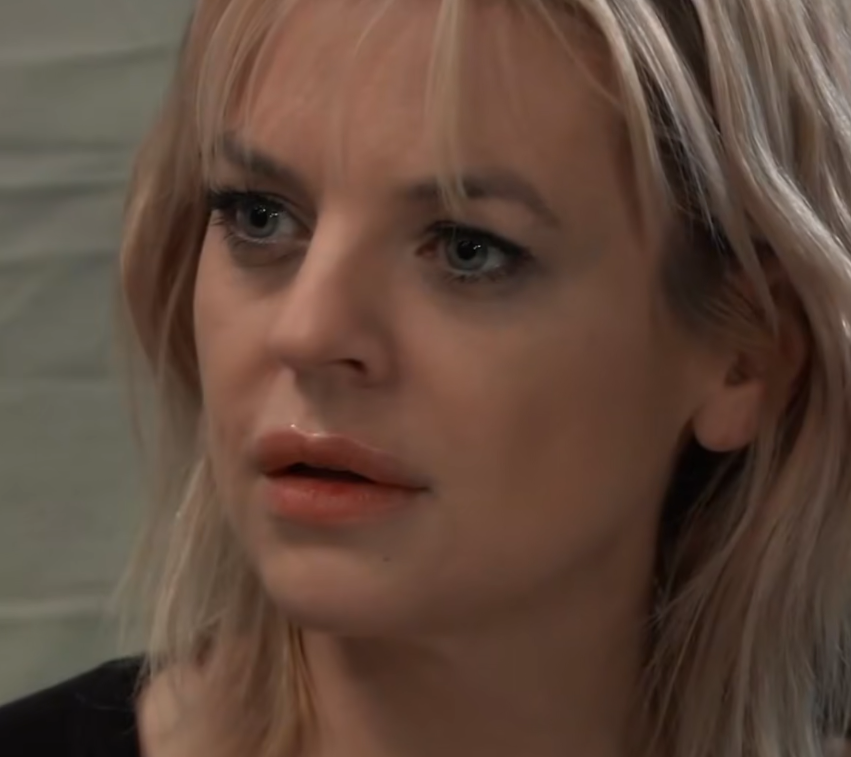
The first and most unsettling red flag is Nathan’s complete absence during Maxie’s coma. A man who once loved Maxie with unwavering devotion would have been at her bedside every day, desperate for any sign of life. Yet Nathan never came. This absence alone challenges everything viewers know about his character. If he truly survived and remembered who Maxie was, why did he stay away when she needed him most? For a show that thrives on emotional logic, this silence speaks louder than any DNA test ever could.
Felicia Scorpio has insisted that science confirms Nathan’s identity. DNA and fingerprints match. The medical and forensic evidence is clear. But soap operas have always taught fans one crucial rule: science can be manipulated, and villains can steal anything—including identities. General Hospital has a long history of impostors, clones, and mind-controlled doubles. When the show puts such heavy emphasis on “proof,” it often signals that the truth is far more sinister. DNA might be convincing to doctors and police, but it cannot prove a soul.
Maxie’s reaction is the emotional core of this storyline. Instead of celebrating, she is hesitant, observant, and deeply unsettled. She wants to confirm Nathan through feeling, memory, and instinct rather than laboratory results. This sets up a powerful conflict between logic and intuition. Soap storytelling often uses this contrast to reveal deeper truths, and Maxie’s emotional intelligence may be the key that exposes a massive deception. Her hesitation is not denial; it is recognition.
When Maxie finally comes face-to-face with Nathan, the real shock is expected to hit. Fans anticipate subtle but chilling signs that something is wrong. His eyes may not soften when he looks at her. His touch may feel unfamiliar. He may fail to recall private memories, inside jokes, and shared trauma that defined their relationship. Sometimes the smallest emotional details reveal the biggest lies. If Maxie senses that the man in front of her feels like a stranger wearing Nathan’s face, the implications will be explosive.
This opens the door to multiple dark theories. The simplest explanation is an impostor who somehow obtained Nathan’s DNA and fingerprints. A more sinister possibility is advanced medical or Cassadine-level experimentation, where memories were erased, altered, or implanted. Another theory is that the real Nathan died years ago and someone engineered a replacement for reasons still unknown. Each possibility carries devastating consequences, not only for Maxie but for everyone in Port Charles who believed in this miracle return.
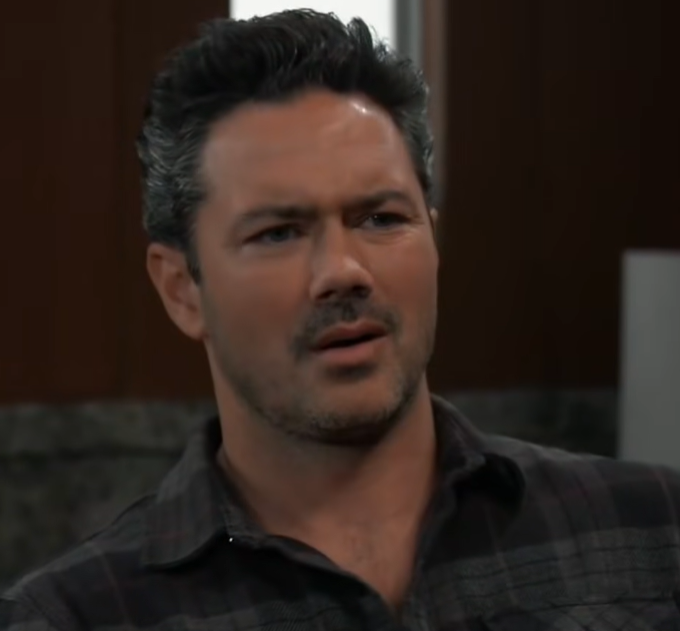
The emotional fallout could be even more tragic than Nathan’s original death. Maxie may be forced to grieve him a second time, realizing that the man she mourned never truly came back. This storyline also threatens her current relationship and stability, pulling her into a psychological battle between hope and horror. If Nathan is fake, then every interaction since his return becomes a manipulation, and Maxie becomes the only one brave enough to question the miracle.
What makes this plot so compelling is its thematic depth. Science versus emotion, truth versus illusion, and love versus deception are classic soap opera pillars. By positioning Maxie as the only character who senses something is wrong, the show elevates her from victim to truth-seeker. She becomes the audience’s surrogate, questioning what everyone else accepts blindly. Her instincts may expose a conspiracy that could reshape the entire narrative landscape of General Hospital.
If this theory proves true, the repercussions will be massive. Who created the fake Nathan? Why target Maxie? Is this part of a larger plan tied to past villains or new enemies in Port Charles? The answers could introduce a new era of dark storytelling, filled with psychological thriller elements rarely explored in daytime drama.
In the end, the most haunting idea is that love cannot be replicated. DNA can be copied. Fingerprints can be forged. Faces can be reconstructed. But emotional connection, shared history, and soul recognition cannot be faked. Maxie’s heart may be the only lie detector that truly matters.
And if she is right, Port Charles is about to face one of its most terrifying revelations ever.
