Willow’s decision to take Drew into her home and become his full-time caregiver may look compassionate on the surface, but in a custody battle, compassion can become a weapon. In soap opera logic, no good deed goes unpunished, and this storyline is practically begging to be turned into a courtroom bombshell. If Diane decides to weaponize Willow’s role in Drew’s care, the fallout could be catastrophic—not just for Willow’s reputation, but for her right to raise Wylie and Amelia.
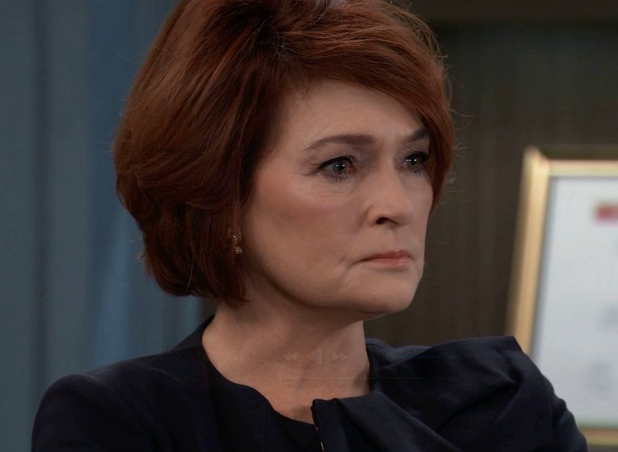
The first and most devastating argument is time. Full-time caregiving for a completely dependent adult is physically and emotionally consuming. It requires constant monitoring, medical coordination, emotional labor, and crisis management. Diane could argue that Willow cannot possibly provide the level of attention, stability, and presence required for two young children while also acting as a 24/7 caretaker. In court, perception matters, and Diane is a master at shaping perception. She could frame Willow not as a devoted mother, but as a woman stretched so thin that her children inevitably come second.
The second angle is emotional environment. Children are sensitive to trauma, illness, and fear, and living with a severely incapacitated adult can be deeply unsettling. Diane could bring in a child psychologist to testify that constant exposure to Drew’s condition could cause anxiety, fear of mortality, or emotional distress for Wylie and Amelia. Suddenly, Willow’s home becomes an environment painted as emotionally unsafe. The narrative would be simple and brutal: Willow is prioritizing her emotional bond with Drew over the psychological well-being of her children.
Then comes the most dangerous narrative twist: Willow as emotionally unstable. By isolating Drew from medical facilities and insisting on being his primary caregiver, Willow could be portrayed as obsessive, controlling, and incapable of making rational decisions. Diane could argue that Willow’s judgment is compromised by her attachment to Drew, turning her into a liability rather than a protector. In a custody case, mental and emotional stability are everything, and Diane would have no problem suggesting that Willow’s choices indicate blurred priorities and impaired decision-making.
The courtroom drama becomes even more explosive if Drew himself becomes a witness. Imagine Drew revealing that Willow restricted access to doctors, discouraged outside help, or made decisions without medical guidance. Whether or not Willow intended harm, the optics would be devastating. Diane could twist this into a narrative of emotional abuse or coercive control, painting Willow as a caregiver who crossed the line into captor territory. Even if Drew is genuinely grateful, a single ambiguous statement could be enough to plant doubt in the judge’s mind.
There is also the possibility of a darker twist: Drew may not be as incapacitated as he appears. If he is secretly aware and later testifies that Willow manipulated his vulnerability or enjoyed the power dynamic, the fallout would be nuclear. The court of public opinion would turn on Willow instantly, and Diane would frame the entire situation as proof that Willow cannot be trusted with anyone’s well-being, let alone her children’s.
Diane could also argue that Willow’s decision to keep Drew at home instead of in a professional care facility is medically irresponsible. Experts could testify that specialized facilities provide better safety, monitoring, and rehabilitation, and that Willow’s insistence on handling everything herself is driven by ego, guilt, or emotional dependency rather than what is best for Drew. That narrative would spill over into the custody case: if Willow ignores professional advice for Drew, what guarantees exist that she won’t do the same for her children?
In a soap opera, custody battles are rarely just legal—they are symbolic. This case could symbolize Willow’s transformation from nurturing, selfless nurse to obsessive caregiver who loses sight of her role as a mother. Diane’s strategy would not be to prove Willow is evil, but to prove she is overwhelmed, misguided, and potentially harmful despite good intentions. That distinction is powerful, because it makes the argument believable and morally complex rather than cartoonishly villainous.
The potential outcomes are dramatic. The court could grant temporary custody to Michael, Nina, or another guardian, citing concerns about Willow’s availability and judgment. In a more shocking twist, Willow could lose primary custody entirely, triggering a psychological breakdown and pushing her into a full-blown villain arc. Alternatively, Willow could fight back, accusing Diane of exploiting Drew’s condition and weaponizing compassion, but that defense might only make her seem more emotionally volatile.
Ultimately, this storyline has all the ingredients of classic soap devastation: moral ambiguity, legal warfare, psychological unraveling, and devastating consequences. Diane using Drew against Willow would be the ultimate soap move—turning empathy into evidence and love into liability. If this theory plays out, Willow’s greatest act of compassion could become the very reason she loses the people she claims to love most.
