Sidwell’s decision to hold back and observe Lucas rather than act immediately is far more chilling than any impulsive act of violence. By choosing to wait, he transforms Lucas into a living experiment, a silent test designed to measure the limits of loyalty, power, and emotional allegiance. This is not mercy. This is strategy. Sidwell is calculating every move, convinced that true betrayal is not Lucas speaking out, but Marco choosing love over legacy. In this twisted moral framework, Lucas is expendable, and Marco’s loyalty is the only currency that matters.
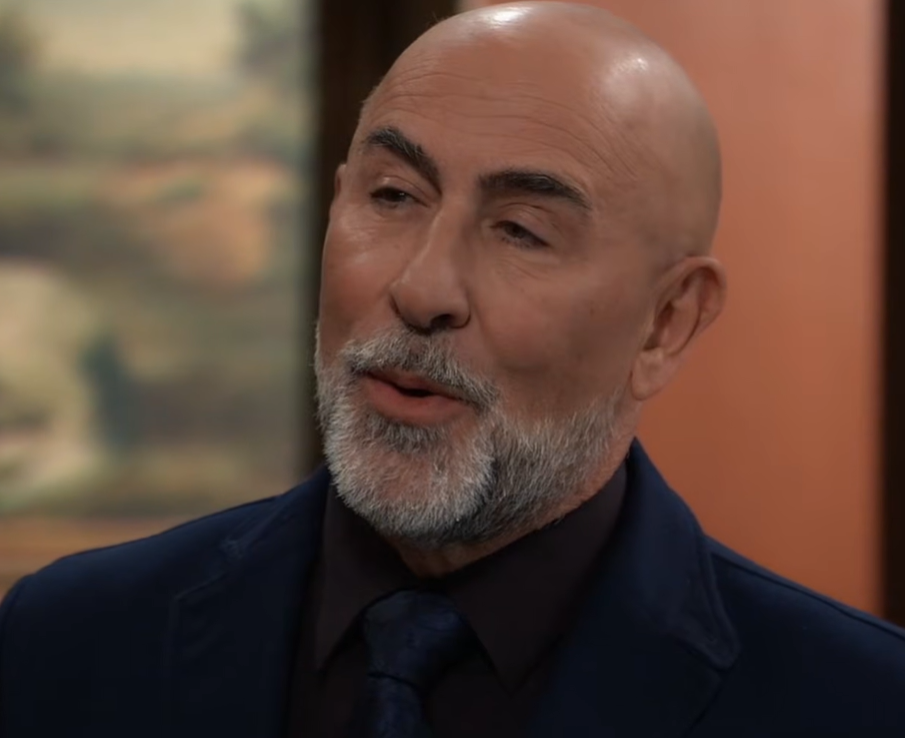
At the heart of Sidwell’s strategy is control. He believes his son is fundamentally loyal, not because of love, but because of conditioning. Marco has been raised in a world where power, obligation, and dynasty outweigh personal attachments. Sidwell is not testing Lucas as much as he is testing his own influence over Marco. By allowing Lucas to live for now, he is sending a silent message: loyalty is rewarded with survival, and disobedience will be punished with blood. This psychological trap is far more effective than any overt threat.
Lucas, meanwhile, becomes a pawn in a high-stakes loyalty game he never agreed to play. His silence is interpreted as submission, but his presence alone is a destabilizing force. Sidwell knows that even if Lucas does nothing, his relationship with Marco represents a crack in the armor of generational control. Lucas embodies an alternative life, one not dictated by Sidwell’s ambitions. In Sidwell’s eyes, that makes him dangerous, even when he says nothing at all.
The ultimatum is brutal in its simplicity. If Lucas stays quiet and does not try to pull Marco away, he is allowed to live. If Marco chooses Lucas, Lucas dies. This binary worldview reveals Sidwell’s core philosophy: love is a weakness that must be eliminated if it threatens power. By framing Lucas as the price of Marco’s independence, Sidwell forces his son into an impossible choice, one that will define their relationship forever. It is not just a test of loyalty; it is an emotional weapon designed to keep Marco trapped.
What makes this storyline especially compelling is the moral complexity. Sidwell does not see himself as a monster. In his mind, he is protecting his empire, his legacy, and his family structure. He genuinely believes Marco will not betray him, and that belief gives him confidence to delay action. This creates dramatic irony: the audience knows Marco’s loyalty is not guaranteed, and the longer Sidwell waits, the more catastrophic the fallout could be. The tension lies not in whether violence will happen, but when and how.
Marco’s potential choice is the emotional core of this arc. If he remains loyal, he becomes complicit in Sidwell’s cruelty, even if Lucas survives. If he chooses Lucas, he triggers a deadly chain reaction that he may never forgive himself for. Either outcome reshapes Marco’s identity. He is no longer just Sidwell’s son; he is either the heir who sacrificed love for power or the rebel who defied his father and paid a devastating price. Soap opera storytelling thrives on such irreversible choices.
This setup also elevates Sidwell into a true long-term villain. Rather than acting impulsively, he plays the long game, manipulating emotions, relationships, and expectations. His willingness to kill Lucas if Marco chooses him marks a moral event horizon. It signals that Sidwell values control over humanity, legacy over love, and obedience over compassion. Viewers are drawn to villains who are methodical and ideological, and Sidwell fits that archetype perfectly.
Ultimately, this storyline is not just about a potential murder. It is about power, control, and the cost of choosing love in a world built on legacy. Sidwell’s silent observation is more terrifying than immediate action because it turns every interaction between Marco and Lucas into a ticking time bomb. The audience is left waiting for the moment Marco chooses, knowing that whatever he decides, someone will lose everything.
