There was a time when Willow was the moral center of every room she walked into. A soft-spoken schoolteacher who believed in second chances. A compassionate nurse who put patients before politics. But power changes people—or perhaps more chillingly, it reveals who they have been all along. Now, as a newly minted congresswoman, Willow is no longer reacting to events. She is shaping them. And the most unsettling moment of all was not a scream, not a confrontation, not even an accusation. It was a smile.
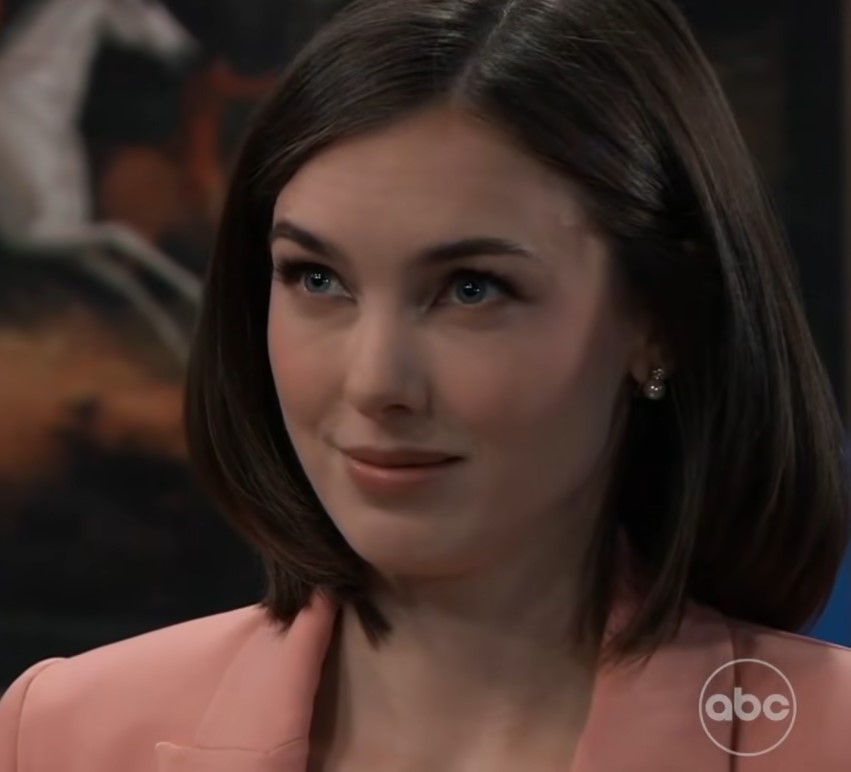
When the PCPD dropped their investigation, Willow didn’t panic. She didn’t rage. She didn’t spiral. Instead, she calmly acknowledged that her plan to gain sole custody of Wiley and Amelia had stalled—and then quietly admitted that maybe it was for the best. After all, no investigation means no evidence. That single line shifted the entire narrative. This was not a woman relieved of false accusations. This was someone calculating risk exposure. Someone aware there could have been something to find.
Power thrives in gray areas, and Willow is living there now. As discussions swirl about wealthy power players like Sidwell influencing her administration, the question isn’t whether she’ll be manipulated. It’s whether she’ll be the one doing the manipulating. Fans speculate she could even turn on Sidwell eventually, outmaneuvering him in the very game he believes he controls. That possibility is more than dramatic irony. It signals evolution. Willow is no longer naïve. She is strategic.
Her transformation is visible beyond dialogue. Viewers have noticed the sharper styling, the darker eye makeup, the more composed body language. This isn’t accidental. The woman who once projected warmth now radiates authority. Some call it maturity. Others call it calculation. In visual storytelling, aesthetic shifts matter. Willow’s eyes no longer plead for understanding. They assess. They measure. They hold.
Then there is the silence surrounding her alleged shooting of Drew. The theory alone is explosive, but what intensifies it is her uncertainty. She doesn’t know how many people might already suspect the truth. That ignorance creates tension. A character who believes she has outmaneuvered everyone is always one revelation away from collapse. If Kai exposes her, if Alexis finds a legal loophole to remove her from Congress, if a stray conversation is overheard at the Metro Court, the carefully constructed façade could shatter overnight.
Yet perhaps the most disturbing aspect of Willow’s arc is how rational it all feels. She justifies every step as necessary. Necessary for her children. Necessary for her future. Necessary for stability. That is how corruption often begins—not with villainous laughter, but with self-assurance. She believes she deserves this power. She believes she can handle it. She believes she is still the good person in the story.
The discovery of a body threatens to redirect suspicion elsewhere, possibly toward Dalton, but it also underscores how volatile the environment has become. In a world where secrets are currency and leverage is survival, Willow’s new position gives her access to both. Congress is not just a title. It is insulation. It is influence. It is the ability to shape outcomes before they reach a courtroom.
The tragedy is not that Willow has changed. Characters evolve. The tragedy is that she seems comfortable with it. From teacher to nurse to aspiring sole custodian to potential attempted murderer, her trajectory reads less like a fall and more like a climb. And that climb is accelerating.
Absolute power does not corrupt overnight. It seduces. It reassures. It rewards ambition. Willow may believe she is using power for protection. But if she continues down this path, Port Charles may soon discover that the most dangerous players are not the ones who snarl in the shadows. They are the ones who smile when the investigation dies.
